Market Drivers and Buyer Interest
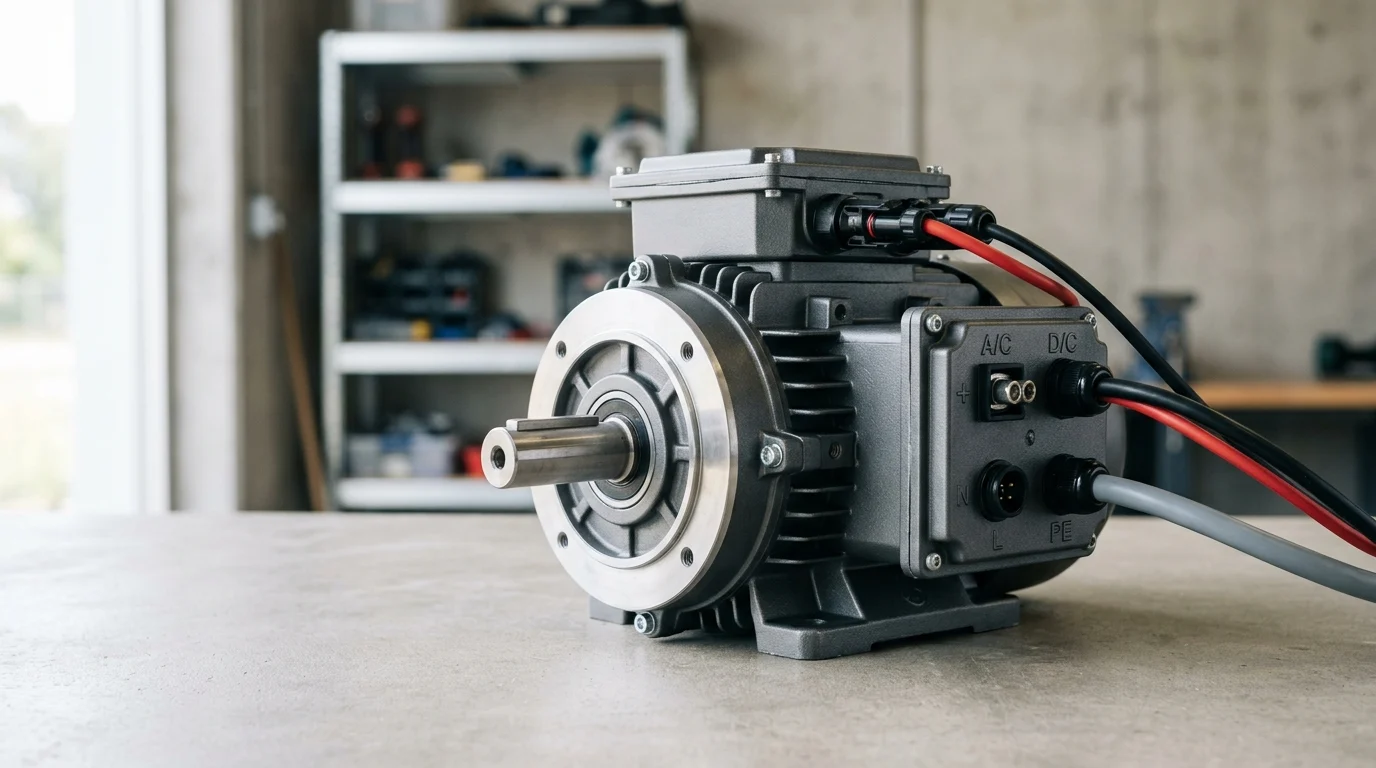
The transition toward intelligent energy architectures has accelerated the adoption of the ACDC hybrid solar EC motor across commercial and industrial sectors. For procurement teams and industrial distributors, securing reliable, energy-efficient motor technology is no longer just about meeting basic operational requirements; it is about future-proofing equipment against volatile energy costs and unstable power grids. By integrating electronically commutated (EC) technology with dual-input capabilities, these motors allow systems to operate seamlessly on both direct current (DC) from photovoltaic panels and alternating current (AC) from the main grid.
This photoelectric complementarity ensures continuous day and night energy support without the need for expensive battery storage banks. As a result, B2B buyers are increasingly prioritizing hybrid solutions to achieve sustainable power for high-demand applications, aiming for energy savings of 30% to 50% compared to traditional asynchronous AC motors.
Why buyers are evaluating ACDC hybrid solar EC motors
Procurement professionals are shifting their focus to ACDC hybrid solar EC motors primarily to mitigate operational risks associated with grid interruptions. In regions where grid stability is compromised or electricity tariffs peak during daylight hours, a hybrid motor automatically prioritizes solar input, drawing from the grid only when solar irradiance drops below a predefined threshold, such as 50W. This intelligent switching capability guarantees uninterrupted operation for critical systems.
Furthermore, buyers are evaluating these motors to bypass the high capital expenditure associated with deep-cycle battery banks. By utilizing the grid as a secondary power source rather than relying on chemical storage, the total cost of ownership (TCO) drops significantly, often yielding a return on investment (ROI) within 18 to 24 months for commercial installations.
Key demand drivers across OEM and distribution channels
Across Original Equipment Manufacturer (OEM) channels, demand is heavily driven by the need to develop premium, eco-friendly product lines. Manufacturers of solar industrial fans, solar water pumps, air coolers, and air compressors are integrating hybrid EC motors to capture market share in the growing green building and sustainable agriculture sectors. A standard 1kW hybrid motor integration can reduce an end-user’s annual energy expenditure by $400 to $600, a compelling selling point for OEMs.
In distribution channels, demand is fueled by government subsidies for renewable energy adoption and stringent energy efficiency regulations (such as IE4 and IE5 standards). Distributors require versatile inventory that can serve both off-grid agricultural clients and grid-tied industrial facilities, making the universal applicability of the ACDC hybrid motor highly attractive.
Product Definition and Technical Criteria

Defining the ACDC hybrid solar EC motor requires understanding its dual nature: it is fundamentally a brushless DC (BLDC) motor engineered with an advanced, integrated controller capable of accepting and managing two distinct power inputs. This architecture eliminates the friction and wear associated with mechanical brushes, relying instead on electronic commutation to achieve high efficiency and precise speed control.
Core components and operating principles
The core architecture includes a permanent magnet rotor, a precision-wound stator, and an intelligent microgrid controller. For example, modern frameless BLDC motor components often utilize a compact 80mm stator winding configuration.
The operating principle centers on photoelectric complementarity. The integrated controller features dual maximum power point tracking (MPPT) or specialized voltage sensing. During daylight, the controller directs DC power from the solar array to the motor phases. If a cloud passes or dusk approaches, the controller seamlessly rectifies AC grid power to supplement the DC bus, maintaining a constant RPM without power interruption.
Critical specifications for supplier comparison
When comparing suppliers, procurement teams must evaluate several critical technical specifications to ensure long-term reliability. Power output ratings typically range from 200W to 1000W for standard commercial applications, with operational speeds spanning 500 to 6000 RPM. Buyers must verify the motor’s IP rating; IP55 or IP65 is mandatory for agricultural pumps or outdoor HVAC units exposed to dust and moisture.
Thermal management and efficiency metrics are equally critical. High-tier hybrid EC motors boast system efficiencies exceeding 85%. Additionally, buyers should scrutinize the controller’s switching latency (ideally under 20 milliseconds) and its maximum input voltage tolerance for both the solar string (e.g., up to 450V DC) and the grid connection (universal 110V-240V AC).
How to compare AC, DC, and hybrid motor options
Selecting the optimal motor technology requires a clear understanding of the trade-offs between traditional and hybrid options. While standard AC motors have a low initial cost, their high energy consumption and lack of solar compatibility limit their use in modern sustainable projects. Standard DC motors offer excellent efficiency but require expensive battery infrastructure for 24/7 operation.
| Feature | Standard AC Motor | Standard DC Motor | ACDC Hybrid EC Motor |
|---|---|---|---|
| Efficiency | 60% – 75% | 80% – 90% | > 85% |
| Power Source | Grid Only | Solar / Battery | Dual (Solar + Grid) |
| Speed Control | Requires external VFD | Native / Integrated | Native / Integrated |
| 24/7 Operation | Yes | Requires Batteries | Yes (Seamless switching) |
| Cost Multiplier | 1.0x (Baseline) | 1.3x | 1.6x – 1.8x |
The ACDC hybrid EC motor commands a premium upfront cost multiplier of approximately 1.6x to 1.8x over a basic AC motor. However, by eliminating battery costs and external variable frequency drives (VFDs), the hybrid system provides the most capital-efficient pathway for continuous, off-grid-capable industrial applications.
Supplier Evaluation and Sourcing Process
Sourcing ACDC hybrid solar EC motors demands a rigorous supplier evaluation process, as the technology relies heavily on the precise integration of electromechanical components and sophisticated printed circuit boards (PCBs). B2B buyers must navigate a landscape of manufacturers with varying levels of expertise in intelligent photovoltaic microgrid solutions and motor winding automation.
Supplier qualification criteria for B2B buyers
B2B buyers should mandate strict qualification criteria before initiating negotiations. First, the supplier must demonstrate ISO 9001 certification and utilize highly automated winding lines to ensure consistency across production batches. A critical benchmark is the supplier’s stated defect rate, which should be rigorously maintained below 0.5% for the motor hardware and below 1% for the controller electronics.
Furthermore, buyers should assess the manufacturer’s in-house R&D capabilities. Suppliers who outsource their controller design often struggle with after-sales support and firmware troubleshooting. Verifying that the supplier has proprietary control over the MPPT algorithms and day/night energy switching logic is essential for long-term product stability.
Customization options that affect procurement
Procurement strategies are heavily influenced by the level of customization required for the final application. Mechanical customizations, such as specific shaft lengths, custom mounting flanges, or tailored frameless dimensions (e.g., modifying a standard 76.4mm OD stator), directly impact tooling costs and lead times.
Electrical and software customizations also dictate Minimum Order Quantities (MOQs). While a supplier might offer a standard hybrid motor with an MOQ of 100 units, requesting custom firmware to adjust the threshold at which the motor switches from solar to AC power may push the MOQ to 500 or 1000 units. Buyers must weigh the necessity of customization against the financial impact of higher inventory commitments.
Sample testing and pilot validation process
Given the complexity of dual-input systems, the sample testing and pilot validation phase cannot be rushed. Initial validation typically involves procuring 3 to 5 sample units for bench testing. Engineers must verify the seamless transition between AC and DC inputs under simulated load conditions, ensuring no voltage spikes damage the controller.
Following bench tests, a pilot run of 50 to 100 units should be deployed in real-world environments. This phase must include thermal cycling tests (e.g., operating in ambient temperatures ranging from -20°C to +60°C) and a 30-day continuous run test to validate the thermal dissipation of the controller housing and the durability of the stator windings under maximum load.
Commercial Terms, Compliance, and Logistics
Successfully importing ACDC hybrid solar EC motors requires a comprehensive understanding of international commercial terms (Incoterms), regulatory compliance, and the variables that dictate the final landed cost. Procurement teams must account for fluctuating raw material prices, complex electronic certifications, and specialized packaging requirements to protect sensitive components during transit.
Main landed cost drivers
The landed cost of a hybrid EC motor is influenced by several volatile components. The permanent magnets, typically made from neodymium, are subject to rare-earth commodity pricing. The integrated smart controller accounts for 20% to 30% of the total unit cost, driven by the price of high-grade semiconductors and copper for the PCB.
| Cost Component | Est. % of Landed Cost | Key Market Variables |
|---|---|---|
| Raw Materials (Motor) | 45% – 50% | Copper wire and neodymium magnet commodity indices |
| Smart Controller / PCB | 20% – 30% | Semiconductor availability, custom firmware costs |
| Freight & Insurance | 10% – 15% | Ocean freight rates (typically $1.50 – $3.00 per kg) |
| Tariffs & Duties | 5% – 15% | Import duties based on HS Code 8501.31 and origin |
Additionally, buyers must accurately classify these units for customs. Hybrid motors generally fall under HS Code 8501.31 (DC motors and generators of an output not exceeding 750 W) or similar classifications depending on wattage. Misclassification can lead to unexpected tariffs, severely impacting the projected ROI of the procurement cycle.
Required compliance documents and certifications
Because these motors handle both high-voltage AC grid power and DC solar power, compliance documentation is heavily scrutinized by customs and local safety authorities. For the European market, CE marking is mandatory, specifically complying with the Low Voltage Directive (LVD) and Electromagnetic Compatibility (EMC) directive to ensure the motor’s high-frequency switching does not cause grid interference.
For North American buyers, UL recognition (such as UL 1004-7 for Electronically Commutated Motors) is critical for OEM integration. Additionally, RoHS compliance is required globally to certify the absence of hazardous substances in the PCB manufacturing process. Suppliers must be able to provide these test reports from accredited third-party laboratories prior to shipment.
Lead times, packaging, and spare parts planning
Standard production lead times for ACDC hybrid EC motors range from 30 to 45 days, though custom firmware or non-standard shaft dimensions can extend this to 60 days. Because the integrated controllers are sensitive to static and impact, packaging must include anti-static bags and custom-molded EPE foam inside double-corrugated export cartons.
Logistics planning must also incorporate a robust spare parts strategy. B2B buyers should negotiate for 1% to 2% free spare controllers or complete motor assemblies per bulk order. Because the electronic controller is the most likely component to fail under extreme electrical surges, having readily available spares prevents costly downtime for end-users relying on continuous ventilation or water pumping.
Purchase Decision Framework

Transitioning to ACDC hybrid solar EC motors represents a strategic upgrade for equipment manufacturers and industrial distributors. To maximize the financial and operational benefits of this technology, procurement teams must align the motor’s capabilities with the correct end-use applications and execute a structured, risk-averse selection process.
Best-fit applications and channel scenarios
The hybrid EC motor is most effectively deployed in applications requiring continuous, resilient power where grid electricity is expensive or unreliable. Best-fit scenarios include solar industrial fans for warehouse ventilation, solar water pumps for agricultural irrigation, and solar air compressors. These applications heavily benefit from the motor’s ability to run at full capacity on solar power during peak daylight hours.
For distribution channels, targeting commercial and industrial users in regions experiencing grid interruptions exceeding 5 hours per week yields the highest conversion rates. The “plug-and-play” nature of the dual-input controller allows distributors to sell a single SKU that serves both off-grid rural clients and grid-connected urban facilities aiming to reduce peak-hour energy consumption.
Key Takeaways
- Wholesale sourcing and supply-chain implications for ACDC Hybrid Solar EC Motor
- Specifications, compliance, and commercial terms buyers should validate
- Actionable recommendations for distributors and procurement teams
Frequently Asked Questions
What is an AC/DC hybrid solar EC motor?
It is a brushless EC motor with a controller that runs on solar DC and grid AC, switching automatically to keep equipment operating.
How does the motor work at night or during weak sunlight?
The controller prioritizes solar power in daylight, then draws AC from the grid when solar input drops, so fans, pumps, or compressors keep running.
Why choose a hybrid EC motor instead of a standard AC motor?
Hybrid EC motors typically save 30%–50% energy, offer precise speed control, and reduce downtime from unstable grids.
Does Eternal Energy Tech use this technology in industrial applications?
Eternal Energy Tech applies photoelectric complementarity in microgrid solutions for solar industrial fans, water pumps, air coolers, and air compressors.
What specs should buyers check before selecting one?
Focus on power range, RPM, controller compatibility, and IP55/IP65 protection for outdoor use. For many systems, 200–1000W and 500–6000rpm are common targets.