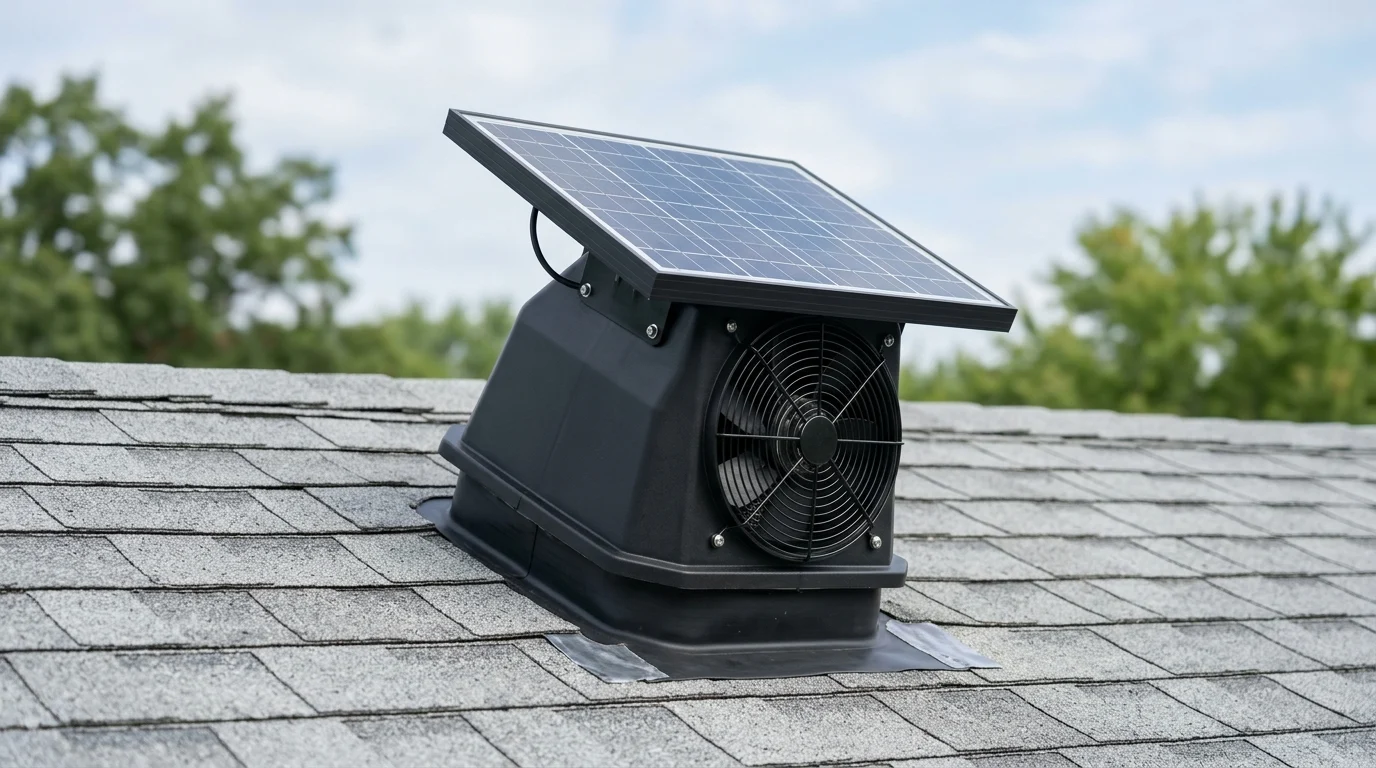
Why Solar EC Fans Are Reshaping Warehouse Cooling Costs
Large-scale logistics facilities and distribution centers face escalating operational expenditures, driven significantly by the continuous demand for climate control and ventilation. Maintaining optimal ambient temperatures is critical not only for workforce safety but also for preserving inventory integrity. As energy grids become increasingly congested, traditional AC induction fans are proving to be a financial liability for high-volume warehousing.
The integration of Electronically Commutated (EC) fan motors with intelligent photovoltaic microgrid solutions offers a transformative approach to facility management. By leveraging day and night energy support through advanced photoelectric complementarity systems, these setups provide resilient, off-grid or grid-supplemented power. This transition allows industrial users to decouple their cooling costs from volatile utility markets while meeting aggressive corporate sustainability targets.
Energy tariffs and peak-demand pressure
Industrial electricity tariffs have demonstrated steady upward volatility, with average commercial rates frequently exceeding $0.15 per kWh in major global logistics hubs. Furthermore, peak-demand charges—which can account for up to 30% or more of a facility’s total monthly utility bill—penalize warehouses that rely on power-hungry AC fans during the hottest hours of the day.
Because traditional cooling systems draw maximum grid power precisely when utility rates peak, procurement departments are forced to absorb inflated operational costs. Mitigating these demand spikes requires a shift toward decentralized, renewable-driven mechanical systems that can operate independently during peak tariff windows.
Why procurement teams are evaluating Solar EC fans
Procurement teams are evaluating Solar EC fans primarily due to their superior electromechanical efficiency. EC motors integrate a built-in inverter and an external rotor, allowing them to utilize both AC and DC power sources while achieving efficiency rates up to 70% higher than conventional induction motors. When paired with intelligent microgrids, these systems make solar energy highly affordable and convenient.
By utilizing solar inputs during daylight hours, warehouses can run continuous ventilation with near-zero grid draw. This capability provides a compelling hedge against grid interruptions, ensuring that cooling, pumping, and compressed air systems remain operational even when centralized power infrastructure fails. For buyers, the proposition shifts from merely purchasing a fan to investing in a resilient energy asset.
How Buyers Should Compare Solar EC Fan Specifications

When sourcing solar-powered ventilation solutions, wholesale buyers must scrutinize mechanical and electrical specifications to ensure compatibility with large-scale industrial environments. A granular understanding of motor topologies, power ratings, and system interoperability is essential for maximizing both airflow output and energy capture.
Key performance specifications
At the core of a high-performance solar EC fan is the brushless DC (BLDC) motor component. Advanced frameless models, such as those utilizing a compact 80mm stator winding, offer exceptional torque density and thermal management. For instance, an industrial-grade stator specification might feature a 76.4mm outer diameter (OD), a 44.6mm inner diameter (ID), 9 slots, and 6 poles.
These compact yet powerful BLDC components typically support power ranges from 200W up to 1000W, delivering variable operational speeds between 500 and 6000 RPM depending on the controller input and load requirements. This flexibility allows facility managers to precisely modulate airflow volume (measured in CFM) to match real-time thermal conditions rather than relying on inefficient, single-speed operation.
Comparison with conventional fan systems
To fully grasp the procurement advantage, buyers must benchmark solar EC setups against legacy AC induction models across several critical operational metrics.
| Specification Metric | Conventional AC Fan System | Solar EC Fan System |
|---|---|---|
| Motor Efficiency | 40% – 55% | 80% – 90% |
| Power Source | 100% Grid Dependent | Solar PV / Grid Complementary |
| Speed Control | Fixed or Voltage-stepped | Stepless / Variable (0-10V/PWM) |
| Operating Lifespan | 20,000 – 30,000 Hours | 40,000 – 60,000+ Hours |
| Peak Demand Impact | High (Draws max power at peak) | Minimal to Zero (Runs on solar) |
This comparative data highlights that while the initial capital expenditure for EC technology may be moderately higher, the dramatic reduction in energy consumption and extended lifecycle fundamentally alter the total cost of ownership.
Motor and component factors
Component longevity is heavily dependent on the quality of the motor electronics and the integration of photoelectric complementarity systems. The EC fan’s onboard electronics must seamlessly switch between direct solar PV input and grid power (or battery storage) without interrupting the fan’s rotation. High-quality systems achieve this with multi-strand (1pp/3pp) stator configurations that optimize electromagnetic flux.
Furthermore, the enclosure and heat dissipation mechanisms of the motor must be robust enough to withstand continuous 24/7 operation in warehouse ceilings where ambient temperatures can easily exceed 45°C (113°F). Specifying motors with appropriate thermal overload protection and sealed bearings is vital for maintaining the projected 50,000-hour lifespan.
How Importers and Distributors Can Source Solar EC Fan Systems
Securing a reliable supply chain for solar EC fans requires rigorous vetting of manufacturers and an understanding of international trade dynamics. Importers and distributors must align with technology partners capable of delivering consistent quality, scalable production, and comprehensive after-sales support.
Supplier evaluation checkpoints
When auditing potential manufacturing partners, buyers should prioritize suppliers with dedicated R&D capabilities in intelligent photovoltaic microgrid solutions. A supplier’s ability to provide complete ecosystems—encompassing the BLDC motor, solar controllers, and PV panels—reduces integration risks.
Distributors should demand factory audit reports demonstrating strict quality control, targeting a hardware defect rate of less than 0.5%. Additionally, verifying the supplier’s production capacity (e.g., the ability to output 10,000+ units monthly) ensures they can handle seasonal demand spikes typical in the HVAC and industrial cooling sectors.
MOQ, lead time, and spare-parts terms
Importers must negotiate favorable Minimum Order Quantities (MOQs) to balance inventory risk with freight efficiency. Standard industrial solar EC fans typically carry an MOQ of 50 to 100 units for standard models, while custom OEM designs—requiring specific stator windings or proprietary controller firmware—may necessitate MOQs of 500 units or more.
Production lead times generally span 30 to 45 days, though specialized photoelectric complementarity systems may add 10-15 days to the manufacturing cycle. To mitigate downtime, buyers should secure Service Level Agreements (SLAs) that include 1% to 2% free spare parts per order, specifically targeting high-wear components like controllers and frameless motor modules.
Compliance and documentation requirements
Compliance is a non-negotiable gateway for importing industrial electrical equipment. Procurement officers must ensure that all solar EC fan systems hold relevant certifications such as CE, RoHS, and UL/ETL listings, depending on the target regional market.
Because these units operate in challenging industrial environments, buyers should verify Ingress Protection (IP) ratings. Motors and external controllers should carry a minimum of IP54, with IP65 preferred for environments exposed to heavy dust or moisture. Comprehensive technical documentation, including wiring diagrams for microgrid integration and EMC (Electromagnetic Compatibility) test reports, must be provided prior to shipment.
How to Improve Deployment, ROI, and Channel Strategy
For distributors and system integrators, successful commercialization of solar EC fans relies on strategic deployment frameworks and clear value communication. Translating the technical superiority of brushless motors and smart microgrids into tangible financial returns is crucial for driving B2B sales.
Site assessment and project variables
Proper site assessment dictates the technical viability of a microgrid-tied cooling system. Installers must evaluate warehouse ceiling heights—typically ranging from 10 to 15 meters—to calculate the necessary CFM and optimal fan placement to combat thermal stratification.
Additionally, roof space availability and structural load capacity for PV panel arrays must be audited. A standard 1000W solar EC fan setup may require 3 to 4 standard solar panels, necessitating roughly 6 to 8 square meters of unshaded roof space per unit. Assessing local solar irradiance levels is also critical to sizing the photoelectric complementarity system accurately.
Pilot rollout and implementation steps
To prove the technology’s efficacy to skeptical warehouse operators, distributors should advocate for a structured 3-to-6-month pilot rollout. This involves retrofitting a specific thermal zone within a facility with solar EC fans and sub-metering the energy consumption against a control zone using legacy AC fans.
Data collected during the pilot typically reveals payback periods (ROI) of 18 to 36 months, heavily influenced by local utility rates and available renewable energy tax incentives. Documenting this empirical data empowers procurement teams to justify full-facility CAPEX approvals for subsequent rollout phases.
Positioning for wholesalers and distributors
From a channel strategy perspective, wholesalers should position these systems not merely as ventilation hardware, but as intelligent energy assets. Marketing narratives should emphasize concepts like ‘Smarter Energy’ and ‘Power Without Limits,’ aligning with corporate ESG (Environmental, Social, and Governance) goals.
Distributors can generally command healthy gross margins of 25% to 40% on comprehensive solar EC fan kits, provided they offer value-added services such as microgrid sizing consultation and local technical support. Bundling the fans with solar air coolers or solar water pumps can further increase average order value and deepen client lock-in.
Which Purchasing Framework Supports Lower Warehouse Cooling Costs

A comprehensive purchasing framework minimizes supply chain risk while maximizing the financial benefits of solar EC technology. Procurement teams must move beyond simple unit-cost comparisons and adopt a Total Cost of Ownership (TCO) methodology that accounts for energy savings, maintenance reductions, and component lifespan.
Final supplier shortlisting criteria
Finalizing the vendor selection requires a multi-dimensional scorecard. Buyers should weigh the supplier’s technical pedigree—particularly their expertise in 9-slot/6-pole stator manufacturing and off-grid power management—against commercial terms.
| Evaluation Criteria | Weighting | Target Metric / Expectation |
|---|---|---|
| Technical & Motor Specs | 30% | 200-1000W range, variable RPM, proven BLDC components |
| Energy Integration | 25% | Seamless day/night photoelectric complementarity |
| Commercial Terms | 20% | MOQs < 100, Lead times < 45 days, favorable payment terms |
| Quality & Warranty | 15% | Defect rate < 0.5%, Minimum 5-year comprehensive warranty |
| Compliance & Certifications | 10% | CE, UL, IP65 ratings, complete EMC documentation |
By applying these rigorous shortlisting criteria, B2B buyers can confidently secure solar EC fan systems that drastically reduce warehouse cooling costs, ensure operational resilience during grid failures, and provide a reliable foundation for sustainable industrial infrastructure.
Key Takeaways
- Wholesale sourcing and supply-chain implications for Solar EC Fan
- Specifications, compliance, and commercial terms buyers should validate
- Actionable recommendations for distributors and procurement teams
Frequently Asked Questions
How do Solar EC fans reduce warehouse cooling costs?
They use high-efficiency EC motors and solar power during peak daytime hours, cutting grid consumption and demand charges while maintaining ventilation.
Why are Solar EC fans better than conventional AC warehouse fans?
Solar EC fans offer 80%–90% motor efficiency, stepless speed control, and lower peak-demand impact than typical AC induction fans.
What specifications should buyers check in a Solar EC fan motor?
Focus on motor efficiency, power range, RPM, control method, airflow match, and compatibility with PV or microgrid systems.
What motor range suits large warehouse Solar EC fan applications?
Many industrial setups use BLDC motors around 200–1000W with variable speeds from 500–6000 RPM, depending on fan size and airflow needs.
About Zhejiang Eternal Hybrid Tech Co., Ltd.
Headquartered in Ningbo, China, Zhejiang Eternal Hybrid Tech Co., Ltd. is a new energy technology company specializing in intelligent photovoltaic microgrid solutions. Since entering the solar sector in 2019, the company has developed proprietary ParaFlow MicroGrid and Photoelectric Complementarity technologies, supporting a product line that includes solar industrial fans, solar water pumps, solar air coolers, and solar air compressors.
The company is committed to making clean energy affordable and reliable for industrial and agricultural users worldwide.
Contact: info@eternalwatt.com | +86-574-8906-5058