Strategic Value of Solar Direct Drive Fans
The integration of renewable energy into industrial ventilation has shifted from a niche sustainability initiative to a core operational strategy. For procurement teams and facility managers, the solar direct drive fan represents a critical evolution in climate control, offering decentralized power generation coupled with high-efficiency air movement.
Operational and energy-saving benefits
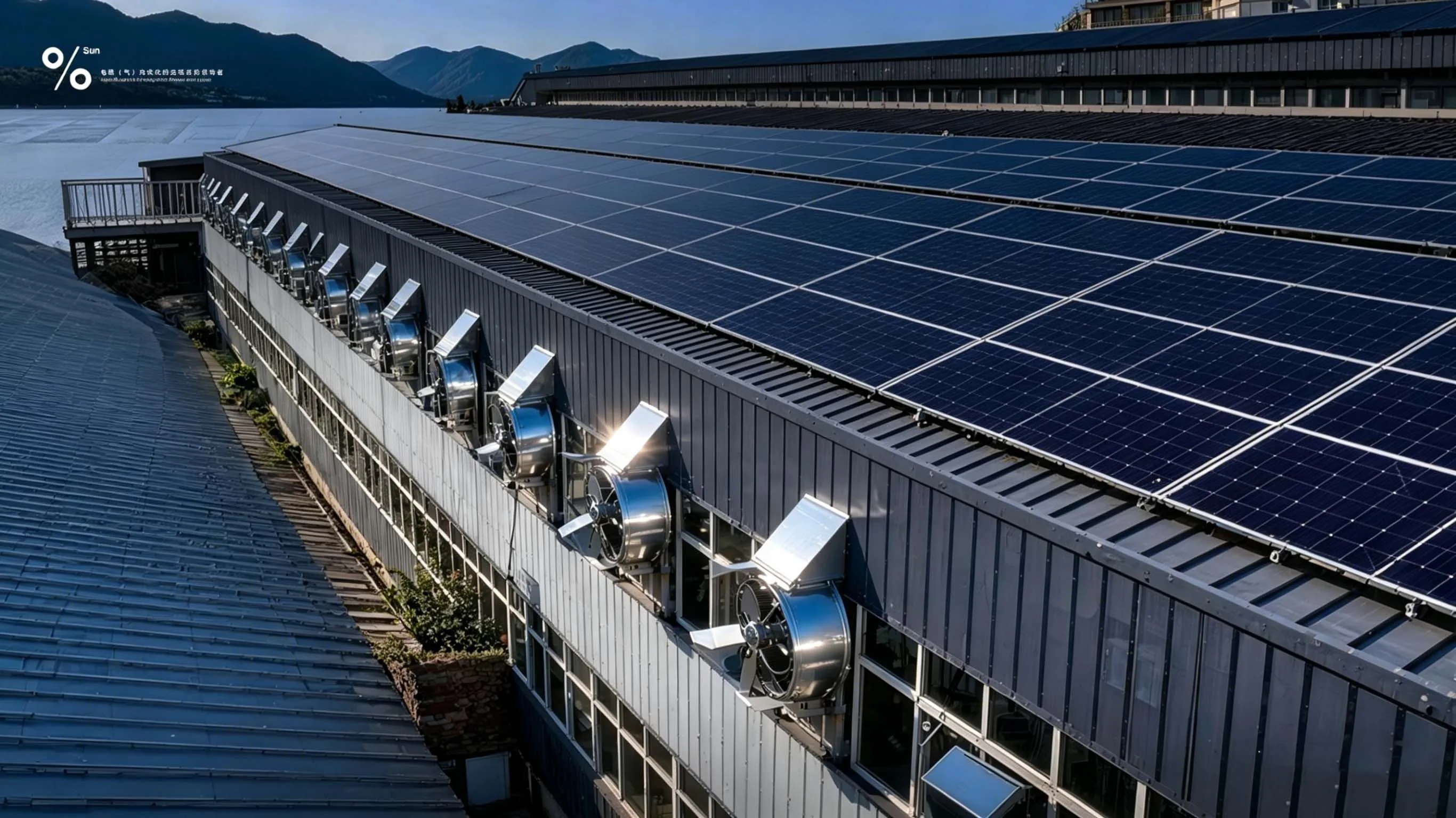
By eliminating the reliance on grid-supplied electricity during peak daylight hours, solar direct drive fans dramatically reduce operational expenditures (OPEX). Advanced intelligent photovoltaic microgrid solutions, such as the ParaFlow MicroGrid, enable seamless energy management. Industrial facilities deploying these systems typically observe an electricity cost reduction of up to 40% to 60% in cooling-heavy months. Furthermore, the direct drive mechanism eliminates transmission losses, ensuring that up to 95% of the generated solar energy is converted directly into kinetic airflow.
Best-fit industrial and commercial environments
These systems are engineered for expansive environments where grid interruptions cause severe operational bottlenecks. Best-fit applications include agricultural poultry houses, heavy manufacturing floors, and logistics warehouses spanning 10,000 to 50,000 square feet. In regions facing high energy costs or unstable grid infrastructure, deploying photoelectric complementary systems ensures resilient ventilation. The ability to maintain optimal ambient temperatures safeguards inventory and boosts worker productivity without incurring punitive peak-hour utility rates.
Technical Specifications and Performance Criteria
Evaluating a solar direct drive fan requires a rigorous analysis of its electromechanical components and photovoltaic architecture. Procurement specialists must look beyond generic airflow metrics to assess the specific motor topologies and energy management controllers that define long-term reliability.
Motor, airflow, and photovoltaic input
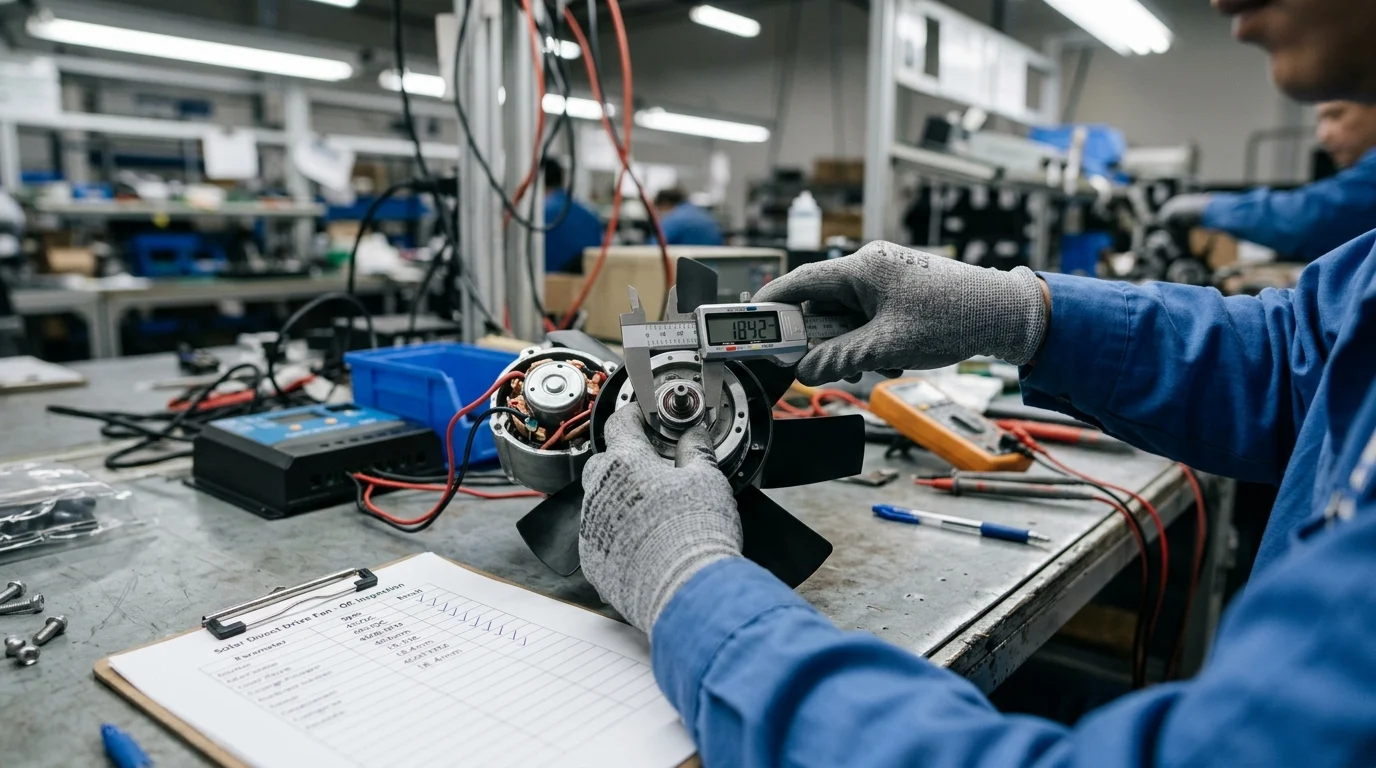
The core of a high-performance unit is its brushless DC (BLDC) motor. For instance, advanced frameless BLDC motor components, such as the VOL-WSRS80 9S, utilize an 80mm smaller stator winding with a 76.4mm outer diameter and 44.6mm inner diameter. Engineered with 9 slots and 6 poles, these motors support power outputs ranging from 200W to 1000W and rotational speeds of 500 to 6000 RPM. This compact, high-torque configuration maximizes cubic feet per minute (CFM) output while minimizing the required photovoltaic input, allowing for smaller, more cost-effective solar panels.
Day-and-night operation and control features
Continuous ventilation is often non-negotiable in industrial settings, necessitating robust day-and-night operation capabilities. Modern solar direct drive fans utilize photoelectric complementarity systems that intelligently blend solar power with grid or battery reserves. During daylight, the system runs entirely on the PV array. As solar irradiance drops below a critical threshold (typically around 150 W/m²), the controller automatically supplements power from the grid or an attached battery bank, ensuring zero downtime and maintaining a constant RPM without manual intervention.
How to compare models for procurement
When comparing models, buyers should benchmark motor efficiency, PV capacity, and controller logic against standard facility requirements. Below is a comparative matrix to guide procurement evaluations:
| Model Tier | Motor Power | Max Airflow (CFM) | Min. PV Panel Wattage | Target Facility Size (sq ft) |
|---|---|---|---|---|
| Light Commercial | 200W – 400W | 15,000 | 300W | 5,000 – 10,000 |
| Heavy Industrial | 500W – 800W | 35,000 | 600W | 15,000 – 30,000 |
| Extreme Duty | 1000W+ | 50,000+ | 1000W | 35,000+ |
Selecting the correct tier prevents over-capitalization on PV hardware while ensuring adequate air exchange rates.
Comparison with Belt-Driven Alternatives
The mechanical design of an industrial fan dictates its maintenance schedule, lifespan, and overall efficiency. The transition from traditional belt-driven architectures to direct drive systems represents a significant leap in mechanical reliability and total cost of ownership.
Performance and maintenance advantages
Belt-driven fans inherently suffer from mechanical friction, resulting in a 10% to 15% loss of transmission efficiency. Belts stretch, slip, and degrade over time, typically requiring replacement every 6 to 12 months, alongside regular tensioning and bearing lubrication. In contrast, solar direct drive fans couple the fan blades directly to the BLDC motor shaft. This frictionless transfer eliminates particulate shedding from degrading belts and slashes maintenance labor costs by an estimated 80% over a five-year lifecycle. The absence of pulleys also reduces vibrational noise, creating a safer and quieter working environment.
Site constraints and application limits
Despite their advantages, direct drive systems present specific site constraints. The initial capital expenditure (CAPEX) for a solar direct drive fan is generally 20% to 30% higher than a standard grid-tied, belt-driven equivalent due to the inclusion of PV panels and smart microgrid controllers. Additionally, installation requires unobstructed roof access and structural integrity sufficient to support the solar array, which typically adds 40 to 60 pounds per panel. Facilities heavily shaded by adjacent high-rises or situated in regions with persistently low solar insolation may find it challenging to achieve the desired 3-to-4-year ROI, making hybrid grid-tied models essential.
Sourcing, Compliance, and Logistics
Successfully sourcing solar direct drive fans involves navigating complex global supply chains, verifying electrical safety standards, and optimizing freight logistics. Importers and wholesale distributors must establish stringent criteria when onboarding new OEM partners.
Supplier evaluation and OEM options
Evaluating suppliers requires scrutinizing their manufacturing capacity and OEM flexibility. Tier-1 manufacturers should offer customization for both the BLDC motor specifications and the microgrid controllers to match regional grid voltages and solar profiles. Wholesale buyers should expect Minimum Order Quantities (MOQs) to range between 50 and 100 units to secure favorable FOB pricing. Partnering with suppliers who focus on intelligent energy solutions ensures access to advanced features like customized branding on the controller interfaces and tailored PV mounting brackets.
Certifications, safety, and documentation
Compliance is critical for customs clearance and downstream liability. At a minimum, the BLDC motors and control units must carry CE and RoHS certifications for European markets, or UL/ETL listings for North America. Because the PV panels and external wiring are exposed to the elements, all external connectors must be rated IP65 or higher for dust and water ingress protection. Distributors must demand comprehensive technical documentation, including factory acceptance test (FAT) reports and motor winding specifications.
Shipping, lead time, warranty, and after-sales support
The logistics of shipping solar ventilation systems require careful container optimization. The volumetric weight of the fan housings and the fragility of the PV panels dictate specialized packaging. Standard production lead times hover between 30 and 45 days, with ocean transit adding another 20 to 30 days.
| Component | Packaging Type | Standard Warranty | Est. Replacement Cycle |
|---|---|---|---|
| BLDC Motor | Foam-lined Carton | 5 – 10 Years | 15+ Years |
| Smart Controller | Anti-static Box | 3 – 5 Years | 8 – 10 Years |
| PV Panel | Wooden Pallet | 25 Years | 25+ Years |
| Fan Blades | Stacked Crate | 5 Years | 10+ Years |
Robust after-sales support, including local availability of replacement controllers and stator windings, is essential for maintaining B2B client relationships.
Procurement Decision Framework
Establishing a structured procurement framework empowers B2B buyers to transition from ad-hoc purchasing to strategic sourcing. A standardized evaluation process minimizes risk and ensures alignment between facility needs and hardware capabilities.
Step-by-step evaluation process
The evaluation process begins with a comprehensive site audit to determine the required air changes per hour (ACH). Procurement teams must calculate the total cubic volume of the facility and cross-reference it with the targeted CFM of the solar direct drive fans. Next, buyers must conduct a solar yield analysis based on local geographic data to appropriately size the PV array. Finally, the total cost of ownership model should be calculated, factoring in the initial hardware cost, installation labor, available government tax incentives for renewable energy, and the projected offset of grid electricity over a 10-year horizon.
Channel and distributor positioning
For wholesale distributors, solar direct drive fans represent a high-value category that elevates their portfolio above commoditized ventilation products. By positioning these systems as “Smarter Energy” solutions, distributors can target ESG-conscious corporations and facilities facing punitive energy tariffs. The specialized nature of the intelligent microgrid integration allows distributors to command gross margins of 25% to 35%, significantly higher than standard HVAC equipment. Providing value-added services, such as ROI calculators and site-specific PV sizing consultations, further cements the distributor’s role as a trusted energy consultant rather than a mere hardware vendor.
Key Takeaways
- Wholesale sourcing and supply-chain implications for Solar Direct Drive Fan
- Specifications, compliance, and commercial terms buyers should validate
- Actionable recommendations for distributors and procurement teams
Frequently Asked Questions
What is a solar direct drive fan?
It is an industrial fan powered directly by solar PV through a BLDC motor, without belts. This cuts transmission losses, lowers maintenance, and improves daytime ventilation efficiency.
How much can manufacturing sites save with a solar direct drive fan?
In cooling-heavy months, facilities often reduce electricity costs by about 40% to 60% during daylight operation, especially where peak utility rates are high.
Can solar direct drive fans run at night or during low sunlight?
Yes. Eternalmaxx photoelectric complementary systems can switch from solar to grid or battery support automatically, maintaining airflow when irradiance drops.
Where do solar direct drive fans work best in industry?
They are ideal for warehouses, poultry houses, and manufacturing floors from about 10,000 to 50,000 sq ft, especially in hot regions or areas with unstable grids.
How should buyers size a solar direct drive fan system?
Match motor power, airflow, and PV wattage to the facility size. For example, 500W to 800W systems with about 600W PV often fit 15,000 to 30,000 sq ft sites.