Introduction
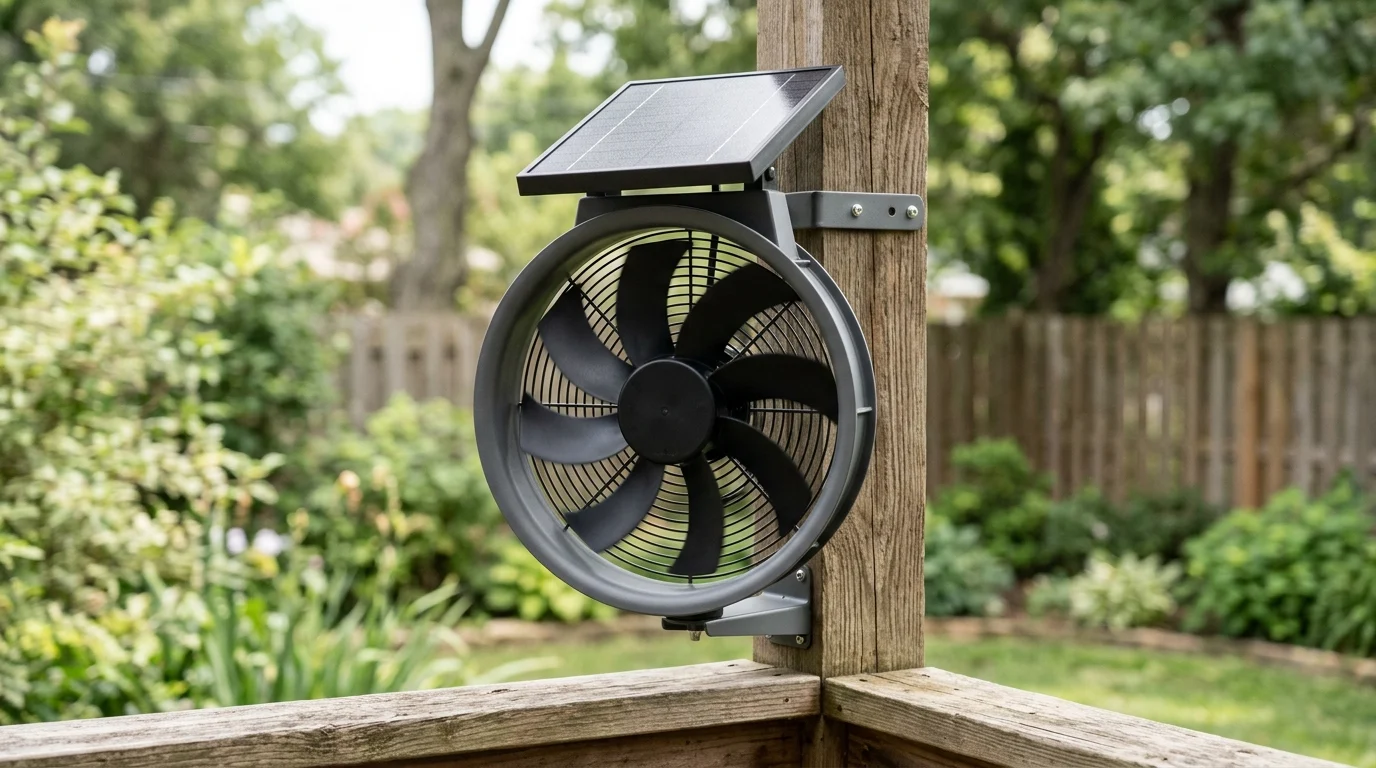
Manufacturing plants often need the most ventilation when heat, sunlight, and electricity demand are all at their peak. A solar direct drive fan addresses that overlap by using photovoltaic power to run a DC motor directly, without relying on grid power, batteries, or inverters. For facility operators, this can mean lower daytime energy costs, reduced exposure to utility price swings, simpler system architecture, and measurable emissions reductions. The discussion ahead explains how these fans work, where they fit best in industrial settings, and why they can be a practical option for factories seeking more resilient and cost-effective ventilation.
Strategic Value of Solar Direct Drive Fans
Industrial facilities are increasingly integrating decentralized renewable energy assets to mitigate operational risks and reduce overhead. Solar direct drive (SDD) fans represent a specialized ventilation solution that connects photovoltaic (PV) panels directly to direct current (DC) motors, completely bypassing the need for grid interconnection, inverters, or battery storage.
Energy cost volatility and decarbonization pressure
With industrial electricity rates experiencing annualized increases of 4% to 7% globally, facility managers face mounting pressure to stabilize utility overhead. SDD fans directly address energy cost volatility by operating entirely off-grid during peak daylight hours—the exact period when building heat loads and utility peak demand charges are highest. Furthermore, implementing SDD ventilation helps achieve Scope 2 emissions reductions, a critical metric for corporate decarbonization mandates, by offsetting up to 100% of daytime ventilation power requirements with zero-emission renewable energy.
Best-fit industrial use cases
The most compelling applications for SDD fans are found in facilities characterized by high daytime thermal loads and expansive roof footprints. Warehousing, logistics centers, and heavy manufacturing plants lacking comprehensive HVAC systems benefit significantly from continuous daytime air exchange. Facilities experiencing internal temperature differentials exceeding 10°C (18°F) between the floor and ceiling are prime candidates. In these environments, SDD fans actively disrupt thermal stratification without incurring the heavy daytime utility penalties associated with conventional grid-tied exhaust systems.
Solar Direct Drive Fan Basics
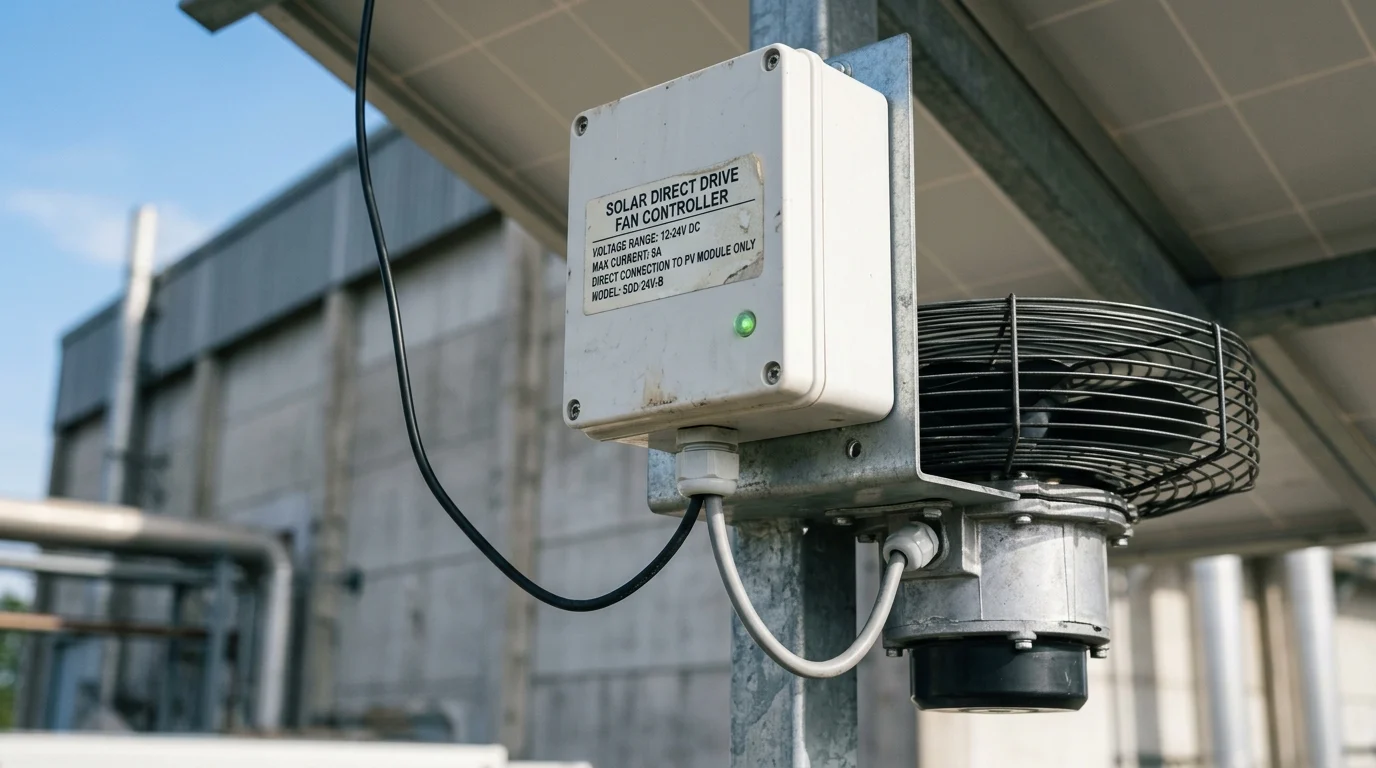
Understanding the technical architecture of solar direct drive fans requires examining their streamlined power delivery model. By eliminating alternating current (AC) conversion steps, these systems achieve exceptional electromechanical efficiency while reducing potential points of failure.
Core components and operating principle
The architecture of an SDD fan relies on three primary components: a monocrystalline or polycrystalline photovoltaic panel, a specialized Maximum Power Point Tracking (MPPT) controller, and a high-efficiency Brushless DC (BLDC) motor. When solar irradiance strikes the PV panel, the generated direct current routes through the MPPT controller, which dynamically optimizes the voltage-current relationship to maximize power transfer. The BLDC motor translates this optimized DC power directly into rotational kinetic energy, driving the impeller assembly without the inherent heat and conversion losses associated with standard AC induction motors.
Key performance specifications
Performance specifications for industrial SDD fans scale according to the facility’s volumetric air exchange requirements. Commercial-grade units typically feature dedicated PV panel capacities ranging from 50W to 400W, driving BLDC motors capable of displacing between 3,000 and 12,000 cubic feet per minute (CFM) of air per unit. Acoustic performance is another critical specification; premium BLDC motors operate at lower friction and noise thresholds, frequently maintaining acoustic signatures below 55 dB(A) at maximum RPM, ensuring strict compliance with occupational noise exposure limits.
Comparison with conventional fan systems
Comparing SDD fans to conventional ventilation systems highlights distinct operational paradigms and efficiency profiles.
| Feature | Solar Direct Drive | AC Grid-Tied Fan | Solar with Battery Storage |
|---|---|---|---|
| Power Source | Direct PV (DC) | Grid Utility (AC) | PV + Battery (DC/AC) |
| System Conversion Losses | < 2% | N/A | 10% – 15% |
| Peak Operating Time | Daylight hours only | 24/7 capability | 24/7 capability |
| Maintenance Overhead | Very Low | Low | Moderate (Battery replacements) |
| Installation Complexity | Low (No grid wiring) | Moderate (Electrical routing) | High (Charge controllers, storage) |
The absence of inverters and battery storage in SDD configurations significantly reduces capital expenditure and lifecycle maintenance, though it inherently ties operational capacity directly to real-time solar irradiance.
Benefits and Limitations
Deploying solar direct drive fans requires a balanced assessment of their economic advantages against their inherent physical and meteorological constraints. Facility operators must weigh immediate utility savings against the limitations of intermittent operation.
Operating cost and energy savings
The primary economic driver for SDD fan adoption is the outright elimination of utility costs associated with daytime ventilation. Facilities operating large-scale exhaust systems can consume tens of thousands of kilowatt-hours annually just moving air. By transitioning to SDD units, operators isolate these heavy loads from peak utility tariffs. Depending on regional electricity rates and solar insolation levels, industrial SDD installations typically demonstrate a return on investment (ROI) within 24 to 48 months. The qualification for renewable energy tax credits or accelerated depreciation schedules in many jurisdictions can compress this payback period even further.
Intermittency, site, and roof constraints
The most significant limitation of the direct drive topology is operational intermittency. Because the fan’s rotational speed is directly proportional to real-time solar irradiance, performance degrades during heavy cloud cover and ceases entirely at night. Optimal operation requires an unshaded roof environment with access to peak solar insolation, often benchmarked at Standard Test Conditions of 1,000 W/m². Additionally, facility managers must evaluate structural constraints; while individual SDD units are relatively lightweight, deploying a fleet of 50 to 100 units introduces localized dead loads. This requires a careful assessment of roof membrane integrity and structural wind uplift ratings prior to installation.
Total cost of ownership and reliability
When evaluating the Total Cost of Ownership (TCO), SDD fans present a highly favorable profile due to their mechanical simplicity. The absence of grid connections eliminates professional electrical contracting and permitting costs during installation. Component longevity further improves the TCO model: industrial-grade PV panels routinely retain 80% of their original output capacity after 20 years, while the sealed BLDC motors carry Mean Time Between Failure (MTBF) ratings exceeding 50,000 operational hours. Consequently, lifecycle maintenance is generally restricted to periodic cleaning of PV panel surfaces to prevent particulate accumulation from degrading irradiance absorption.
Specification and Implementation
Successful integration of solar direct drive fans into an industrial facility demands rigorous preliminary engineering, precise load calculations, and strict adherence to established ventilation and building standards.
Load assessment and system sizing
Accurate system sizing begins with a volumetric load assessment to determine the required Air Changes per Hour (ACH). Standard warehousing operations generally require 4 to 6 ACH to maintain air quality, whereas heat-intensive manufacturing environments may necessitate 10 to 20 ACH to sustain safe ambient temperatures. Engineers must calculate the total facility volume and divide it by the aggregate CFM capacity of the proposed SDD array. Crucially, designers must apply a derating factor of 15% to 20% to account for suboptimal irradiance days. This buffer ensures the deployed fleet provides adequate baseline ventilation even under less-than-ideal solar conditions.
Compliance, safety, and engineering requirements
Implementation must comply with regional building codes and occupational safety standards, such as ASHRAE Standard 62.1 for acceptable indoor air quality. From a structural engineering perspective, the rooftop assemblies must be rated for local meteorological extremes. Industrial SDD fan housings and panel mounts are typically engineered to withstand sustained wind speeds of up to 150 mph (240 km/h) to comply with stringent hurricane-zone building codes. Additionally, fire safety codes dictate specific clearances around rooftop units to ensure unimpeded access for emergency personnel and to prevent interference with automated smoke and heat exhaust systems.
Vendor selection and deployment criteria
Vendor qualification should prioritize component durability and verifiable third-party performance data. Procurement teams must specify units featuring IP68-rated BLDC motors, ensuring complete protection against dust ingress and high-pressure water—vital characteristics for highly exposed rooftop environments. Warranties serve as a reliable proxy for component quality; industry-leading vendors offer minimum 10-year warranties on the PV panels and 5-year warranties on the motor and MPPT controller assemblies. Furthermore, deployment criteria must include an adjustable panel mounting bracket to allow the tilt angle to be matched precisely to the installation site’s latitude, maximizing the annual solar yield.
Decision Framework for Adoption
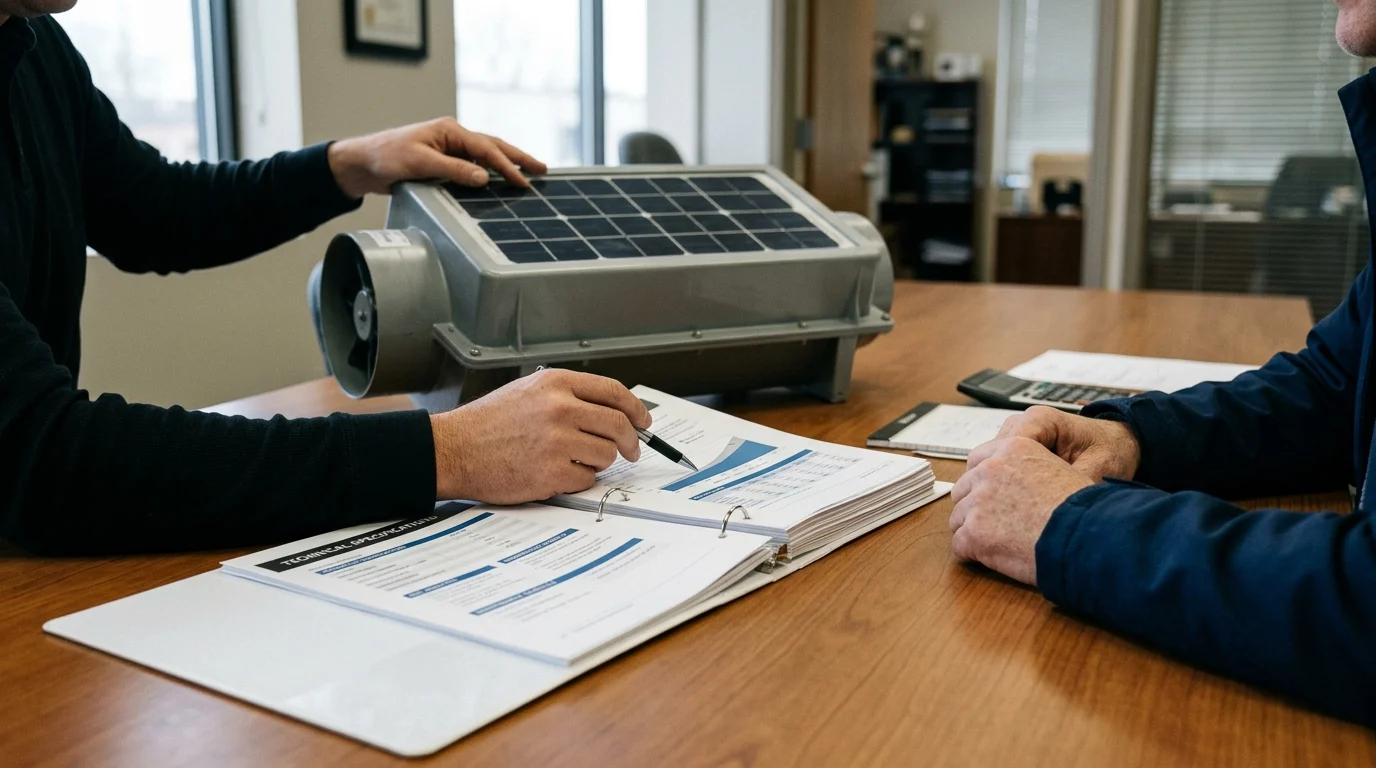
Establishing a standardized decision framework allows facility managers and procurement officers to objectively evaluate the viability of solar direct drive fans for their specific operational footprint and geographical constraints.
Application fit and climate suitability
The primary determinant of application fit is the facility’s geographic location and its corresponding climate profile. SDD systems yield the highest operational dividends in regions receiving average daily solar insolation exceeding 4.0 kWh/m²/day. Facilities operating single daytime shifts extract maximum utility from these systems, as the solar ventilation curve perfectly matches the operational occupancy and ambient heat gain curve. Conversely, facilities running 24/7 continuous operations in high-latitude regions with prolonged winter darkness must relegate SDD fans to a supplementary role, relying on grid-tied or hybrid AC/DC systems for reliable baseline nighttime air exchange.
Procurement and operations checklist
To streamline the evaluation and procurement process, industrial buyers should utilize a structured qualification matrix. The following checklist outlines the critical decision gates for SDD adoption.
| Evaluation Phase | Key Metric / Criteria | Target Threshold for SDD Adoption |
|---|---|---|
| Site Assessment | Average Daily Insolation | > 4.0 kWh/m²/day |
| Operational Need | Peak Heat Load Timing | 10:00 AM to 4:00 PM |
| Financial | Target Payback Period (ROI) | < 48 Months |
| Structural | Roof Reserve Load Capacity | > 5 lbs per square foot (psf) |
| Environmental | Ambient Particulate Level | Low to Moderate (or planned cleaning schedule) |
Proceeding through this checklist ensures capital is deployed effectively. If a facility meets these target thresholds, transitioning to a solar direct drive ventilation architecture represents a highly strategic facility upgrade, offering immediate reductions in operational expenditure and long-term resilience against energy market fluctuations.
Key Takeaways
- The most important conclusions and rationale for Solar Direct Drive Fan
- Specs, compliance, and risk checks worth validating before you commit
- Practical next steps and caveats readers can apply immediately
Frequently Asked Questions
What is a solar direct drive fan?
It is a ventilation fan powered directly by solar panels through an MPPT controller and BLDC motor, without inverter or batteries for daytime operation.
Where do solar direct drive fans work best in manufacturing?
They fit plants, warehouses, and logistics sites with high daytime heat, large roofs, and poor air circulation, especially where ceiling-to-floor temperature differences are high.
How much can a solar direct drive fan reduce operating costs?
It can offset up to 100% of daytime ventilation electricity use, helping cut peak-demand charges and stabilize energy costs during sunny production hours.
Do solar direct drive fans work at night or during cloudy weather?
Standard systems slow down or stop as sunlight drops. For extended runtime, Eternalmaxx offers photoelectric complementarity and microgrid options with day/night energy support.