Introduction
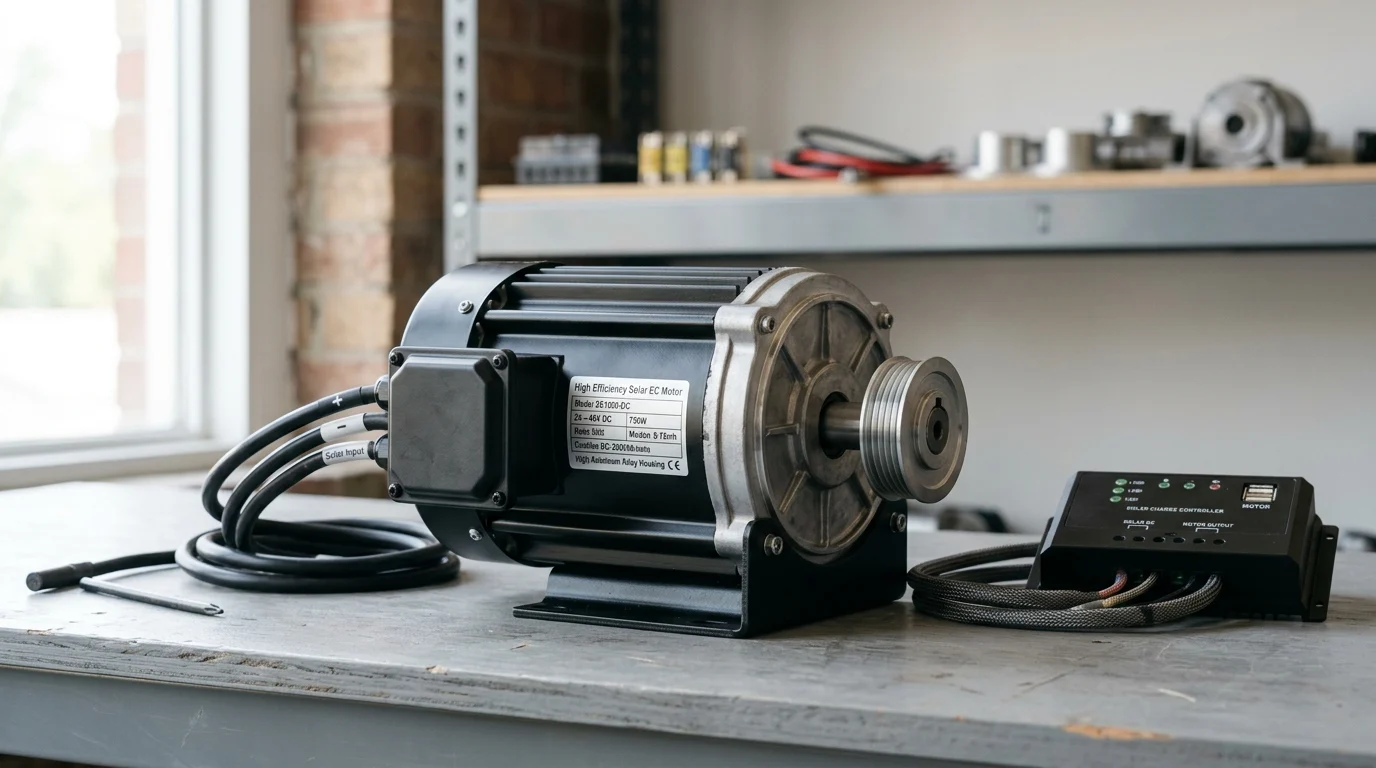
As energy costs rise and off-grid operations expand, airflow systems are under pressure to deliver more performance from limited power. High-efficiency solar EC motors address this challenge by combining brushless DC architecture with integrated controls, converting a larger share of solar-generated electricity into usable airflow than conventional AC motor setups. This article explains why that efficiency gain matters, where it has the biggest operational impact, and how solar EC motors simplify system design by reducing conversion losses and improving control under variable solar input. The sections that follow connect these technical advantages to practical outcomes in ventilation, cooling, and other airflow-driven applications.
Why High-Efficiency Solar EC Motors Matter
The transition toward sustainable and decentralized power has elevated the importance of advanced electromechanical components, particularly the high-efficiency solar EC (electronically commutated) motor. Traditional ventilation and fluid movement systems have historically relied on AC induction motors, which typically operate at 45% to 60% efficiency and require external inverters for solar integration. In contrast, solar EC motors integrate brushless DC technology with onboard electronics, achieving system efficiencies of 80% to 90%. This leap in performance is critical for optimizing airflow in energy-constrained environments, ensuring that every watt generated by a photovoltaic array translates directly into maximum volumetric flow.
Energy costs, decarbonization, and off-grid demand
Rising global energy costs and aggressive decarbonization mandates are forcing industrial and agricultural sectors to rethink airflow generation. Off-grid demand, in particular, presents unique power constraints where grid electricity is either unavailable or prohibitively expensive—often exceeding $0.50 per kWh when generated by remote diesel engines. By integrating high-efficiency solar EC motors, facilities can eliminate grid dependency for critical cooling and ventilation loads.
These motors are uniquely designed to handle the variable output of solar panels without requiring intermediate battery storage or complex power conversion stages. The reduction in energy consumption—often up to 60% compared to legacy systems—accelerates the return on investment (ROI). For large-scale agricultural ventilation or telecom cooling, the payback period for upgrading to solar EC technology frequently falls between 18 and 24 months, making it a financially sound strategy alongside its environmental benefits.
Where they deliver the most value
The value proposition of solar EC motors is most pronounced in applications characterized by high duty cycles and isolated locations. Telecommunications shelters, which require uninterrupted cooling to protect sensitive electronics, benefit immensely from direct-solar EC fans that reduce the load on backup battery banks. Similarly, agricultural facilities such as poultry and swine houses—where ventilation systems must move upwards of 20,000 cubic feet per minute (CFM) continuously—rely on these motors to maintain air quality without crippling operational costs.
Furthermore, remote water pumping and greenhouse aeration systems utilize direct-drive solar EC motors to operate autonomously. The integrated nature of the motor and controller eliminates points of failure common in multi-component systems, driving up reliability in environments where maintenance access is difficult.
| Motor Technology | Typical Efficiency | Lifespan (Operating Hours) | Solar Integration |
|---|---|---|---|
| High-Efficiency Solar EC | 80% – 90% | 50,000+ | Direct via built-in MPPT |
| Standard AC Induction | 45% – 60% | 30,000 | Requires external inverter |
| DC Brushed | 50% – 65% | 5,000 – 10,000 | Requires external controller |
Key Performance Factors
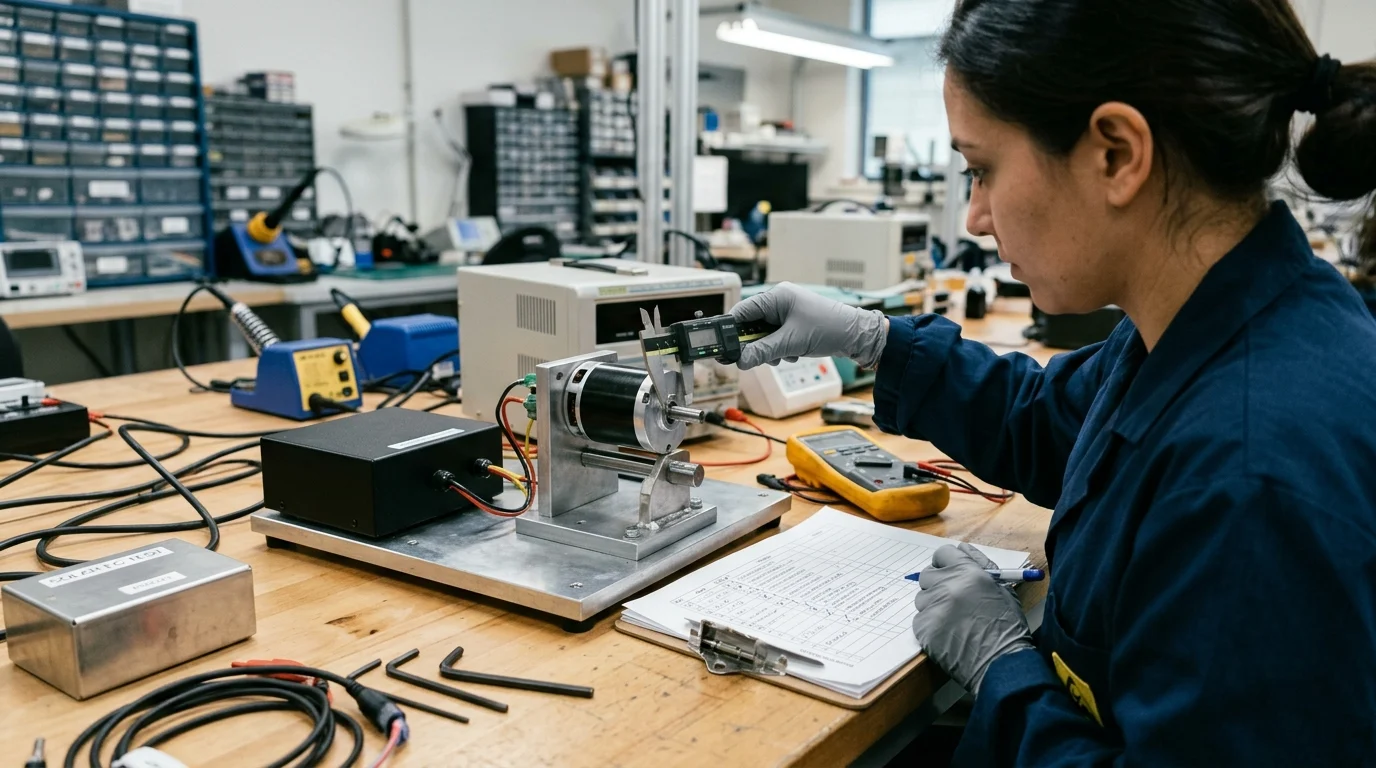
Evaluating a high-efficiency solar EC motor requires a deep dive into its electromechanical specifications and control architecture. Airflow optimization is not merely about raw power; it involves matching the motor’s torque and speed capabilities to the aerodynamic profile of the fan blade or impeller under variable power conditions.
Specifications that affect airflow and efficiency
The primary specifications that dictate airflow and efficiency include the operating voltage range, rated RPM (revolutions per minute), and torque output. Solar EC motors are typically designed for wide input voltage bands, such as 12V to 48V DC for small to medium applications, or up to 310V DC for large-scale industrial arrays. This wide voltage tolerance ensures the motor can continue to spin the fan even during low irradiance conditions, such as early morning or heavy cloud cover.
Additionally, the motor’s torque constant must be carefully matched to the load. A mismatch can result in aerodynamic stalling or excessive current draw. High-efficiency EC motors often feature RPM ranges from 300 to over 3,000 RPM, allowing for precise speed modulation. By maintaining optimal torque across this broad RPM band, the motor ensures consistent CFM output proportional to the available solar energy.
Controller design, MPPT, and EC commutation
The defining feature of a solar EC motor is its onboard controller, which manages the electronic commutation of the brushless stator. In solar applications, the integration of Maximum Power Point Tracking (MPPT) algorithms within this controller is a massive operational advantage. MPPT continuously analyzes the voltage and current from the photovoltaic array, adjusting the motor’s electrical load to extract the maximum possible power.
A highly optimized MPPT controller can increase total daily energy harvest by 15% to 30% compared to standard PWM (Pulse Width Modulation) controllers. Furthermore, the EC commutation process eliminates physical brushes, reducing friction and electrical noise. The controller also provides built-in protections against overvoltage, undervoltage, locked-rotor conditions, and thermal overload, ensuring the motor operates safely regardless of fluctuating solar inputs.
How to compare motor performance
Comparing motor performance requires moving beyond basic horsepower ratings and focusing on system-level efficiency metrics. The most critical metric for airflow optimization is Watts per CFM (W/CFM), which measures the electrical power required to move a specific volume of air. A top-tier high-efficiency solar EC motor paired with an optimized impeller can achieve ratios as low as 0.03 to 0.05 W/CFM at its optimal operating point.
Engineers should also evaluate the motor’s efficiency map across different speeds and loads, rather than relying solely on peak efficiency numbers. A motor that maintains 85% efficiency at both 50% and 100% load is far more valuable in a variable solar application than a motor that hits 90% at full load but drops to 60% during partial shading events.
System Design, Reliability, and Compliance
Designing a robust airflow system powered directly by solar energy introduces unique engineering challenges. High-efficiency solar EC motors must be integrated into systems that account for extreme environmental variables, fluctuating power supply, and rigorous international safety standards.
Design trade-offs for direct solar systems
The most fundamental design trade-off involves choosing between a direct-drive (battery-less) system and a battery-backed system. Direct-drive solar EC systems save approximately 30% to 40% on initial capital expenditures (Capex) by eliminating batteries and charge controllers. However, they require motors with exceptional low-voltage start capabilities. For instance, a nominal 24V system might require the motor to initiate rotation at just 12V to capitalize on early morning sunlight.
Conversely, battery-backed systems provide continuous airflow regardless of solar irradiance but introduce conversion losses and maintenance overhead. Engineers must balance the required duty cycle of the ventilation system against the cost and complexity of energy storage. In many agricultural applications, direct-drive is preferred, utilizing the thermal mass of the building or greenhouse to ride through temporary dips in airflow.
Durability and environmental protection
Because solar EC motors are frequently deployed in harsh outdoor, agricultural, or industrial environments, durability is paramount. Ingress Protection (IP) ratings are a critical specification. A standard outdoor application typically requires an IP55 rating, protecting against dust and low-pressure water jets. However, in environments with high humidity, corrosive gases like ammonia in poultry farms, or marine salt spray, an IP68 rating or specialized conformal coating on the internal electronics is mandatory.
Bearing life is another crucial factor, as it dictates the mechanical longevity of the motor. Premium high-efficiency solar EC motors utilize double-sealed ball bearings with an L10 life expectancy exceeding 50,000 to 60,000 hours at 40°C. Furthermore, the motor housing should feature advanced thermal management, such as extruded aluminum heat sinks, to dissipate heat effectively when operating in ambient temperatures up to 60°C.
Standards, testing, and documentation
Compliance with international standards ensures safety, reliability, and market access. High-efficiency solar EC motors must adhere to electrical safety standards such as UL 1004-7 for electronically commutated motors and CE directives for the European market. Electromagnetic compatibility (EMC) testing is also essential, as the high-frequency switching of the EC controller can generate interference; motors must pass stringent radiated and conducted emissions tests.
Purchasers should demand comprehensive documentation, including ISO 9001 certification from the manufacturing facility. Quality control metrics should be scrutinized, with a target defect rate below 0.1% (1000 Parts Per Million). Rigorous End-of-Line (EOL) testing documentation, including hipot (high potential) testing and dynamic balancing reports, provides assurance that the motor will perform reliably in the field.
Cost, Supply Risk, and Supplier Evaluation
While the technical advantages of high-efficiency solar EC motors are clear, successful procurement requires a rigorous analysis of costs, supply chain vulnerabilities, and vendor capabilities. Sourcing industrial components demands a strategic approach to balance upfront pricing with long-term operational stability.
Total cost of ownership inputs
Calculating the Total Cost of Ownership (TCO) is essential to justify the higher initial unit cost of a solar EC motor. While a standard AC induction motor might cost $50 to $100, a comparable mid-range EC motor often ranges from $150 to $400. However, this upfront premium is rapidly offset by the elimination of external inverters and the drastic reduction in operational energy costs.
TCO models must factor in a 5-to-10-year horizon, accounting for zero grid electricity consumption and significantly lower maintenance requirements due to the brushless design. When deploying hundreds of fans in an off-grid commercial facility, the cumulative savings from avoided infrastructure—wiring, heavy-duty inverters, and utility grid extensions—make the solar EC architecture highly economical.
| Cost Component | Solar EC Motor System | AC Motor + Inverter System |
|---|---|---|
| Initial Motor Cost | $150 – $350 | $60 – $120 |
| Inverter/Controller Cost | $0 (Integrated) | $150 – $300 |
| 5-Year Energy Cost (Grid) | $0 (Off-grid) | $800 – $1,200 |
| Maintenance Cost (5 Yrs) | Minimal | Moderate |
| Estimated 5-Year TCO | $150 – $350 | $1,010 – $1,620 |
How to compare suppliers
Evaluating suppliers goes beyond comparing unit prices. Manufacturing capacity, supply chain transparency, and engineering support are critical differentiators. Buyers should assess the supplier’s Minimum Order Quantity (MOQ). Standard off-the-shelf EC motors might have MOQs as low as 10 to 50 units, but custom MPPT programming or specific IP-rated housings often push MOQs to 500 units or more.
Lead times also present a significant supply risk. Oceanic freight and raw material sourcing, particularly for the rare-earth magnets used in high-efficiency rotors, typically result in lead times of 8 to 14 weeks. Suppliers who maintain regional warehousing or buffer stock programs can mitigate these delays, ensuring continuous production for OEM integrators.
A practical shortlist and testing process
Developing a practical shortlist of suppliers requires a structured testing and validation process. Procurement teams should begin by requesting 5 to 10 sample units from the top three prospective vendors. These samples must undergo rigorous in-house evaluation, including aerodynamic performance mapping and Accelerated Life Testing (ALT).
A standard ALT protocol might involve running the motors at 85°C and 85% relative humidity for 1,000 continuous hours while subjecting them to rapid voltage cycling to simulate passing clouds. Suppliers whose motors survive this testing without degradation in MPPT efficiency or bearing noise are moved to the final commercial negotiation phase.
Selection Framework
Finalizing the selection of a high-efficiency solar EC motor demands a structured framework that reconciles the technical needs of the engineering team with the financial realities of the purchasing department. A well-defined selection matrix ensures a balanced and objective decision.
Aligning engineering and purchasing requirements
Alignment between engineering and purchasing is often the most challenging phase of component selection. Engineering typically prioritizes maximum efficiency (e.g., targeting 0.03 W/CFM), advanced MPPT algorithms, and robust IP68 protection. Purchasing, on the other hand, is driven by unit cost ceilings, favorable payment terms, and low MOQs to minimize inventory carrying costs.
To bridge this gap, cross-functional teams should utilize a value-engineering approach. For example, if engineering specifies an IP68 rating for a mildly humid environment, purchasing might present an IP55 alternative that reduces unit cost by 15% without significantly compromising field reliability. Establishing clear minimum viable specifications ensures that both departments are optimizing for overall project success rather than isolated metrics.
Final decision criteria
The final decision should be driven by a weighted evaluation matrix.
Key Takeaways
- The most important conclusions and rationale for High-Efficiency Solar EC Motor
- Specs, compliance, and risk checks worth validating before you commit
- Practical next steps and caveats readers can apply immediately
Frequently Asked Questions
Why choose a high-efficiency solar EC motor over a standard AC motor?
Solar EC motors typically reach 80%–90% efficiency, versus 45%–60% for AC induction motors. They also integrate electronics for direct solar use, reducing conversion losses and boosting airflow per watt.
Can a solar EC motor run without batteries?
Yes. Many high-efficiency solar EC motors can run directly from PV input, adjusting speed to available sunlight. Eternalmaxx systems can also add day/night support when continuous airflow is required.
Where do solar EC motors deliver the best ROI?
They perform best in high-duty, energy-sensitive sites like poultry houses, greenhouses, telecom shelters, and industrial ventilation. In many cases, payback can fall around 18–24 months.
What specifications matter most for airflow optimization?
Focus on voltage range, RPM range, torque matching, and controller quality. A properly matched EC motor keeps fan speed stable, avoids stall, and maintains better CFM under changing solar conditions.