Introduction
Choosing between a solar-powered cooling system and a traditional AC setup in an office building affects far more than equipment cost. It influences electricity bills, peak demand charges, maintenance planning, grid dependence, and progress toward emissions targets. This article explains how solar air conditioners differ from conventional AC systems in the way they use power, perform during daytime office loads, and fit into commercial building operations. You will get a clear view of the main technical trade-offs, cost considerations, and building conditions that matter most, making it easier to judge which approach aligns with your office’s energy and sustainability goals.
Why Compare Solar Air Conditioners and Traditional AC
Heating, ventilation, and air conditioning (HVAC) systems account for approximately 40% of total energy consumption in standard commercial office buildings. As facility managers and property developers navigate increasingly stringent energy codes, the evaluation of advanced cooling technologies has become a primary focus.
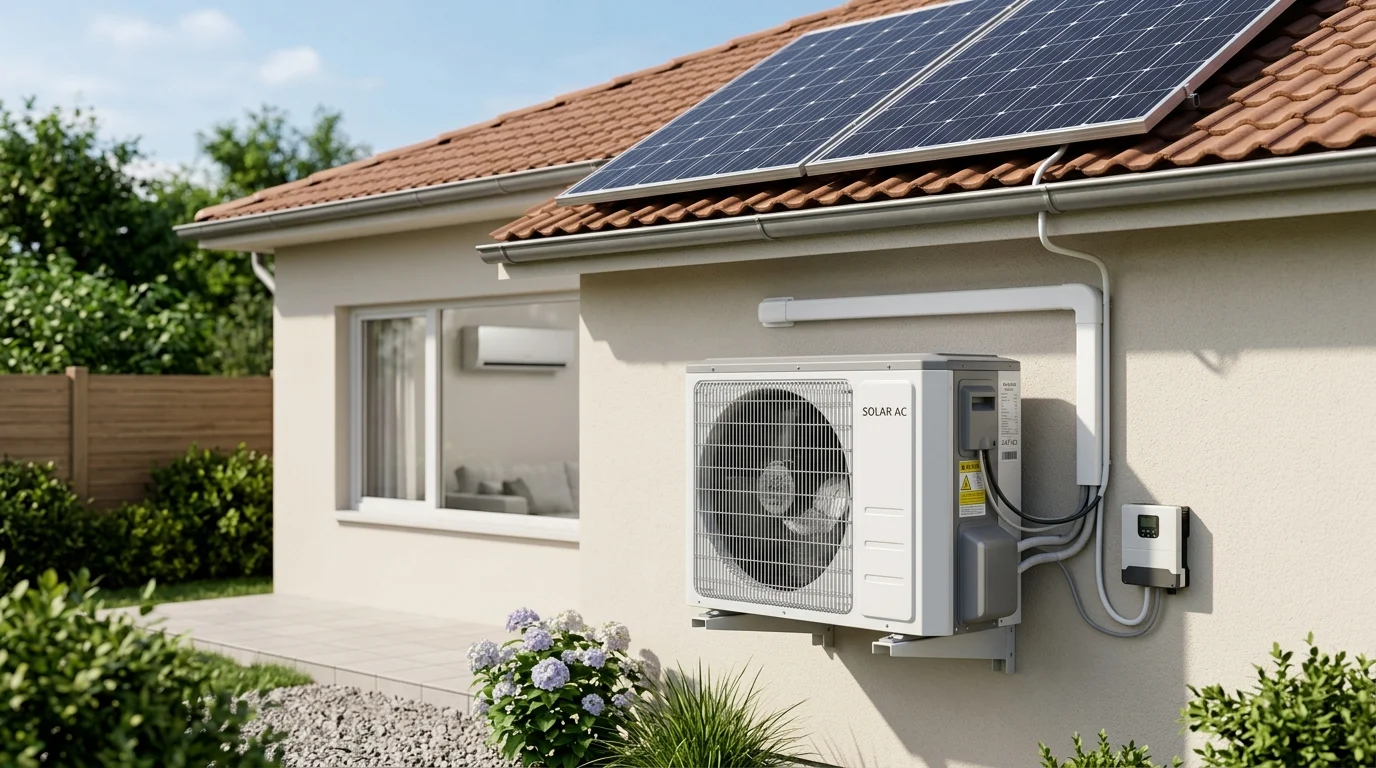
The emergence of the direct-current (DC) solar air conditioner presents a compelling alternative to traditional alternating-current (AC) systems. By directly coupling photovoltaic (PV) generation with variable-refrigerant flow (VRF) or unitary cooling equipment, engineers can bypass traditional grid dependencies. Understanding the technical and financial disparities between these architectures is critical for optimizing commercial real estate portfolios.
Rising electricity costs and decarbonization goals
Commercial electricity rates have escalated by 15% to 20% across major metropolitan markets over the last five years, severely impacting operational expenditures. Beyond volumetric energy charges (kWh), commercial facilities face punitive peak demand charges (kW), which frequently exceed $15 to $20 per kW in deregulated markets.
Simultaneously, corporate decarbonization goals demand aggressive reductions in Scope 2 emissions. Traditional AC systems draw heavily from the grid during peak afternoon hours, coinciding with the highest carbon intensity of local utility generation. A solar air conditioner mitigates both financial and environmental liabilities by generating localized, zero-carbon cooling exactly when ambient temperatures and solar irradiance peak.
Building types best suited for solar cooling
Not all commercial architectures are viable candidates for direct solar cooling. Low-to-mid-rise office buildings, typically ranging from one to five stories, represent the optimal deployment environment. These structures possess a high roof-to-floor-area ratio, providing the necessary footprint for dedicated photovoltaic arrays.
A standard rule of thumb dictates that a commercial solar air conditioner requires a minimum of 120 to 150 square feet of unshaded roof space per ton of cooling capacity (12,000 BTU/h). Furthermore, buildings operating on a standard 8:00 AM to 6:00 PM schedule align perfectly with the solar generation curve, ensuring that maximum cooling production coincides with peak occupancy and thermal loads, thereby minimizing the need for expensive battery storage systems.
Key Technical Differences
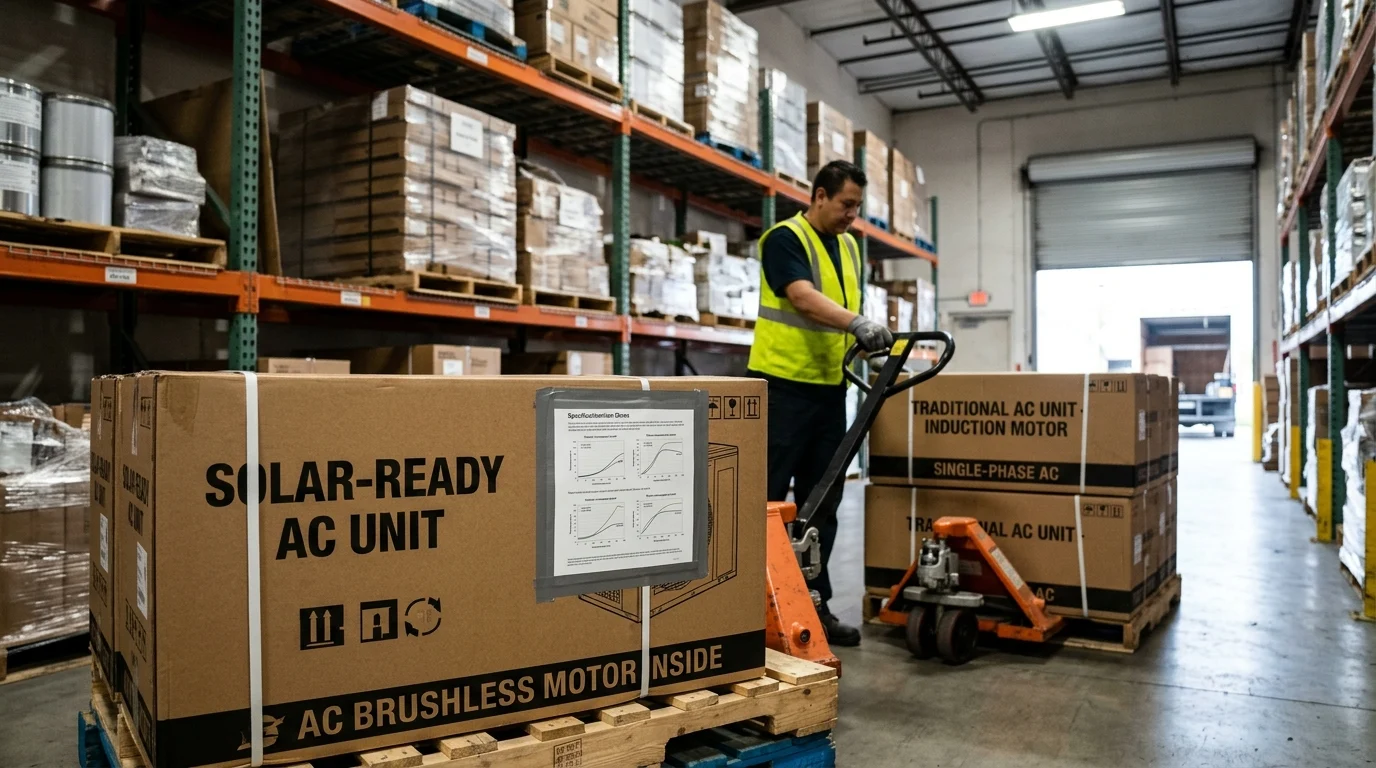
The fundamental distinction between a solar air conditioner and a traditional AC unit lies in power electronics and compressor topology. While standard systems rely on centralized grid distribution, solar-integrated units utilize localized micro-generation, requiring specialized internal components to manage variable power inputs seamlessly.
System architecture, load profile, and controls
Traditional commercial AC systems utilize grid-supplied AC power, which must be rectified into DC to operate modern variable-frequency drives (VFDs) and inverter compressors. This AC-to-DC conversion process inherently incurs a 5% to 8% energy loss through heat dissipation and harmonic distortion.
Conversely, a purpose-built solar air conditioner employs a direct-DC system architecture. The compressor features a permanent magnet DC motor designed to accept native DC voltage (typically 48V for smaller units or 300V to 380V for commercial VRF chassis) directly from the solar panels. Advanced hybrid models incorporate an intelligent dual-power controller that seamlessly blends direct PV DC power with grid AC power, utilizing the grid only when cloud cover or twilight reduces solar yield.
Performance metrics to compare
Evaluating these systems requires looking beyond standard regulatory metrics. Traditional commercial VRF systems are measured by the Energy Efficiency Ratio (EER) and the Seasonal Energy Efficiency Ratio (SEER2), with high-end models achieving SEER2 ratings between 18 and 22.
When assessing a solar air conditioner, traditional SEER metrics fall short because they do not account for grid-offset power. Instead, the industry utilizes an effective SEER, which can mathematically exceed 35 or even 50 when factoring in the direct solar contribution. Engineers also evaluate the Solar Energy Utilization Ratio (SEUR), which measures the percentage of consumed energy derived directly from the PV array versus the utility grid over an annualized cooling season.
Side by side system comparison
To clearly delineate the operational and structural differences, the following matrix compares a standard commercial inverter system against a direct-DC hybrid solar cooling system.
| Specification Metric | Traditional AC (Commercial VRF) | Direct-DC Solar Air Conditioner |
|---|---|---|
| Primary Power Input | 208/230V or 460V 3-Phase AC | 300-380V DC (PV) + 230V Grid Backup |
| Compressor Technology | AC Inverter Driven | Permanent Magnet Direct DC |
| Inverter Conversion Loss | 5% – 10% (AC to DC rectification) | < 2% (Native DC input) |
| Peak Demand Draw | High (Approx. 1.2 kW/ton) | Negligible (< 0.2 kW/ton during peak sun) |
| Grid Interconnection | Standard Breaker Panel | Dual-input (PV Array + Breaker) |
Economics, Lifecycle Cost, and Compliance
Transitioning from standard HVAC to solar-integrated cooling shifts the financial model from high operational expenditure (OpEx) to higher initial capital expenditure (CapEx). Facility operators must conduct comprehensive lifecycle cost analyses to justify the investment over a standard 15-year equipment lifespan.
Capex, savings, and payback
The procurement and installation of a solar air conditioner carry a 30% to 45% premium over traditional AC systems. While a standard commercial VRF may cost $1,500 to $2,200 per installed ton, a solar-integrated system ranges from $2,500 to $3,500 per ton, factoring in the dedicated PV modules, racking, and specialized DC wiring.
Despite the higher CapEx, the localized energy generation yields cooling cost reductions of 40% to 70%. For commercial buildings facing blended utility rates above $0.15/kWh, the simple payback period typically falls between 3.5 and 6 years. Over the equipment lifecycle, the net present value (NPV) of the solar AC investment significantly outpaces traditional systems, particularly when leveraging federal tax credits or Modified Accelerated Cost Recovery System (MACRS) depreciation.
Codes, refrigerants, and interconnection rules
Regulatory compliance introduces distinct pathways for both technologies. Traditional solar arrays tied to standard AC units require formal grid interconnection agreements under IEEE 1547 standards, often triggering lengthy utility approval processes and net-metering caps.
Because a direct-DC solar air conditioner consumes its PV power strictly on the load side—behind the meter and without back-feeding the grid—it frequently bypasses complex utility interconnection regulations. Furthermore, both system types must comply with the AIM Act phase-down of hydrofluorocarbons (HFCs). Modern systems are transitioning to low-GWP (Global Warming Potential) refrigerants such as R-32 or R-454B, ensuring a GWP threshold strictly below 750.
Climate, tariffs, and regional factors
The geographic location of the commercial facility dictates the ultimate efficacy of solar cooling. Regions demonstrating high Direct Normal Irradiance (DNI)—specifically those exceeding 5.5 kWh/m²/day—maximize the capacity factor of the integrated PV array.
Local utility tariff structures also play a pivotal role. In territories enforcing rigid Time-of-Use (TOU) pricing, peak rates often occur between 2:00 PM and 6:00 PM. A solar air conditioner provides maximum financial leverage during this exact window, functioning as a peak-shaving asset. In contrast, traditional AC systems incur their highest operational costs during these TOU penalty periods.
How to Evaluate and Select a System
Selecting the appropriate cooling architecture requires rigorous engineering due diligence. Facility managers must bridge the gap between thermodynamic requirements, electrical infrastructure capacities, and structural realities.
Assess loads, occupancy, and roof conditions
The evaluation begins with an accurate ACCA Manual N load calculation to determine the precise sensible and latent cooling demands of the office space. Oversizing a solar air conditioner diminishes its financial return, as excess PV generation cannot typically be exported to the grid in direct-DC configurations.
Structural engineers must also verify roof load capacities. While traditional packaged AC units concentrate weight on specific structural curbs, a dedicated solar array distributes an additional dead load of 4 to 6 pounds per square foot across the roof deck. Finally, occupancy profiling is essential; offices requiring continuous 24/7 cooling, such as those housing critical IT infrastructure or server rooms, may find traditional AC or grid-heavy VRF more reliable than solar-dependent models lacking massive battery reserves.
Procurement, commissioning, and monitoring
Procurement specifications for solar HVAC systems must mandate advanced building management system (BMS) interoperability, natively supporting BACnet or Modbus protocols. This integration allows facility managers to track real-time solar utilization versus grid consumption accurately.
During the commissioning phase, technicians must validate both standard HVAC metrics—such as superheat, subcooling, and airflow—and specialized electrical parameters. The Maximum Power Point Tracking (MPPT) controller integrated into the solar air conditioner must be tested to ensure a minimum conversion efficiency of 98% under variable shading conditions. Continuous monitoring platforms are essential to detect PV string degradation or compressor anomalies before they impact occupant comfort.
Decision Framework for Choosing the Right Option
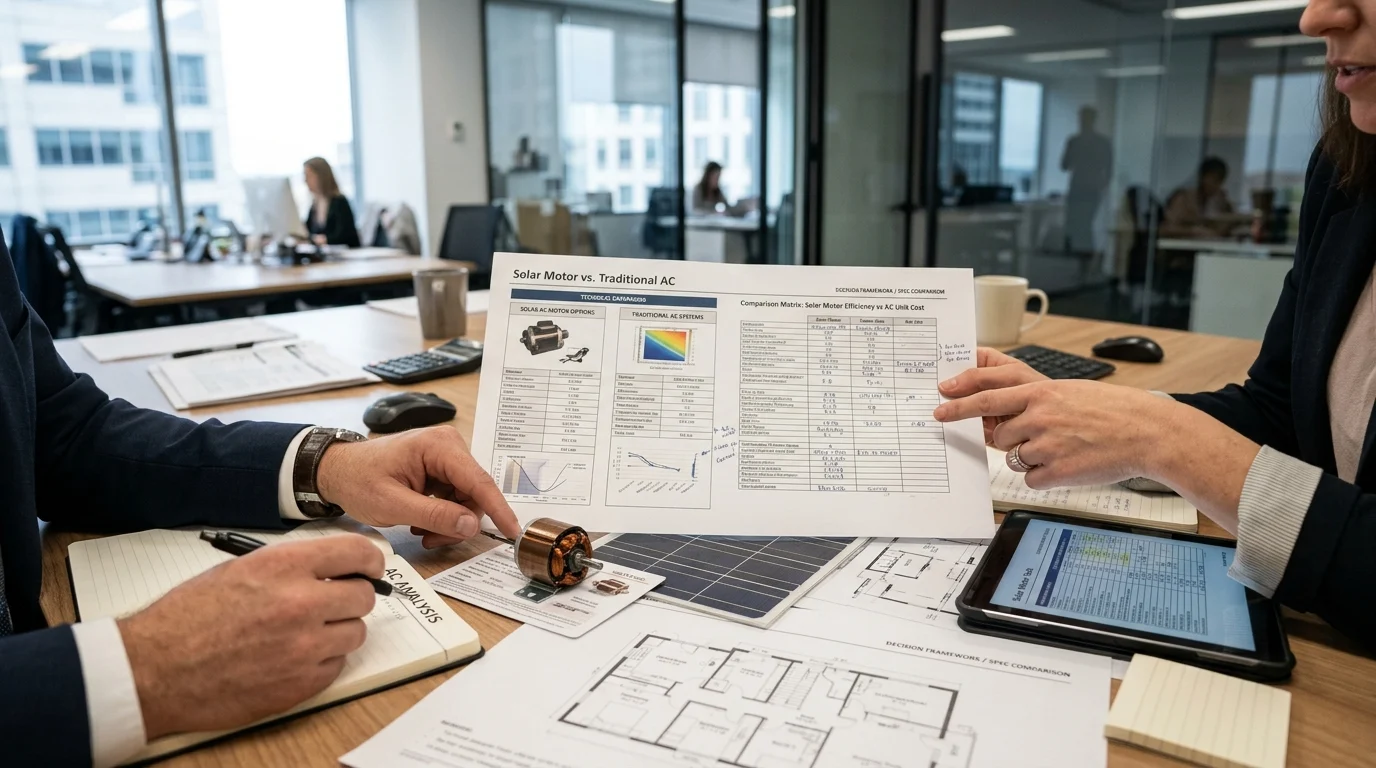
Determining the optimal cooling strategy is rarely a binary choice; it requires evaluating overlapping facility parameters. The following framework assists commercial real estate stakeholders in identifying the technology that best aligns with their operational and financial mandates.
| Decision Driver | Favor Solar Air Conditioner | Favor Traditional AC |
|---|---|---|
| Demand Charges | High (> $15/kW) | Low (< $5/kW) |
| Available Roof Space | Ample (> 150 sq ft/ton) | Constrained (< 50 sq ft/ton) |
| Operating Schedule | Daytime (8 AM – 6 PM) | Continuous (24/7 Operations) |
| Corporate Goals | Aggressive Scope 2 reductions | Standard compliance |
| Capital Strategy | Lifecycle ROI focused | Strict CapEx limits |
When solar air conditioning is the better choice
A solar air conditioner is the superior choice for low-rise commercial offices located in high-insolation regions with expensive, demand-heavy utility tariffs. Facilities that operate primarily during daylight hours will extract the maximum financial benefit by aligning their heaviest cooling loads directly with peak solar generation.
Furthermore, organizations bound by strict Environmental, Social, and Governance (ESG) criteria will find solar cooling invaluable. By physically decoupling the facility’s largest energy draw from fossil-fuel-heavy grid generation, building owners can secure higher LEED certification tiers and drastically reduce their carbon footprint without investing in massive, facility-wide solar microgrids.
When traditional AC is the better choice
Traditional commercial AC remains the practical choice for dense, high-rise urban environments where roof space is highly restricted. If a building’s geometry provides less than 50 square feet of roof area per required cooling ton, the dedicated PV array required for a solar air conditioner is structurally unfeasible.
Additionally, traditional systems are preferred in regions with exceptionally low electricity rates (e.g., < $0.08/kWh) where the financial payback period for solar hardware extends beyond 10 years. Facilities with rigid capital expenditure limits, or those prioritizing immediate, low-cost equipment replacements over long-term operational savings, will find standard high-efficiency VRF or rooftop units to be the most viable path forward.
Key Takeaways
- The most important conclusions and rationale for Solar Air Conditioner
- Specs, compliance, and risk checks worth validating before you commit
- Practical next steps and caveats readers can apply immediately
Frequently Asked Questions
How does a solar air conditioner differ from a traditional office AC system?
A solar air conditioner uses direct PV power with hybrid controls, while traditional AC relies mainly on grid electricity. This cuts conversion losses and lowers daytime cooling costs.
Which office buildings are best suited for solar air conditioning?
Low-to-mid-rise offices with unshaded roofs and daytime occupancy are the best fit. Plan about 120–150 square feet of roof area per ton of cooling.
Can a solar air conditioner keep running when solar output drops?
Yes. Hybrid systems can automatically blend solar with grid power, so cooling continues during cloud cover, late afternoon, or weak solar conditions.
What metrics should facility managers compare besides SEER?
Check effective SEER, peak demand reduction, and Solar Energy Utilization Ratio. These show how much cooling comes from PV and how much grid cost is avoided.