Introduction
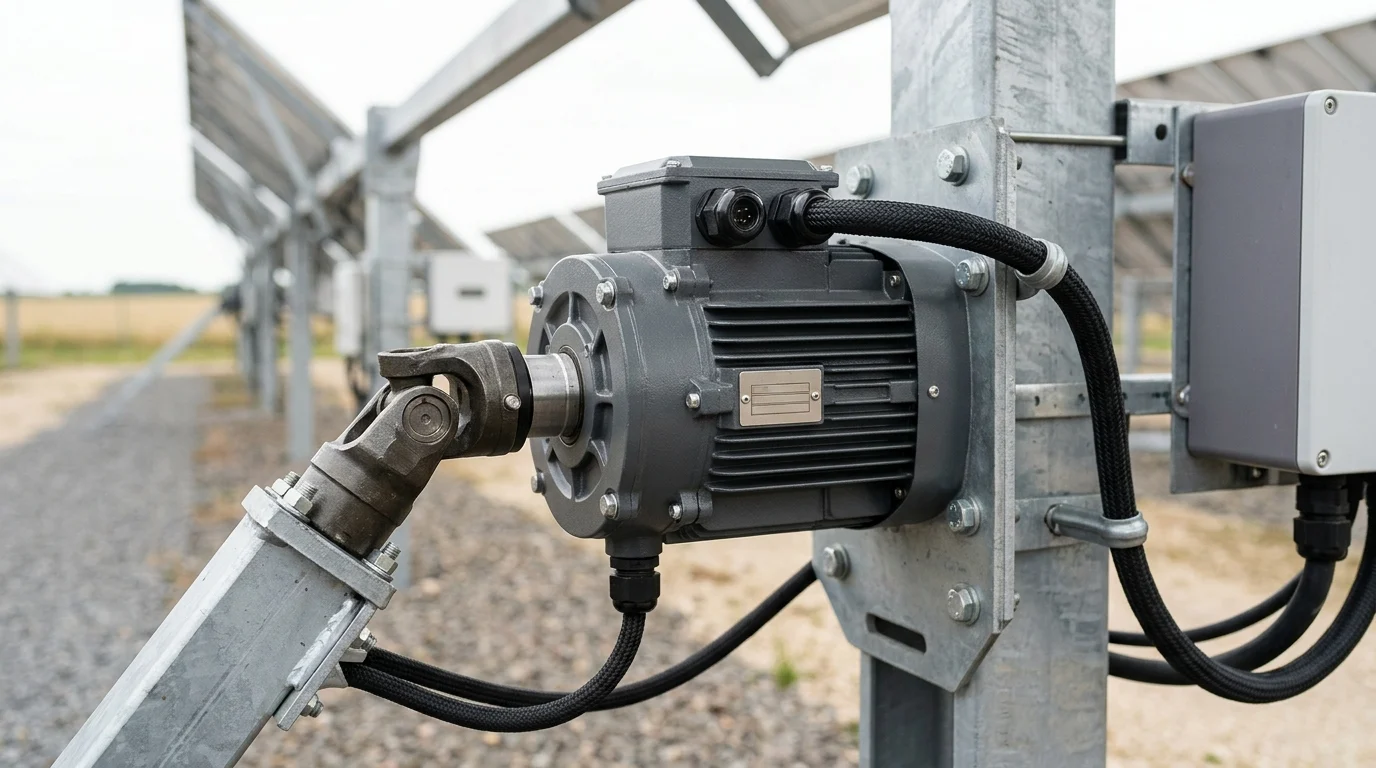
As building owners look beyond whole-site solar offset, direct solar-powered motor loads are emerging as a practical way to cut energy costs where consumption is highest. A grid-tie solar motor uses photovoltaic power and the utility grid together through a dual-input drive, allowing major equipment such as HVAC fans, pumps, and compressors to run more efficiently during daylight hours. This approach can reduce conversion losses, lower peak demand, and improve the value of on-site solar generation without relying solely on central inverter architecture. The discussion that follows explains how the system works, where it fits in building operations, and why it is gaining attention in commercial energy strategy.
Why Grid-Tie Solar Motors Matter in Building Energy Strategy
The integration of renewable energy into commercial and industrial facilities has evolved from decentralized grid offset to targeted, load-specific applications. A grid-tie solar motor represents a paradigm shift in this domain, connecting photovoltaic (PV) arrays directly to high-capacity rotating equipment via specialized dual-input variable frequency drives (VFDs). By bypassing the traditional central inverter architecture, facilities can route DC power straight to primary energy consumers, drawing from the AC grid only to bridge generation shortfalls.
This localized approach to power distribution is fundamentally altering building energy strategies. Heating, ventilation, and air conditioning (HVAC) systems, alongside large fluid pumps, frequently account for 40% to 60% of a commercial building’s total electrical consumption. Directly coupling a grid-tie solar motor to these heavy loads minimizes conversion losses, optimizes daytime energy utilization, and structurally reduces peak demand profiles.
Drivers for adoption in commercial buildings
Commercial adoption of direct solar motor drives is accelerating due to the escalating costs of grid-supplied electricity and the implementation of punitive demand charges. Facility managers are increasingly leveraging these systems to mitigate peak load spikes, which can constitute up to 30% of a commercial electricity bill. By prioritizing solar DC input, a 100-horsepower (HP) chiller motor can seamlessly ramp down its AC grid draw during peak daylight hours, effectively flattening the facility’s load profile.
Furthermore, the elimination of centralized inverters for these specific loads reduces the overall balance-of-system footprint. Facilities with limited electrical room space or constrained main switchgear capacity can deploy a grid-tie solar motor to add renewable capacity without triggering expensive utility service upgrades or surpassing the 120% rule limits defined by the National Electrical Code (NEC).
Impact of tariffs and decarbonization goals
The transition away from highly favorable net energy metering (NEM) policies, such as the shift to NEM 3.0 in certain jurisdictions, has eroded the financial return of exporting excess solar power to the grid. Consequently, self-consumption is the primary driver of modern solar ROI. Grid-tie solar motors ensure that generated power is immediately consumed by base loads, maximizing the value of every kilowatt-hour produced.
Decarbonization mandates further amplify this value proposition. Regulations like New York City’s Local Law 97 impose strict emissions caps, with penalties reaching $268 per metric ton of CO2 equivalent over the limit. Directly powering high-duty-cycle motors with zero-emission solar energy provides a verifiable, highly efficient pathway to compliance, reducing Scope 2 emissions without the conversion inefficiencies inherent in standard grid-tied PV systems.
What Defines a Grid-Tie Solar Motor
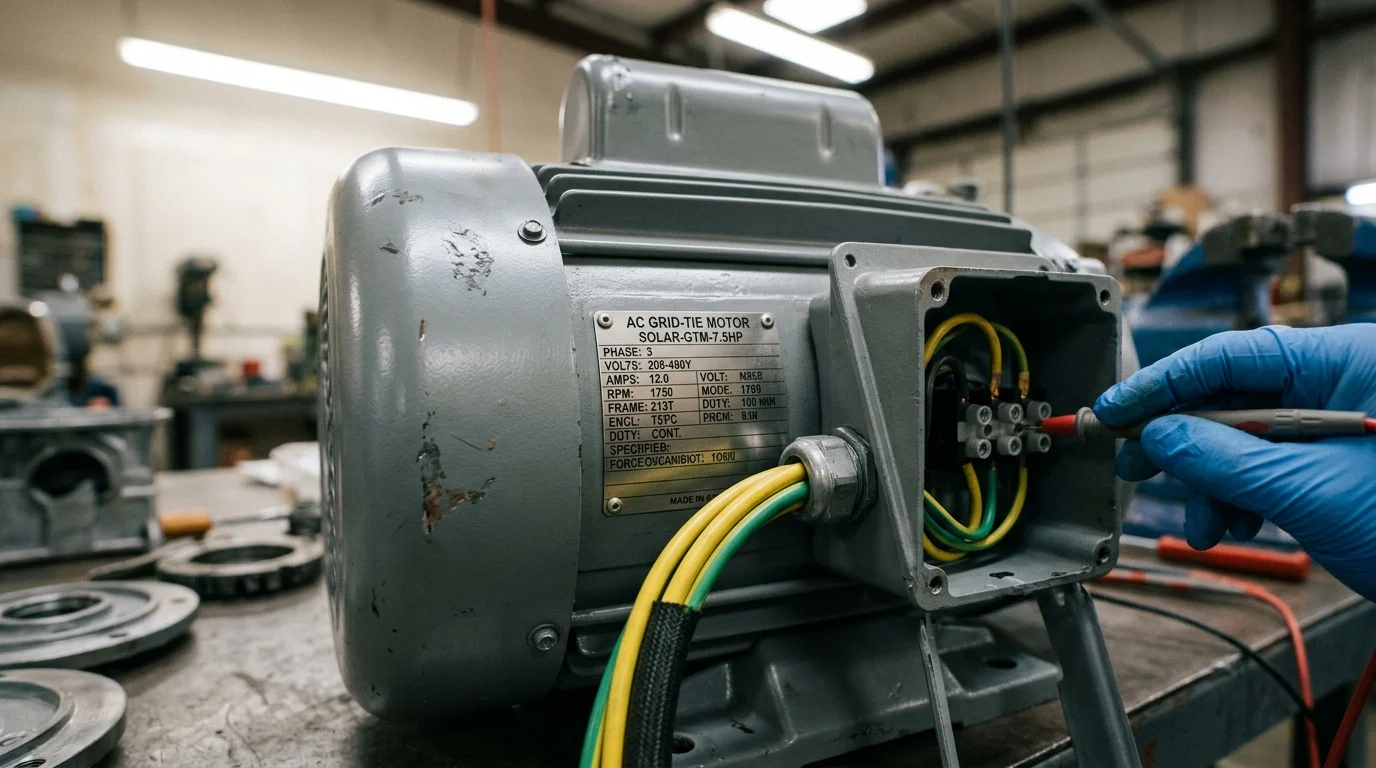
A grid-tie solar motor is not a fundamentally different mechanical machine; rather, it is defined by its specialized control and power electronics. The core of the system is a hybrid motor drive capable of accepting both direct current (DC) from a solar array and alternating current (AC) from the utility grid simultaneously. This dual-source architecture allows the motor to operate continuously, dynamically blending power sources based on real-time solar availability.
Unlike off-grid solar pumps that shut down when clouds pass, a grid-tie configuration uses the utility connection to guarantee uninterrupted operation. If the solar array provides 60% of the required power, the drive seamlessly pulls the remaining 40% from the grid, ensuring the mechanical output remains perfectly stable.
Core technical characteristics
The defining technical characteristic of these systems is the dual-input VFD. These drives are engineered with a common DC bus that interfaces directly with the PV strings. Standard operating voltages for the DC bus typically range from 400V to 800V DC, aligning with the output of standard 60-cell or 72-cell commercial solar modules wired in series.
To maintain motor stability, the drive monitors the DC link voltage at high frequencies. When irradiance drops, the DC voltage dips, and the drive’s active front end or integrated rectifiers instantly compensate by drawing active power from the three-phase 480V AC grid connection. This blending happens in milliseconds, completely transparent to the mechanical load and without causing torque ripples.
Role of inverters, MPPT, and controls
Maximum Power Point Tracking (MPPT) is critical to the efficacy of a grid-tie solar motor. While traditional setups locate MPPT algorithms within a central inverter, hybrid solar drives integrate MPPT directly into the motor controller. High-tier industrial drives achieve MPPT efficiencies exceeding 99%, constantly adjusting the operating point of the PV array to extract maximum power regardless of temperature or shading variations.
The onboard controls also manage phase synchronization and harmonic mitigation. Because the drive is connected to the grid, it must manage total harmonic distortion (THDi) to remain compliant with utility standards. Advanced models utilize active filters or multi-pulse rectifiers to keep THDi below 5%, protecting both the building’s internal power quality and the broader utility network.
Typical building use cases
In commercial real estate and industrial facilities, the most compelling use cases for grid-tie solar motors involve high-inertia, continuous-duty applications. Centralized HVAC chillers, cooling tower fans, and domestic water booster pumps are primary candidates. These systems run predictably during daylight hours, perfectly correlating with the solar generation curve.
| System Architecture | Power Conversion Steps | Typical Efficiency (Sun to Shaft) | Grid Dependence |
|---|---|---|---|
| Traditional PV + Standard VFD | DC -> AC (Inverter) -> DC (VFD Bus) -> AC (Motor) | 88% – 92% | High (Subject to central inverter limits) |
| Grid-Tie Solar Motor (Direct Drive) | DC -> DC (VFD Bus) -> AC (Motor) | 95% – 97% | Low (Seamless blending) |
By utilizing the direct drive architecture outlined above, facilities bypass the central inverter entirely for that specific load, yielding a 4% to 5% gain in end-to-end efficiency. This makes the technology particularly viable for agricultural irrigation pumps and industrial aeration blowers integrated into building water treatment processes.
What Performance and Compliance Factors Matter Most
Deploying a grid-tie solar motor requires rigorous engineering to match electrical inputs with mechanical demands while satisfying strict utility regulations. Because these systems operate at the intersection of renewable generation and critical building infrastructure, performance specifications and compliance standards cannot be compromised. Engineers must evaluate the dynamic behavior of the motor under variable power conditions and ensure the installation meets all local interconnection rules.
Load profile, torque, and operating conditions
The mechanical load profile dictates the sizing of both the motor drive and the solar array. Engineers must calculate the starting torque requirements, particularly for high-inertia loads like centrifugal chillers. The solar drive must provide adequate soft-starting capabilities, often requiring an overload capacity of 150% for up to 60 seconds to overcome initial static friction without tripping the system.
Operating conditions also influence performance. Variations in ambient temperature affect both PV panel output (voltage drop at high temperatures) and the drive’s thermal derating. A drive specified for 50 kW at 40°C ambient may only deliver 40 kW if installed in an unconditioned rooftop penthouse reaching 50°C. Proper environmental enclosures (e.g., NEMA 4X / IP66) and active thermal management are mandatory for sustained output.
Codes, interconnection, and electrical protection
Because the hybrid drive connects to the utility grid, it is subject to stringent interconnection codes. In North America, the equipment must adhere to IEEE 1547 standards and carry UL 1741 SA/SB certification. These certifications ensure the drive possesses advanced grid-support functionalities, including voltage ride-through and frequency ride-through capabilities.
Electrical protection is paramount. The system must feature robust anti-islanding protection, guaranteed to detect a grid outage and cease energizing the local circuit within a clearing time of less than 2.0 seconds. Additionally, integrated DC disconnects, fast-acting semiconductor fuses, and surge protection devices (SPDs) rated for up to 1000V DC must be installed to protect the drive from lightning-induced transients on the solar array.
Maintenance, commissioning, and failure risks
The integration of solar DC inputs introduces new maintenance vectors. The DC bus capacitors within the hybrid drive undergo significant electrical stress due to the continuous blending of power sources. While high-quality film capacitors boast a lifespan of 10 to 15 years, electrolytic variants may require replacement within 7 years depending on thermal conditions.
Commissioning risks involve the complex tuning of the MPPT algorithms alongside the motor’s PID control loops (e.g., maintaining constant water pressure). If poorly tuned, the drive may oscillate between grid and solar power, causing nuisance tripping or premature wear on the power modules. Thorough site acceptance testing (SAT) must simulate various irradiance drops to verify the seamless transition of power sourcing.
How Buyers Should Compare Options and Costs
Procuring a grid-tie solar motor system requires a holistic financial analysis that extends beyond the initial capital expenditure (CAPEX). Buyers must evaluate the total cost of ownership (TCO), balancing the premium cost of specialized hybrid drives against the operational savings generated by direct solar utilization and avoided infrastructure costs.
Key total cost of ownership drivers
The primary TCO drivers include the hardware cost per kilowatt ($/kW), installation labor, and long-term utility savings. Hybrid solar VFDs typically carry a 25% to 40% cost premium over standard AC-only drives. However, this premium is frequently offset by the elimination of a central solar inverter and the associated AC wiring that would otherwise be required to route power from the roof to the main switchgear.
| Cost Category | Traditional PV + Standard VFD | Grid-Tie Solar Motor Drive | Financial Impact |
|---|---|---|---|
| Hardware (Drive & Inverter) | High (Requires separate inverter) | Moderate (Premium VFD, no inverter) | 10-15% CAPEX reduction |
| Installation & Wiring | High (Extensive AC conduit runs) | Low (Direct DC home runs to motor) | Lower labor costs |
| Energy Efficiency | Baseline | +4% to +5% improvement | Accelerated OPEX savings |
| Maintenance (10-Year) | Moderate (Two discrete systems) | Low (Single integrated drive) | Reduced lifecycle costs |
Operational savings are highly dependent on local utility tariffs. In markets with high peak demand charges or time-of-use (TOU) rates ranging from $0.15 to $0.30 per kWh, the payback period for a direct solar motor system can drop below 4 years, particularly when paired with federal tax credits (e.g., the ITC in the United States) or accelerated depreciation schedules.
Supplier and sourcing considerations
Sourcing commercial-scale hybrid drives requires navigating a specialized supplier landscape. Unlike standard VFDs, which are heavily commoditized, dual-input solar drives are manufactured by a select group of industrial power electronics OEMs. Buyers must account for extended lead times, which can range from 12 to 24 weeks for drives exceeding 100 HP.
When evaluating suppliers, buyers should prioritize manufacturers with a proven track record in both variable speed motion control and renewable energy inverters. Supplier support infrastructure is critical; the OEM must offer localized technical support for commissioning and rapid access to replacement power modules to minimize downtime for critical building systems.
Evaluation criteria for procurement
Procurement evaluation should be weighted across integration capabilities, warranty terms, and control flexibility. The drive must support standard building automation protocols, such as Modbus TCP or BACnet/IP, to allow facility managers to monitor solar fraction, grid draw, and motor health from a centralized dashboard.
Warranty coverage must be scrutinized. A standard industrial drive may offer a 1-to-2-year warranty, whereas solar inverters typically offer 5-to-10-year terms. Buyers should negotiate extended warranties on the hybrid drive to align with the expected lifespan of the solar array, ensuring the TCO models remain accurate over a 15-year operational horizon.
How to Build a Specification and Decision Framework

Transitioning from conceptual interest to deployment requires a structured specification framework. Consulting engineers and facility directors must systematically evaluate load characteristics, spatial constraints, and energy profiles to ensure a grid-tie solar motor will perform reliably and deliver the projected return on investment.
Step-by-step specification process
The specification process begins with a granular load analysis.
Key Takeaways
- The most important conclusions and rationale for Grid-Tie Solar Motor
- Specs, compliance, and risk checks worth validating before you commit
- Practical next steps and caveats readers can apply immediately
Frequently Asked Questions
What is a grid-tie solar motor?
It is a standard motor paired with a dual-input drive that uses solar DC first and automatically adds grid AC when solar output drops.
Which building loads are best for grid-tie solar motors?
High-duty loads like HVAC fans, chilled-water pumps, cooling systems, and air compressors usually deliver the best savings and daytime solar use.
How does a grid-tie solar motor keep running during cloudy periods?
The controller blends power in real time, taking available PV energy first and instantly pulling the balance from the utility grid.
It boosts self-consumption by feeding solar directly to major motor loads, reducing purchased electricity and helping avoid peak-demand charges.
Can Eternal Energy solutions support day and night motor operation?
Yes. Eternal Energy’s intelligent microgrid and photoelectric complementarity systems are designed to support stable operation with solar priority and grid backup.