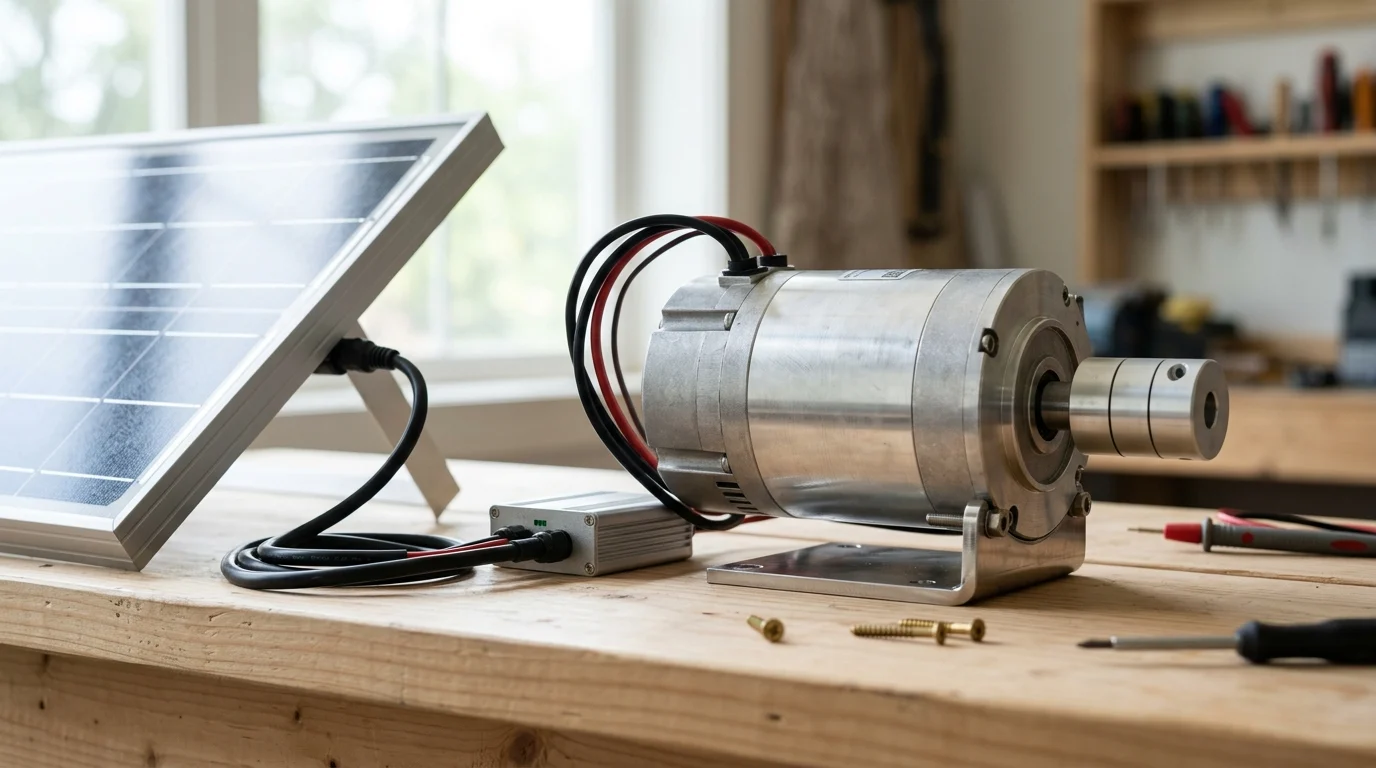
Why Direct Drive Solar Motors Are a Strategic Choice
The transition toward decentralized, intelligent photovoltaic microgrid solutions is reshaping commercial and industrial power architectures. As enterprises seek resilient, sustainable power for critical infrastructure, eliminating intermediate conversion steps has emerged as a primary engineering objective. Direct drive solar motors, which operate directly on DC power generated by solar arrays, bypass the traditional requirement for centralized or string inverters.
For B2B wholesale buyers, distributors, and OEM procurement teams, this architectural shift represents a significant opportunity to streamline supply chains and reduce total cost of ownership. By integrating direct drive technology, facilities can secure uninterrupted power, ensuring continuous operation for ventilation, cooling, pumping, and compressed air systems even when grid interruptions occur.
How direct drive design reduces inverter-related losses
Traditional solar-powered electromechanical systems rely on a convoluted energy path: photovoltaic panels generate direct current (DC), which an inverter converts to alternating current (AC) to drive standard induction motors. This DC-AC conversion introduces thermal and electrical losses typically ranging from 5% to 15%. Furthermore, AC induction motors operating at partial loads often suffer from poor power factors.
Direct drive solar designs utilizing brushless DC (BLDC) technology eliminate the inverter entirely. The motor controller accepts DC voltage directly from the PV array or a localized DC microgrid. By removing the inverter, system-level electrical efficiency routinely exceeds 95%. Additionally, this eliminates the system’s most common point of failure. While industrial motors can operate reliably for 15 to 20 years, commercial inverters typically require replacement every 7 to 10 years, driving up long-term maintenance liabilities.
Which commercial applications deliver the strongest ROI
The financial advantages of direct drive architecture are most pronounced in applications characterized by continuous daytime operation and high starting torque requirements. Solar industrial fans, solar water pumps, and solar air coolers are prime candidates. In agricultural irrigation, for example, direct drive solar pumps can reduce the average capital payback period from 4.5 years to approximately 2.8 years by stripping out inverter costs and minimizing electrical infrastructure.
Industrial air compressors and localized cooling systems also benefit from this approach. When paired with photoelectric complementary systems that blend solar input with localized battery or grid support for day/night energy requirements, direct drive motors provide seamless operational continuity. Facilities facing high peak-demand grid tariffs can isolate these high-draw motor loads onto independent DC microgrids, achieving immediate reductions in utility expenditures.
Key Technical Specifications to Evaluate
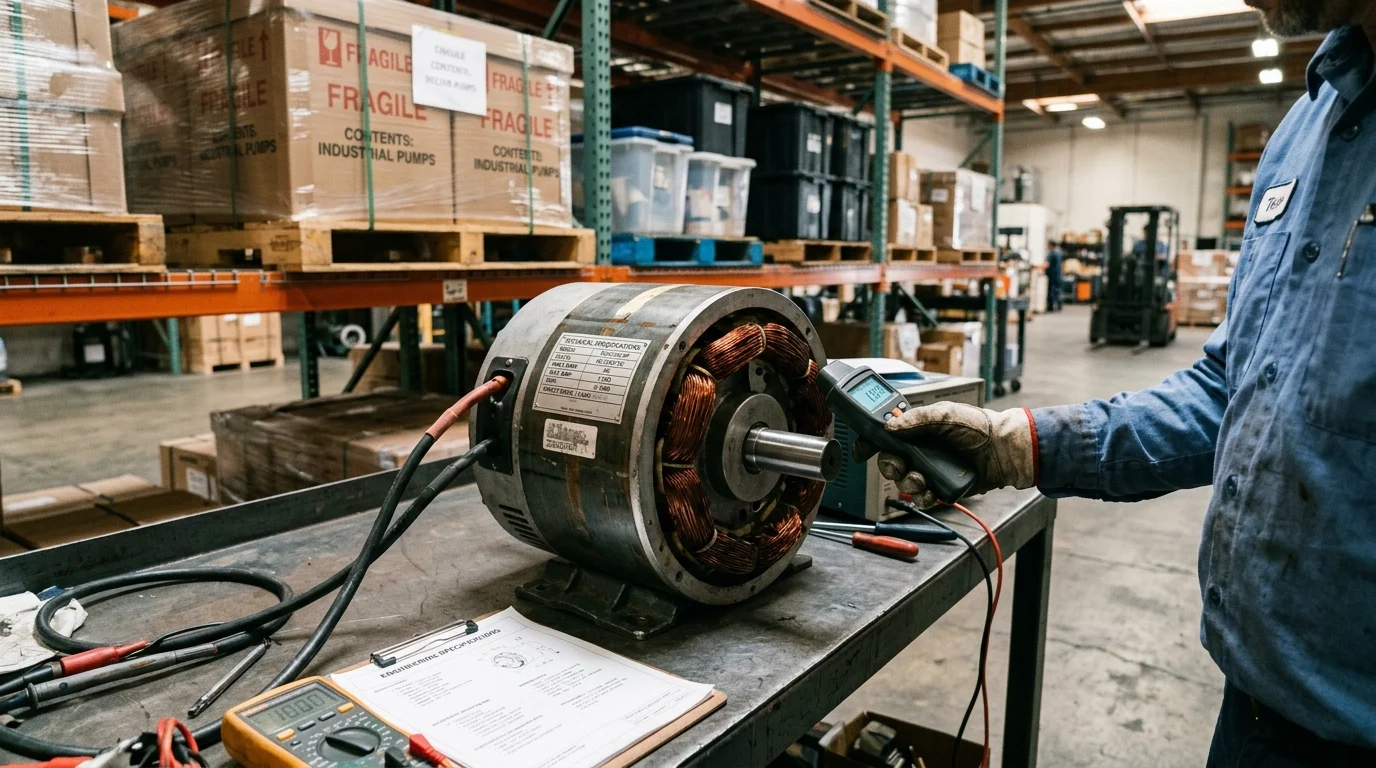
Evaluating direct drive solar motors requires procurement teams to move beyond basic horsepower ratings. Buyers must analyze specific electrical inputs, mechanical form factors, and integration capabilities to ensure the selected motors align with the intended OEM equipment and solar array characteristics.
Which electrical and mechanical parameters buyers should compare
When sourcing direct drive motors, buyers must first match the motor’s input voltage range to the nominal voltage of the target PV arrays. Standard commercial applications typically demand wide-input controllers capable of handling 24V, 48V, or up to 300V DC to accommodate fluctuating solar irradiance. Power ratings for high-efficiency commercial tasks generally fall between 200W and 1000W.
Operational speed flexibility is another critical parameter. Advanced direct drive BLDC motors offer broad RPM bands, typically ranging from 500 to 6000 rpm. This variable speed capability, managed by maximum power point tracking (MPPT) algorithms within the DC controller, allows the motor to dynamically adjust its speed based on real-time solar availability, maintaining operation rather than shutting down during low-light conditions.
How frameless BLDC design and component choices affect performance
Frameless BLDC motor designs offer superior integration for OEMs manufacturing pumps and industrial fans. Instead of purchasing a fully housed motor, OEMs procure the rotor and stator components to embed directly into their equipment housing. This reduces overall weight, minimizes mechanical footprint, and allows the equipment’s primary casing to act as a heat sink.
A prime example of this component-level specification is the 80mm stator winding for brushless motors, such as the VOL-WSRS80 9S. Engineered with a 76.4mm outer diameter and a 44.6mm inner diameter, this 9-slot, 6-pole configuration utilizes 1pp/3pp strands. This specific geometry maximizes copper fill and magnetic flux density, ensuring high torque density within a highly constrained spatial footprint, which is essential for compact solar air coolers and microgrid-integrated compressors.
How direct drive systems compare with inverter-based alternatives
To quantify the engineering advantages, procurement teams must compare direct drive BLDC systems against traditional inverter-driven AC induction systems. The comparison encompasses efficiency, footprint, and lifecycle longevity.
| Technical Metric | Direct Drive BLDC System | Inverter-Based AC System |
|---|---|---|
| System Efficiency | 92% – 96% | 75% – 85% |
| Component Count | Low (Panel, Controller, Motor) | High (Panel, Inverter, VFD, Motor) |
| Operating Lifespan | 15 – 20 years | 7 – 10 years (Inverter bottleneck) |
| Speed Control | Native variable speed via DC | Requires external VFD |
| Space Requirement | Highly compact (Frameless options) | Bulky (Requires inverter cabinet) |
How Distributors and Importers Should Source Suppliers
Transitioning to direct drive solar components requires a robust sourcing strategy. Importers, wholesalers, and OEM buyers must identify manufacturing partners capable of delivering consistent quality at scale, while also providing the necessary technical infrastructure to support complex microgrid integrations.
Which supplier qualification criteria matter for OEM and channel buyers
Supplier qualification should prioritize manufacturers with dedicated R&D in intelligent energy and microgrid compatibility. Buyers should mandate ISO 9001 certification and audit the supplier’s production lines for automated winding and magnetic insertion capabilities. Automated winding is critical for frameless BLDC stators to ensure consistent electrical resistance and thermal performance.
Volume capabilities and defect rates are non-negotiable metrics. Buyers should target suppliers capable of sustaining a defect rate below 0.5% at minimum order quantities (MOQs) of 500 to 1000 units. Furthermore, suppliers must demonstrate expertise in photoelectric complementary technology—the ability of their motor controllers to intelligently switch or blend power between the solar array and secondary power sources for uninterrupted day and night operation.
How to assess packaging, spare parts, and after-sales support
Because frameless BLDC motors consist of exposed stators and powerful neodymium rotors, packaging requires rigorous engineering. Stators are highly susceptible to moisture and must be sealed in Volatile Corrosion Inhibitor (VCI) bags. Rotors require custom Expanded Polyethylene (EPE) foam isolation to prevent magnetic interference and physical collision during transit.
After-sales support must be codified in the purchasing agreement. Importers should negotiate the inclusion of 1% to 2% spare parts per container shipment, specifically targeting high-wear or electrically sensitive components like Hall effect sensors and MPPT controller boards. Establishing a clear protocol for remote technical diagnostics is also essential for supporting channel partners in the field.
Which channel strategies help wholesalers position direct drive solutions
For wholesalers, direct drive solar motors present a unique bundling opportunity. Rather than selling bare motors, distributors can package these units with optimized PV panels, wiring harnesses, and DC controllers to create turnkey kits for agricultural and industrial installers. This approach simplifies the end-user’s procurement process and accelerates field deployment.
Positioning these kits around themes of “Smarter Energy” and grid independence allows distributors to capture premium margins. Complete direct drive solar pumping or ventilation kits frequently command a 25% to 40% gross margin markup, significantly outperforming the commoditized margins typical of standard AC induction motors. Educating the downstream installer network on the elimination of inverter maintenance is key to driving this channel growth.
Compliance, Logistics, and Commercial Risk Management
International procurement of solar motors involves navigating a complex matrix of regulatory standards, freight logistics, and financial risks. Successful importers implement stringent compliance checks and strategic freight planning to protect their margins from hidden costs and supply chain disruptions.
Which certifications and test documents are required for market access
Market access depends entirely on verifiable compliance documentation. For the European market, CE marking under the EN 60034 series for rotating electrical machines is mandatory, alongside RoHS compliance for hazardous substances. North American buyers must require UL 1004-1 certification for electric motors.
Because direct drive BLDC systems utilize high-frequency switching controllers, electromagnetic compatibility (EMC) is a critical compliance hurdle. Buyers must request IEC 61000 test reports to ensure the motor controllers do not emit electromagnetic interference that could disrupt adjacent industrial equipment or communications within a microgrid.
How carton design, palletization, Incoterms, and lead times affect delivery
Frameless motor components are dense, heavy cargo. An 80mm stator and rotor set can weigh over 1.5 kilograms. To prevent container floor damage and ensure safe handling, palletization must be strictly controlled, typically capped at 800kg per Euro pallet. A standard 20-foot container can accommodate approximately 15,000 to 18,000 sets, depending on the protective foam density.
Incoterms and lead times heavily influence working capital. Standard production lead times for custom-wound BLDC motors range from 30 to 45 days. Buyers relying on ocean freight should model an additional 25 to 40 days for transit. Utilizing FOB (Free on Board) terms allows the buyer to maintain control over the freight forwarder, enabling better optimization of high-density shipping routes.
Which pricing, margin, and replacement-risk factors buyers should model
Commercial risk in motor procurement is heavily tied to raw material volatility. The prices of copper (for stator windings) and rare-earth neodymium (for rotor magnets) fluctuate daily. Procurement teams must negotiate index-linked pricing contracts that transparently adjust unit costs based on quarterly raw material averages, preventing sudden margin erosion.
| Commercial Risk Factor | Financial Impact Level | Recommended Buyer Mitigation Strategy |
|---|---|---|
| Raw Material Volatility | High | Implement quarterly index-linked pricing clauses |
| Freight Cost Fluctuations | Medium | Maximize container density; lock in annual FOB freight contracts |
| Defective Batches | High | Mandate independent pre-shipment inspections at AQL 1.5 |
| Premature Field Failure | Low to Medium | Secure 3-year minimum replacement warranties covering stators and controllers |
How Buyers Can Decide if Direct Drive Solar Motors Fit

While direct drive solar motors offer substantial efficiency gains, they are not a universal replacement for all AC applications. Procurement teams must deploy a systematic evaluation framework to determine if project-specific constraints warrant the transition from traditional inverter-based architectures.
Which project conditions favor direct drive solar motors
Direct drive solutions deliver the highest value in locations where grid connectivity is unreliable, expensive, or non-existent. Agricultural operations requiring remote irrigation, industrial facilities in high-insolation regions facing steep peak-demand charges, and off-grid telecommunications cooling systems are ideal candidates.
These motors are also highly favored in environments where maintenance access is difficult. Because direct drive systems remove the inverter—the component most susceptible to thermal degradation and dust ingress—they drastically reduce the need for skilled technicians to perform site visits. Projects requiring autonomous, resilient operation with minimal human intervention strongly align with this technology.
What evaluation process helps procurement teams make the right choice
To make the right choice, buyers should follow a structured, multi-phase evaluation. First, conduct a rigorous load profile analysis to determine the exact torque and variable speed requirements of the application. Next, size the PV array to ensure it can deliver the required peak DC voltage, factoring in localized solar irradiance data.
Before committing to volume orders, procurement teams must request 5 to 10 sample units of the specified motor (e.g., the 80mm frameless BLDC) for OEM prototyping. These samples must undergo thermal and load testing within the actual equipment housing to verify heat dissipation and continuous operational stability. Finally, executing a limited pilot deployment allows the buyer to validate the supplier’s photoelectric complementary integration, ensuring seamless transitions between solar and secondary power sources during night cycles.
Key Takeaways
- Wholesale sourcing and supply-chain implications for Direct Drive Solar Motor
- Specifications, compliance, and commercial terms buyers should validate
- Actionable recommendations for distributors and procurement teams
Frequently Asked Questions
What is a direct drive solar motor?
It is a BLDC motor powered directly by solar DC or a DC microgrid, so no separate AC inverter is needed.
Why eliminate the inverter in solar motor systems?
Removing the inverter cuts 5%–15% conversion losses, reduces failures, and lowers replacement and maintenance costs over time.
Which applications get the best ROI from direct drive solar motors?
Solar industrial fans, water pumps, air coolers, and air compressors usually benefit most, especially with long daytime operation and high energy costs.
Can direct drive systems run when sunlight is weak or at night?
Yes, when paired with Eternalmaxx photoelectric complementary systems, they can use battery or grid support for stable day/night operation.
What specs should buyers check before selecting a direct drive solar motor?
Match DC input voltage, power range, RPM, controller MPPT capability, and form factor. For OEMs, frameless BLDC options can simplify compact equipment integration.
About Zhejiang Eternal Hybrid Tech Co., Ltd.
Headquartered in Ningbo, China, Zhejiang Eternal Hybrid Tech Co., Ltd. is a new energy technology company specializing in intelligent photovoltaic microgrid solutions. Since entering the solar sector in 2019, the company has developed proprietary ParaFlow MicroGrid and Photoelectric Complementarity technologies, supporting a product line that includes solar industrial fans, solar water pumps, solar air coolers, and solar air compressors.
The company is committed to making clean energy affordable and reliable for industrial and agricultural users worldwide.
Contact: info@eternalwatt.com | +86-574-8906-5058