Solar PV EC fans are becoming one of the fastest-growing ventilation technologies in 2026 because they combine photovoltaic power generation with highly efficient electronically commutated motors. As energy costs rise and sustainability requirements become stricter, solar-powered EC fans are increasingly used in commercial, industrial, agricultural, and infrastructure projects.
The most important application areas for Solar PV EC fans in 2026 include industrial ventilation, greenhouse climate control, livestock farming, solar air cooling systems, telecom facilities, and warehouse ventilation. These sectors benefit from lower electricity consumption, reduced carbon emissions, and improved airflow management.
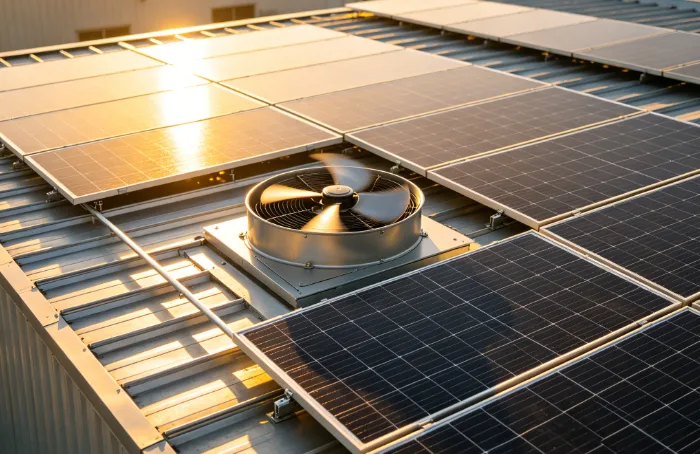
Why Solar PV EC Fans Are Expanding Rapidly in 2026
Solar PV EC fans deliver higher efficiency than conventional AC fan systems. EC motors integrate electronic speed control directly into the motor design, reducing conversion losses and enabling precise airflow adjustment.
According to the U.S. Department of Energy, motor-driven systems account for a significant share of commercial and industrial electricity consumption. Improving motor efficiency remains one of the most effective methods for reducing energy costs. U.S. Department of Energy Motor Systems Program
Three factors are accelerating adoption:
- Higher energy efficiency compared with traditional AC motors.
- Direct compatibility with solar photovoltaic systems.
- Lower maintenance requirements due to brushless motor technology.
Modern solar ventilation solutions increasingly incorporate technologies such as BLDC Motors, Solar Water Pumps, Solar Motors, Industrial Solar Ventilation Systems, and Photovoltaic Microgrid Solutions available from Eternalmaxx. (haofeng)
Top Application Areas for Solar PV EC Fans in 2026
1. Commercial and Industrial Ventilation
Commercial and industrial buildings represent the largest application segment for Solar PV EC fans in 2026.
Manufacturing plants, workshops, and production facilities require continuous ventilation to remove heat, dust, fumes, and airborne contaminants. Solar-powered EC fans provide variable airflow control while reducing peak electricity demand.
Key benefits include:
- Reduced operating costs
- Improved indoor air quality
- Lower carbon emissions
- Better compatibility with rooftop solar installations
Many industrial facilities are also integrating solar-powered ventilation with Solar Motors and intelligent microgrid systems to further reduce grid dependence. (haofeng)
2. Agricultural Greenhouses
Greenhouse climate control is one of the fastest-growing markets for Solar PV EC fans.
Temperature and humidity directly affect crop yields. EC fan technology enables growers to maintain stable environmental conditions while minimizing energy consumption.
Solar-powered greenhouse ventilation offers:
- Precise airflow regulation
- Reduced overheating risk
- Better humidity management
- Lower seasonal energy costs
According to the Food and Agriculture Organization (FAO), climate-controlled agriculture continues expanding globally due to increasing food production requirements. FAO Controlled Environment Agriculture Resources
3. Livestock and Poultry Farms
Livestock facilities increasingly rely on Solar PV EC fans to improve animal welfare and productivity.
Proper ventilation helps remove excess moisture, ammonia, and heat from poultry houses, dairy barns, and pig farms.
Benefits include:
- Improved animal comfort
- Reduced disease risks
- Lower heat stress
- Enhanced feed conversion performance
Because EC fans operate efficiently at variable speeds, farmers can adjust airflow based on seasonal conditions without excessive energy use.
4. Solar Air Cooling Systems
Solar air coolers are emerging as an important application for Solar PV EC fans.
Unlike conventional HVAC systems, solar air cooling systems use evaporative cooling combined with solar-powered airflow generation. EC fans are ideal because they maintain stable airflow while consuming less electricity.
Many integrated systems utilize:
- EC axial fans
- BLDC motors
- Solar PV arrays
- Intelligent speed controllers
These systems are increasingly deployed in factories, warehouses, and commercial buildings seeking lower cooling costs.
5. Data Centers and Telecom Shelters
Data centers and telecom infrastructure require reliable thermal management.
Solar PV EC fans provide an energy-efficient solution for cooling:
- Edge data centers
- Telecom base stations
- Remote communication shelters
- Outdoor electrical cabinets
The growth of 5G networks and distributed computing infrastructure is creating additional demand for off-grid and hybrid solar ventilation systems.
The International Energy Agency (IEA) highlights that energy-efficient cooling technologies are becoming increasingly important as digital infrastructure expands worldwide. International Energy Agency Cooling and Data Centre Resources
6. Warehouse and Logistics Facilities
Warehouse operators are deploying Solar PV EC fans to improve indoor air circulation and reduce cooling loads.
Large logistics centers often experience heat accumulation due to:
- High roof structures
- Equipment operation
- Vehicle movement
- Limited natural ventilation
EC fans help maintain comfortable working conditions while supporting sustainability goals.
Application Comparison Table
| Application Area | Primary Objective | Energy Saving Potential | Typical Operating Hours |
|---|---|---|---|
| Industrial Ventilation | Heat and air quality control | High | 8–24 hours |
| Greenhouses | Climate management | High | Seasonal |
| Livestock Farms | Animal welfare | High | Continuous |
| Solar Air Coolers | Space cooling | Medium-High | Daytime |
| Telecom Shelters | Equipment cooling | Medium | Continuous |
| Warehouses | Air circulation | Medium-High | Daily |
How to Select the Right Solar PV EC Fan
The best Solar PV EC fan depends on airflow requirements, operating environment, and available solar power.
A structured selection process includes:
- Determine required airflow (CFM or m³/h).
- Evaluate solar irradiance levels.
- Calculate operating hours.
- Consider environmental conditions.
- Select appropriate fan type.
Fan Type Comparison
| Fan Type | Best Use Case | Advantages |
|---|---|---|
| EC Axial Fan | Ventilation and exhaust | High airflow |
| EC Centrifugal Fan | Ducted systems | Higher static pressure |
| BLDC Fan System | Solar-powered applications | Maximum efficiency |
Organizations deploying solar ventilation often combine EC fans with BLDC Motors, Solar Water Pumps, and Photovoltaic Microgrid Solutions to improve overall system efficiency. (haofeng)
Key Technical Factors Buyers Should Evaluate
Efficiency is the most important technical criterion when selecting Solar PV EC fans.
Buyers should assess:
- Motor efficiency rating
- IP protection level
- Speed control capabilities
- Solar compatibility
- Noise performance
- Expected service life
Industry data indicates that high-efficiency BLDC and EC motor technologies can significantly outperform conventional brushed motor systems in energy conversion efficiency. (haofeng)
Future Trends for Solar PV EC Fans
Solar PV EC fan adoption is expected to accelerate throughout 2026 and beyond.
Several trends are shaping the market:
- Increased integration with photovoltaic microgrids
- AI-based ventilation control systems
- Smart building energy management
- Expansion of off-grid cooling solutions
- Higher demand for sustainable agricultural ventilation
The combination of solar generation, EC motor efficiency, and intelligent control systems is creating new opportunities across multiple industries.
Conclusion
Solar PV EC fans have become a practical solution for energy-efficient ventilation in 2026. Industrial facilities, greenhouses, livestock farms, solar cooling systems, telecom shelters, and warehouses represent the largest application areas. As organizations seek lower operating costs and reduced emissions, Solar PV EC fan systems are expected to become a standard component of modern ventilation infrastructure.
FAQ
1. What makes Solar PV EC fans more efficient than traditional AC fans?
Solar PV EC fans use electronically commutated motors that integrate electronic speed control directly into the motor. This design reduces electrical losses, enables variable-speed operation, and improves overall system efficiency compared with conventional AC induction motors.
2. Are Solar PV EC fans suitable for off-grid applications?
Yes. Solar PV EC fans are commonly used in off-grid environments such as farms, telecom shelters, remote warehouses, and agricultural facilities. Their compatibility with photovoltaic power systems makes them highly suitable for locations with limited grid access.
3. Which industries benefit most from Solar PV EC fan technology?
Industrial manufacturing, agriculture, livestock farming, logistics, telecommunications, and commercial building management currently represent the largest users of Solar PV EC fans due to their ventilation and energy-efficiency requirements.
4. How long do Solar PV EC fans typically last?
High-quality EC fan systems often achieve operational lifespans exceeding 20,000 to 50,000 hours, depending on operating conditions, maintenance practices, and motor design. Brushless construction contributes to lower wear and longer service life.
5. What should buyers evaluate before purchasing a Solar PV EC fan?
Buyers should assess airflow requirements, static pressure, motor efficiency, environmental protection ratings, solar compatibility, speed control features, and expected maintenance requirements. Proper sizing is essential for achieving optimal performance and energy savings.