Why Is Demand for Solar Industrial Fan Motors Rising in
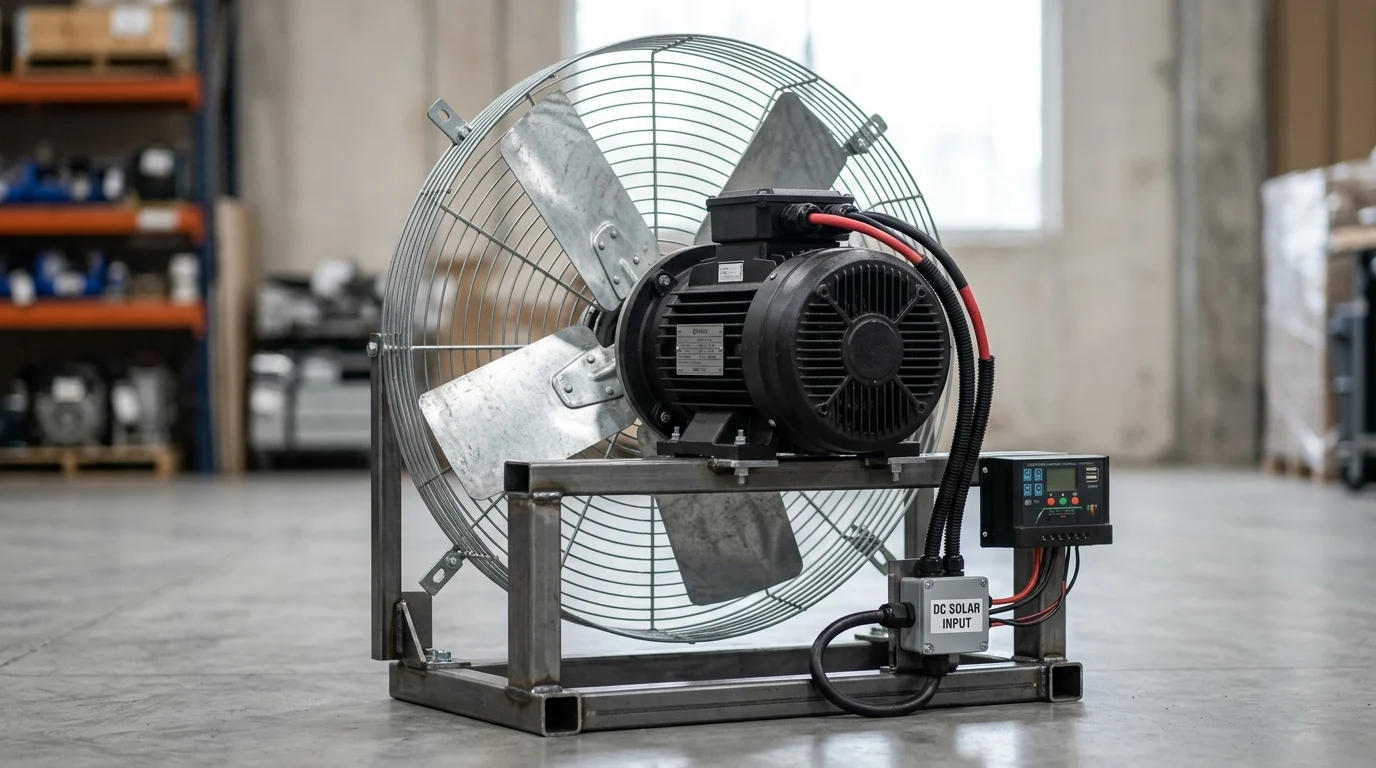
The integration of renewable energy into heavy industrial environments is fundamentally reshaping facility management and procurement priorities. Solar industrial fan motors represent a critical evolution in this space, transitioning ventilation systems from heavy grid-dependent liabilities into self-sustaining operational assets.
How do energy costs, grid instability, and ESG goals affect demand?
Industrial facilities consume massive amounts of electricity, with ventilation and cooling often accounting for up to 15% to 20% of a factory’s total energy load. As global grid prices fluctuate—often exceeding $0.20 per kWh in volatile markets—procurement teams are aggressively seeking decentralized power solutions to protect their margins. Furthermore, grid instability in developing manufacturing hubs can lead to costly downtime, where even a minor cooling failure can halt production lines.
Coupled with stringent environmental, social, and governance (ESG) mandates requiring aggressive Scope 2 emission reductions, the shift to solar-powered motors is transitioning from an optional facility upgrade to a baseline operational requirement. By removing the primary ventilation load from the municipal grid, factory operators can demonstrate immediate, measurable carbon footprint reductions.
Where do solar-powered industrial fans fit in factory operations?
Solar-powered industrial fans are deployed across high-demand zones, including warehouse ridge ventilation, cooling towers, and continuous-duty exhaust systems in chemical or heavy manufacturing plants. In these environments, uninterrupted airflow is mandatory to clear hazardous fumes and prevent machinery from exceeding safe operating temperatures.
By utilizing intelligent photovoltaic microgrid solutions, these specialized motors operate independently of the main electrical infrastructure. This decentralization allows facility managers to maintain critical airflow and temperature control even during brownouts. Furthermore, integrating solar DC motors directly at the point of use eliminates the need for extensive, heavy-gauge AC wiring runs across expansive factory ceilings, drastically reducing initial installation overhead.
What Technical Specifications Matter Most for Solar Industrial Fan Motor
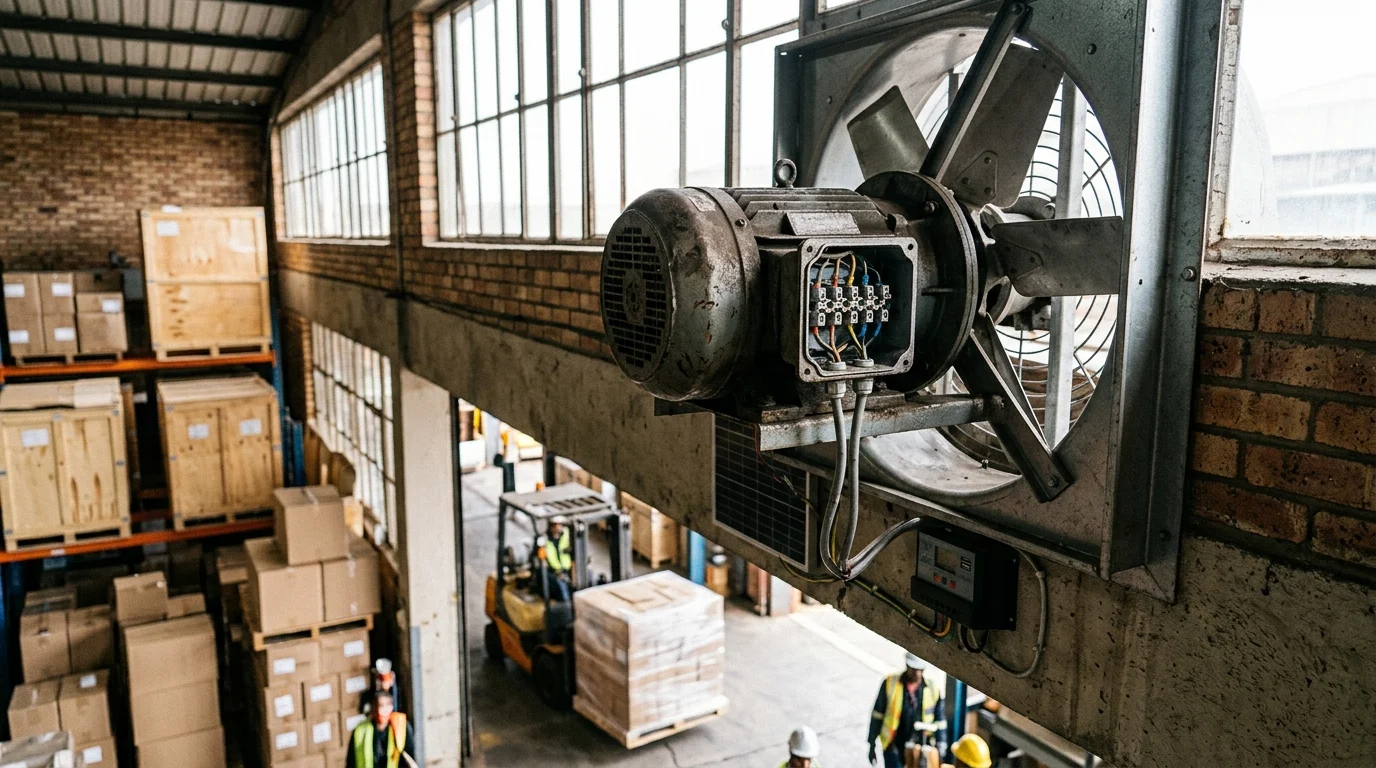
Sourcing the correct motor architecture is the defining factor in a solar industrial fan’s lifecycle, acoustic profile, and overall energy efficiency. Buyers must deeply evaluate the electromechanical properties to ensure seamless compatibility with variable DC inputs generated by photovoltaic arrays.
Which motor, airflow, voltage, speed, and duty-cycle specifications matter most?
The foundational specifications encompass operating voltage, power output, and duty cycle. Industrial applications typically demand 220VAC, 380VAC architectures to align natively with standard solar panel arrays and commercial battery banks without requiring inefficient inverters. Duty-cycle ratings must guarantee continuous 24/7 operation under fluctuating ambient temperatures, often rated for environments exceeding 50°C.
Advanced systems require motors capable of maintaining stable torque and airflow even as solar irradiance drops. This necessitates a wide voltage tolerance and superior thermal dissipation. Airflow requirements dictate the speed (RPM) and torque parameters; high-volume, low-speed (HVLS) fans require high torque at low RPMs, whereas standard exhaust fans rely on rapid rotational speeds to move specific cubic feet per minute (CFM) targets.
How should buyers assess brushless and frameless motor designs?
Brushless DC (BLDC) motors, particularly frameless variants, dominate the solar ventilation sector due to their zero-maintenance profile and exceptional power density. A prime example of modern engineering in this space is the 80mm smaller stator winding brushless motor (model VOL-WSRS80 9S).
This frameless BLDC motor component is engineered with a 76.4mm outer diameter and a 44.6mm inner diameter, utilizing a 9-slot, 6-pole configuration with 1pp/3pp strands. Such precise electromechanical design enables a highly scalable power output ranging from 200W to 1000W, and operational speeds spanning 500 to 6000 RPM. By utilizing a frameless architecture, OEMs can integrate the rotor and stator directly into the fan hub, minimizing space requirements, reducing mechanical losses, and maximizing aerodynamic efficiency.
What comparison criteria should procurement teams use?
Procurement teams must benchmark motors based on electrical efficiency, form factor, and integration readiness. Frameless BLDC designs offer a distinct advantage over legacy brushed or AC motors by eliminating friction points, thereby extending the mean time between failures (MTBF) significantly.
| Specification Matrix | Traditional AC Induction Motor | Frameless BLDC Solar Motor (e.g., 80mm Stator) |
|---|---|---|
| Power Efficiency | 65% – 75% | 85% – 92% |
| Input Compatibility | Requires Inverter (AC Grid) | Direct DC (Solar/Battery) |
| Speed Control | Complex (VFD Required) | Native PWM / Variable Speed |
| Maintenance | Bearing wear / High heat | Near-zero (Brushless/Magnetic) |
| Operating Lifespan | 20,000 – 30,000 hours | 50,000+ hours |
How Should Buyers Source Solar-Powered Industrial Fans for OEM Projects
For Original Equipment Manufacturers (OEMs) and large-scale B2B distributors, the sourcing process extends far beyond technical specifications into supply chain mechanics. Effective procurement requires strict alignment on production capacity, customization capabilities, and global logistics.
Which supplier qualification criteria, MOQ terms, and customization options matter?
Qualifying a supplier necessitates auditing their ISO 9001 (Quality Management) and ISO 14001 (Environmental Management) credentials to ensure consistent manufacturing tolerances. Our BLDC motors typically do not have a minimum order quantity (MOQ), depending on the level of customization required.
OEMs frequently require bespoke stator windings, specific shaft dimensions, or proprietary conformal coatings on the PCB controllers to withstand harsh, corrosive industrial environments. Suppliers must demonstrate the engineering capability to adjust phase resistance and inductance without extending production timelines or drastically inflating unit costs.
How do packaging, spare parts planning, and lead times affect sourcing?
Industrial motors are dense, electromagnetically sensitive components that require robust logistics planning. Standard packaging must utilize anti-static, shock-absorbing materials on ISPM-15 certified pallets to prevent transit damage and moisture ingress during ocean freight.
Lead times generally span 6 to 8 weeks for standard SKUs, but custom winding configurations or unique form factors can push delivery schedules to 10 or 14 weeks. Furthermore, wholesale buyers should negotiate a 2% to 5% spare parts buffer for critical components like external controllers and bearings. This proactive spare parts planning ensures rapid field servicing for end-users, minimizing factory downtime and protecting the distributor’s brand reputation.
Which Compliance and Integration Factors Reduce Implementation Risk
Deploying solar industrial fan motors at scale introduces unique electrical and environmental challenges. Mitigating implementation risks requires strict adherence to international compliance standards and the utilization of intelligent grid-balancing technologies.
What certifications, protection features, and factory requirements should buyers check?
Industrial ventilation operates in harsh environments exposed to heavy particulate matter, high humidity, and occasionally corrosive gases. Motors and their accompanying controllers must carry a minimum of IP65 or IP67 ingress protection ratings. Electrically, CE, RoHS, and UL certifications are non-negotiable for global market access and insurance compliance.
Buyers must also verify built-in electrical protection features. Crucial safeguards include over-voltage, under-voltage, short-circuit, and thermal overload cutoffs. For instance, a 48V solar fan system must safely halt operation if the input voltage drops below 36V during heavy cloud cover, preventing the motor from stalling and protecting the controller from thermal burnout.
How do PV pairing, battery support, and photoelectric controls affect system integration?
The most significant challenge in solar ventilation is maintaining operation during nighttime, severe weather, or heavy industrial dust events that obscure solar panels. Advanced suppliers resolve this by offering intelligent photovoltaic microgrid solutions, such as the ParaFlow MicroGrid.
These architectures utilize photoelectric complementarity systems, allowing the fan motor to draw power seamlessly from solar panels during peak daylight, and shift automatically to battery reserves or AC grid power as solar irradiance fades. This automated day/night energy support is critical for commercial and industrial users who demand resilient, continuous cooling and compressed air without relying on manual switching or experiencing operational drops.
What Is the Best Procurement Strategy for Selecting a Solar
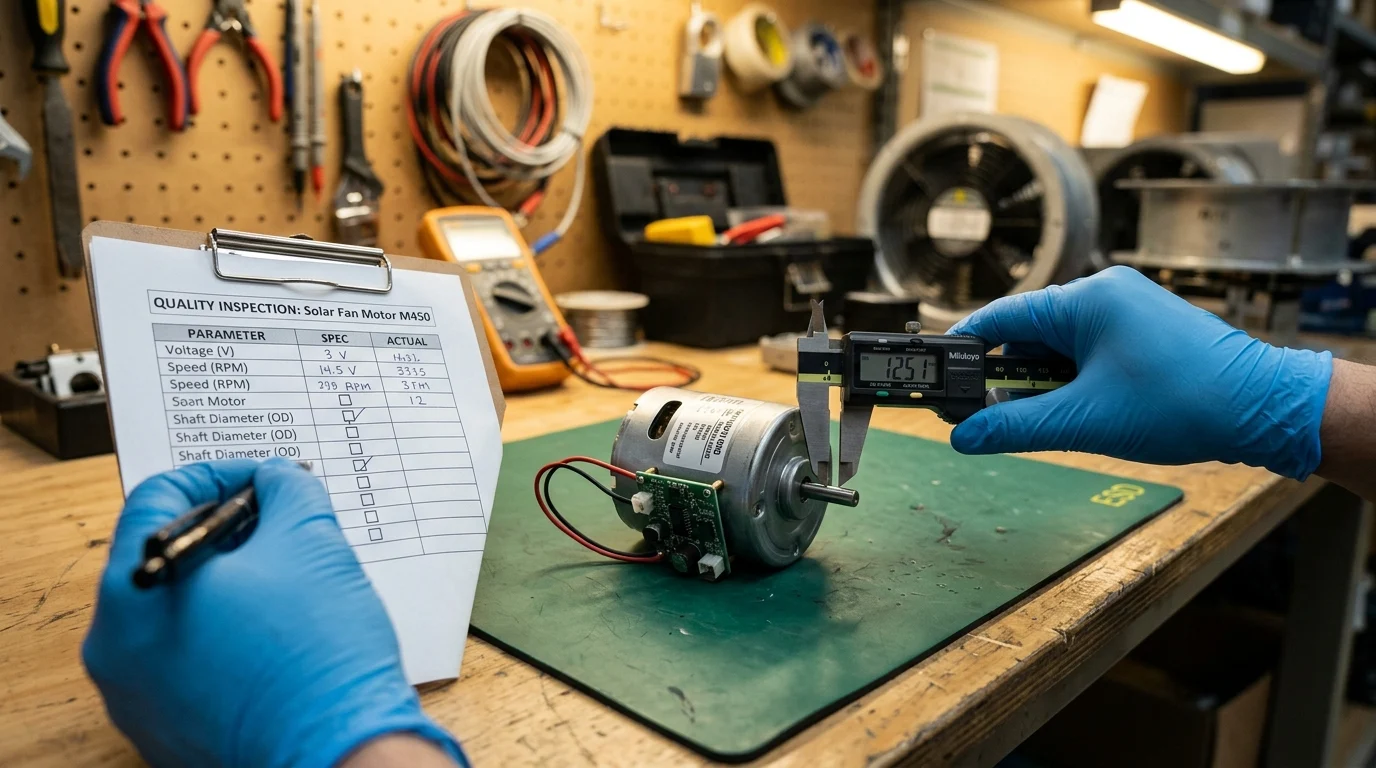
Selecting a long-term manufacturing partner for solar industrial fan motors requires a methodical, multi-tiered approach. Procurement teams must look beyond initial unit pricing to evaluate the total cost of ownership (TCO) and the supplier’s capacity for technological partnership.
Which step-by-step evaluation process helps distributors and project buyers?
Distributors and project buyers should utilize a phased evaluation framework to mitigate sourcing risks. Phase one involves a rigorous desktop audit of motor specifications, focusing on stator dimensions, pole counts, and documented efficiency curves.
Phase two requires physical sample testing, subjecting the motor to 100% load at maximum RPM (e.g., 6000 RPM for the VOL-WSRS80 9S) in a thermal chamber for a continuous 72-hour period to monitor heat dissipation and torque stability. Phase three is a comprehensive factory audit—either in-person or via a certified third party—to verify production capacity, automated quality control checkpoints, and the supplier’s ability to maintain a defect rate strictly below 0.5%.
How should buyers balance price, technical support, logistics, and reliability?
While aggressive pricing is attractive, it must not compromise reliability, logistics, or integration support. Buyers must balance upfront costs against the supplier’s ability to provide intelligent microgrid integration, robust warranties, and responsive technical troubleshooting.
| Supplier Tier | Target Price Index | Defect Rate Expectation | Microgrid / PV Integration Support | Best Fit For |
|---|---|---|---|---|
| Tier 1 (Strategic Partner) | Premium ($$$) | < 0.2% | Full Photoelectric Complementarity | High-stakes industrial OEM projects |
| Tier 2 (Volume Manufacturer) | Competitive ($$) | < 1.0% | Basic PWM / Direct PV only | Standard commercial warehouse fans |
| Tier 3 (Commodity Assembler) | Lowest ($) | 2.0% – 5.0% | None (Motor only) | Low-cost agricultural ventilation |
Ultimately, partnering with a solution-oriented manufacturer that emphasizes intelligent energy, sustainability, and seamless microgrid integration will yield the highest long-term margins. This strategic alignment ensures that industrial end-users receive resilient, worry-free power for their critical ventilation systems.
Key Takeaways
- Wholesale sourcing and supply-chain implications for Solar Industrial Fan Motor
- Specifications, compliance, and commercial terms buyers should validate
- Actionable recommendations for distributors and procurement teams
Frequently Asked Questions
Why are solar industrial fan motors becoming popular in factories?
They cut ventilation electricity costs, reduce Scope 2 emissions, and keep airflow running during grid instability or brownouts.
What voltage is best for a solar industrial fan motor?
Most factory systems use 24V, 48V, or 72V DC to match solar arrays and battery banks efficiently without extra inverter losses.
Why choose a BLDC motor for solar factory ventilation?
BLDC motors offer high efficiency, low maintenance, stable torque, and better continuous-duty performance than brushed or standard AC options.
What motor specs should buyers check first?
Focus on voltage range, power, RPM, torque, duty cycle, heat tolerance, and whether the motor integrates easily with the fan hub and PV system