Introduction
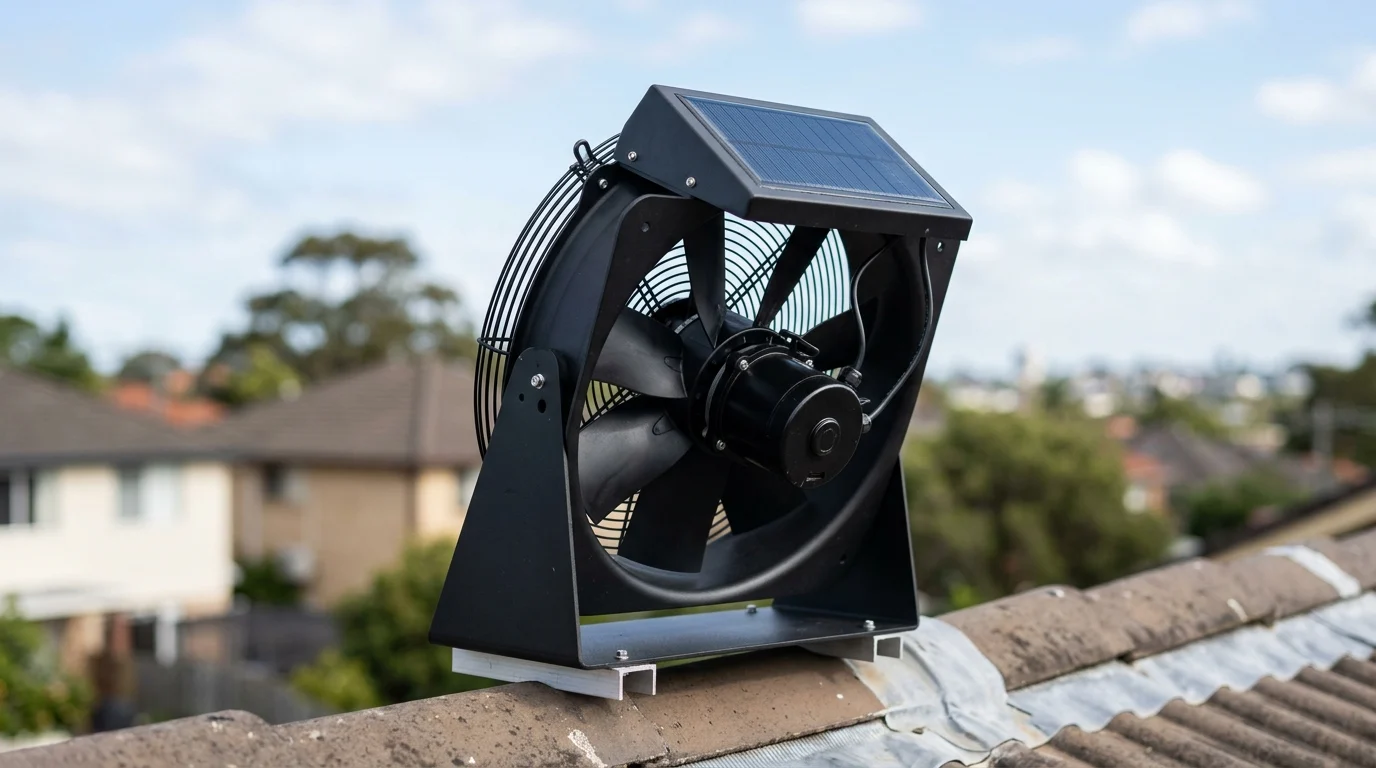
Guest comfort often depends on details guests notice only when they go wrong: a warm corridor, a humid bathroom, or a low mechanical hum at night. Quiet solar EC fans help hospitality properties improve ventilation while reducing noise and energy demand. By pairing efficient electronically commutated motors with solar power, they support fresher indoor air, more stable comfort, and lower operating costs. This article explains why these systems matter for hotels, resorts, and guest facilities, and how they can strengthen both sustainability goals and the overall stay experience.
Why Quiet Solar EC Fans Matter for Hospitality
In the competitive hospitality sector, maintaining an optimal indoor environment is paramount to securing positive guest reviews and driving repeat business. Ventilation plays a critical role in this ecosystem, balancing fresh air intake with thermal regulation and moisture control. However, traditional ventilation systems frequently introduce unwanted mechanical noise, disrupting the tranquil atmosphere that guests expect from premium accommodations.
The integration of solar electronically commutated (EC) fans represents a significant advancement in building services engineering. By combining the ultra-high efficiency of EC motor technology with renewable solar power, these systems offer a decoupled, sustainable approach to ventilation. Crucially for the hospitality industry, they operate at acoustic profiles significantly lower than their alternating current (AC) counterparts, presenting a unique opportunity to enhance guest comfort without inflating utility costs.
Guest comfort and brand impact
Acoustic comfort is directly correlated with guest satisfaction scores. Industry studies indicate that ambient noise levels exceeding 35 dB(A) in sleeping quarters can lead to sleep fragmentation, prompting negative reviews and a potential 15% to 20% decline in repeat bookings for premium resorts. Traditional mechanical ventilation often struggles to meet strict noise criteria without extensive and costly acoustic attenuation.
Quiet solar EC fans address this challenge at the source. The EC motor utilizes a brushless direct current (DC) design with integrated electronic controls, eliminating the magnetic hum and mechanical vibration characteristic of standard AC motors. When operating at partial loads, EC fans can maintain noise levels as low as 25 dB(A), ensuring that the ventilation system remains virtually imperceptible to the occupant. This acoustic invisibility protects the property’s brand equity by guaranteeing an undisturbed environment.
Best-fit property types
While versatile, quiet solar EC fans deliver the highest return on investment in specific hospitality settings. Off-grid eco-lodges, remote island resorts, and high-end glamping sites are prime candidates, as these properties often lack reliable grid infrastructure and rely on expensive diesel generators. By utilizing dedicated 50W to 150W photovoltaic panels, solar EC fans provide independent, reliable airflow without adding to the generator load.
Additionally, luxury coastal properties and wellness retreats, where the ambient soundscape is a core part of the guest experience, benefit immensely. In these environments, the absence of mechanical droning allows guests to connect with their natural surroundings. Retrofit applications in historic boutique hotels are also highly viable, as the low-voltage DC wiring associated with solar EC systems is generally less invasive to install than pulling new high-voltage AC circuits through legacy framing.
Key Performance Specifications for Solar EC Fans
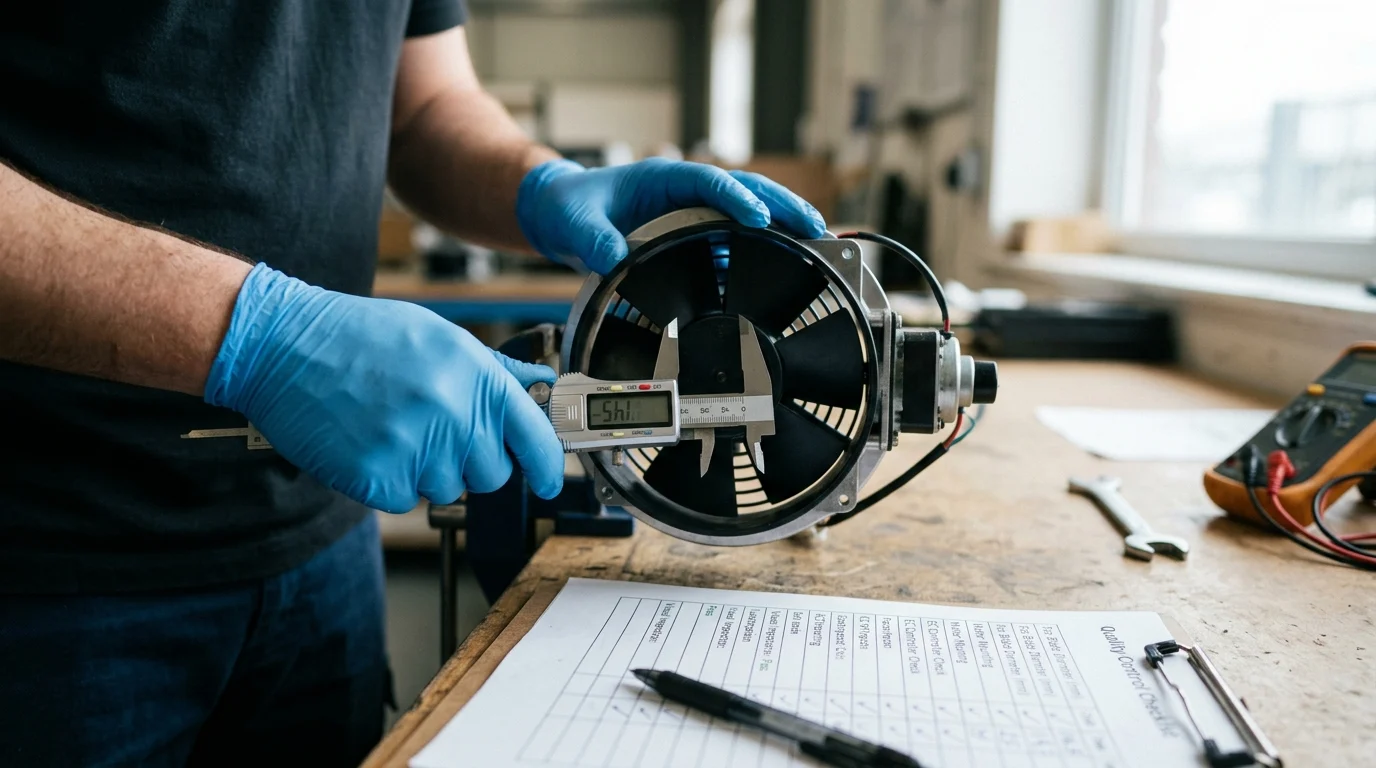
Specifying a ventilation system for a hospitality environment requires a rigorous evaluation of technical parameters. Engineers and sustainability consultants must look beyond nominal airflow ratings to understand how the system will perform under varying solar insolation and thermal loads.
Solar EC fans introduce unique variables into the specification process, primarily due to their direct-drive solar nature and the advanced electronic commutation of the motor. Understanding these specifications is essential for matching the equipment to the specific volumetric and acoustic demands of the property.
EC motors, solar input, and low-noise design
The core of a solar EC fan is its motor, which typically achieves electrical efficiencies of 80% to 90%, a stark contrast to the 45% to 60% efficiency range typical of standard shaded-pole or permanent split capacitor AC motors. This high efficiency is critical because it maximizes the volumetric airflow (CFM or m³/h) generated per watt of solar input. Standard solar inputs for these systems operate on low-voltage DC, generally ranging from 18V to 36V, depending on the matched photovoltaic panel array.
Low-noise design extends beyond the motor itself. Premium hospitality-grade solar EC fans utilize aerodynamically optimized impellers. These blades are often engineered with swept trailing edges and specialized winglets to minimize air turbulence—the primary source of broadband aerodynamic noise. Furthermore, the electronic controller allows for variable speed operation, seamlessly adjusting the fan RPM based on real-time solar yield or thermostatic triggers, ensuring the fan only works as hard—and as loud—as necessary.
Specifications engineers should compare
When evaluating solar EC fans against project requirements, engineers must cross-reference several critical data points to ensure compliance with both ventilation codes and acoustic targets.
| Specification | Conventional AC Fan | Hospitality-Grade Solar EC Fan |
|---|---|---|
| Motor Efficiency | 45% – 60% | 80% – 90% |
| Sound Pressure (at 3m) | 45 – 55 dB(A) | 25 – 35 dB(A) |
| Power Input Requirement | 120V / 240V AC Grid | 18V – 36V DC (Solar Direct) |
| Speed Control | Fixed or stepped | Continuous variable (0-10V/PWM) |
| L10 Design Life | 30,000 hours | 50,000 – 70,000 hours |
Beyond these baseline figures, specifiers should evaluate the minimum startup voltage. A superior solar EC fan controller will initiate motor rotation at extremely low solar insolation levels (e.g., 5V to 8V), ensuring ventilation commences early in the morning and continues through late afternoon or overcast conditions without requiring grid backup.
Solar EC Fans vs Conventional AC Fans
The transition from conventional AC ventilation to solar EC technology represents a paradigm shift in facility management. For hospitality decision-makers, understanding the comparative advantages across acoustics, energy utilization, and financial performance is critical for justifying the capital expenditure.
While AC fans have been the industry standard for decades due to their low upfront cost and simple design, their operational inefficiencies and acoustic profiles increasingly clash with modern sustainability goals and elevated guest expectations.
Acoustics, efficiency, and operating costs
The most immediate differentiator between the two technologies is the acoustic signature. Conventional AC fans typically generate 45 to 55 dB(A) of noise, often characterized by a distinct low-frequency hum caused by the alternating magnetic field. In contrast, the brushless DC nature of an EC motor eliminates this hum, dropping operational noise to a whisper-quiet 25 to 30 dB(A). This 20-decibel reduction represents a massive decrease in perceived loudness, transforming a noticeable mechanical intrusion into background silence.
Efficiency and operating costs heavily favor the solar EC architecture. An AC fan running continuously or for extended periods draws entirely from the commercial grid, subjecting the property to peak demand charges and fluctuating kWh rates. A solar EC fan, drawing power directly from its dedicated photovoltaic panel, operates with virtually zero grid-electricity costs during daylight hours. For a mid-sized resort operating 50 ventilation units, displacing 100 watts of grid power per fan for 8 hours a day can yield annual savings exceeding $1,500 to $2,500, depending on local utility rates ranging from $0.12 to $0.25 per kWh.
Comparison table for decision-makers
To facilitate procurement and engineering decisions, the following matrix outlines the core differences and their direct impacts on hospitality operations.
| Feature/Metric | Conventional AC Fan | Solar EC Fan | Impact on Hospitality Operations |
|---|---|---|---|
| Energy Source | 100% Grid Reliance | 100% Solar (Daytime) | Shields property from utility rate hikes and reduces Scope 2 carbon emissions. |
| Acoustic Profile | Noticeable hum (45+ dB) | Ultra-quiet (<35 dB) | Protects guest sleep quality, improving reviews and repeat booking rates. |
| Maintenance | Higher wear on bearings | Brushless, sealed bearings | Reduces facility management labor; lowers frequency of in-room maintenance disruptions. |
| Installation Wiring | High-voltage AC | Low-voltage DC | Lowers installation labor costs and simplifies retrofitting in existing structures. |
This comparison highlights that while the AC fan serves a basic utilitarian function, the solar EC fan acts as a strategic asset that simultaneously elevates the guest experience and reduces long-term operational overhead.
Specifying, Installing, and Optimizing Quiet Solar EC Fans
Maximizing the benefits of quiet solar EC fans requires meticulous planning during the specification and installation phases. Even the most advanced, low-noise equipment can underperform if improperly sized or installed with inadequate acoustic isolation.
Facility teams and mechanical contractors must collaborate to ensure that the integration of these systems aligns perfectly with the architectural nuances of the hospitality property, balancing airflow demands with strict acoustic thresholds.
Assessing acoustics and ventilation demand
The first step in specification is accurately assessing the ventilation demand, typically measured in Air Changes per Hour (ACH). A standard hotel room or resort cabin generally requires 4 to 6 ACH to maintain indoor air quality and manage humidity. Engineers must calculate the volumetric footprint of the space and select a solar EC fan capable of delivering the required CFM (Cubic Feet per Minute) while operating in the middle of its performance curve, rather than at maximum output.
Operating the fan at 60% to 70% of its maximum RPM is a critical acoustic strategy. Pushing a fan to its absolute limit exponentially increases aerodynamic noise. Furthermore, acoustic assessments must map the target Noise Criteria (NC). For luxury sleeping quarters, the HVAC and ventilation systems combined should not exceed an NC-30 rating. Specifying an oversized solar EC fan and governing its speed via a smart controller ensures the ACH targets are met while maintaining the rigorous NC-30 acoustic threshold.
Installation and commissioning practices
Installation practices dictate the final acoustic performance of the system. Structure-borne noise is a common pitfall; if a fan is mounted rigidly to the building framing, motor vibrations can amplify through the walls. Installers must utilize vibration isolators, such as neoprene mounts or spring hangers, which can attenuate up to 95% of transferred vibrational energy. Flexible ducting should also be used for the final 3 to 5 feet connecting to the interior grille to prevent acoustic bridging.
Commissioning the solar array is equally vital. To optimize the power supplied to the EC motor, the photovoltaic panels must be installed with precise orientation. In the Northern Hemisphere, panels should face true south, with a tilt angle approximately equal to the local latitude. For properties prioritizing afternoon cooling, a slight westerly bias (10 to 15 degrees) can align peak solar generation with the highest ambient thermal loads, ensuring the fan operates at peak efficiency when the guest requires it most.
Evaluating the Business Case

Transitioning to high-efficiency, low-noise ventilation represents a capital commitment. Property owners, asset managers, and sustainability consultants must build a robust business case that justifies the initial expenditure through long-term operational savings and intangible brand enhancements.
Evaluating this business case requires a holistic lifecycle cost analysis, moving beyond simple payback calculations to include maintenance reductions, carbon offset valuations, and guest retention metrics.
Capital cost, payback, and operational trade-offs
Solar EC fans carry a capital premium over standard AC units. A hospitality-grade solar EC fan and panel kit typically ranges from $300 to $600 per unit, compared to $150 to $250 for a conventional AC exhaust fan. However, this initial premium is rapidly offset by operational savings. Because the system incurs $0 in daylight operating costs, properties in high-utility-rate regions can see direct energy savings of $40 to $80 per unit annually.
When factoring in potential renewable energy tax credits—which can cover up to 30% of the equipment and installation costs in certain jurisdictions—the payback period often compresses to between 2.5 and 4.5 years. Beyond the breakeven point, the extended L10 lifespan of EC motors (often exceeding 60,000 hours) means the property avoids at least one full replacement cycle compared to legacy AC equipment, drastically reducing lifecycle capital expenditure.
Decision criteria for owners and consultants
For owners and consultants, the decision criteria should weight both quantitative savings and qualitative impacts. A primary metric is the Total Cost of Ownership (TCO) over a 10-year horizon, which heavily favors the solar EC architecture due to eliminated grid reliance and reduced facility maintenance, such as the avoidance of brush replacements common in older DC systems.
Furthermore, consultants should factor in the premium branding associated with sustainable, ultra-quiet operations.
Key Takeaways
- The most important conclusions and rationale for Solar EC Fans
- Specs, compliance, and risk checks worth validating before you commit
- Practical next steps and caveats readers can apply immediately
Frequently Asked Questions
How do quiet solar EC fans improve guest comfort?
They reduce motor hum and vibration while delivering steady airflow, helping rooms stay fresh and quiet. In hospitality spaces, operation near 25 dB(A) can support better sleep and fewer noise-related complaints.
Which hospitality properties benefit most from solar EC fans?
They are ideal for eco-lodges, island resorts, glamping sites, wellness retreats, coastal hotels, and historic boutique properties where quiet ventilation, lower energy costs, or limited grid access are key concerns.
What specifications should hotels compare before choosing solar EC fans?
Compare airflow, noise level in dB(A), DC voltage range, panel wattage, motor efficiency, speed control, installation needs, and backup power options to match guest comfort and ventilation requirements.
Why are EC motors quieter than traditional AC fan motors?
EC motors use brushless DC technology with electronic control, reducing magnetic hum, friction, and vibration. Variable speed control also lets the fan run only as fast as needed, lowering unnecessary noise.