Introduction
For factories where a few high-load intervals can drive a large share of monthly electricity costs, motor systems powered partly by on-site solar offer a practical way to cut demand charges. Instead of relying only on grid power during the most expensive periods, solar motors use photovoltaic input and compatible drive controls to support pumps, fans, compressors, and other equipment when peak loads occur. This article explains how that setup reduces strain on the grid connection, how it works with variable frequency drives, and where the biggest savings and operational limits typically appear in industrial settings.
How Solar Motors Reduce Factory Peak Load Costs
Industrial facilities operate under stringent energy cost structures, where managing peak electrical loads is paramount for profitability. Solar motors represent a specialized integration of photovoltaic technology and drive systems designed to mitigate these exact financial pressures.
By directly coupling solar generation with heavy industrial loads, facility managers can bypass significant grid dependency during the most expensive operating hours. This approach fundamentally shifts how high-consumption machinery interacts with utility billing cycles.
Why peak demand charges matter
Industrial utility tariffs are typically bifurcated into volumetric energy consumption (kWh) and peak demand charges (kW). In energy-intensive manufacturing, peak demand charges can account for 30% to 70% of a facility’s total monthly electricity bill.
When utility providers assess demand charges at rates ranging from $15 to $30 per kW based on the highest 15-minute consumption interval, a single synchronized startup of heavy machinery can incur thousands of dollars in penalties. Managing these brief but costly spikes is critical to maintaining operational margins.
How solar motors lower grid demand
Solar motors directly address these demand spikes by utilizing dual-input Variable Frequency Drives (VFDs) that accept both direct current (DC) from a dedicated solar array and alternating current (AC) from the grid.
During peak sunlight hours, the drive prioritizes the DC input, seamlessly blending in grid power only when solar irradiance drops. This active load displacement effectively shaves the facility’s peak grid demand, ensuring that the highest consumption intervals are buffered by on-site renewable generation.
Where they fit in decarbonization and resilience
Beyond immediate financial returns, integrating solar motors advances corporate decarbonization mandates. By directly offsetting grid power—which often relies on fossil fuel peaking plants—manufacturers can significantly reduce their Scope 2 greenhouse gas emissions.
Furthermore, when configured with appropriate isolation and control systems, these hybrid motor setups enhance operational resilience. They protect critical continuous processes from minor grid voltage sags or brownouts that frequently occur during peak regional demand periods.
What Solar Motors Are in Industrial Applications
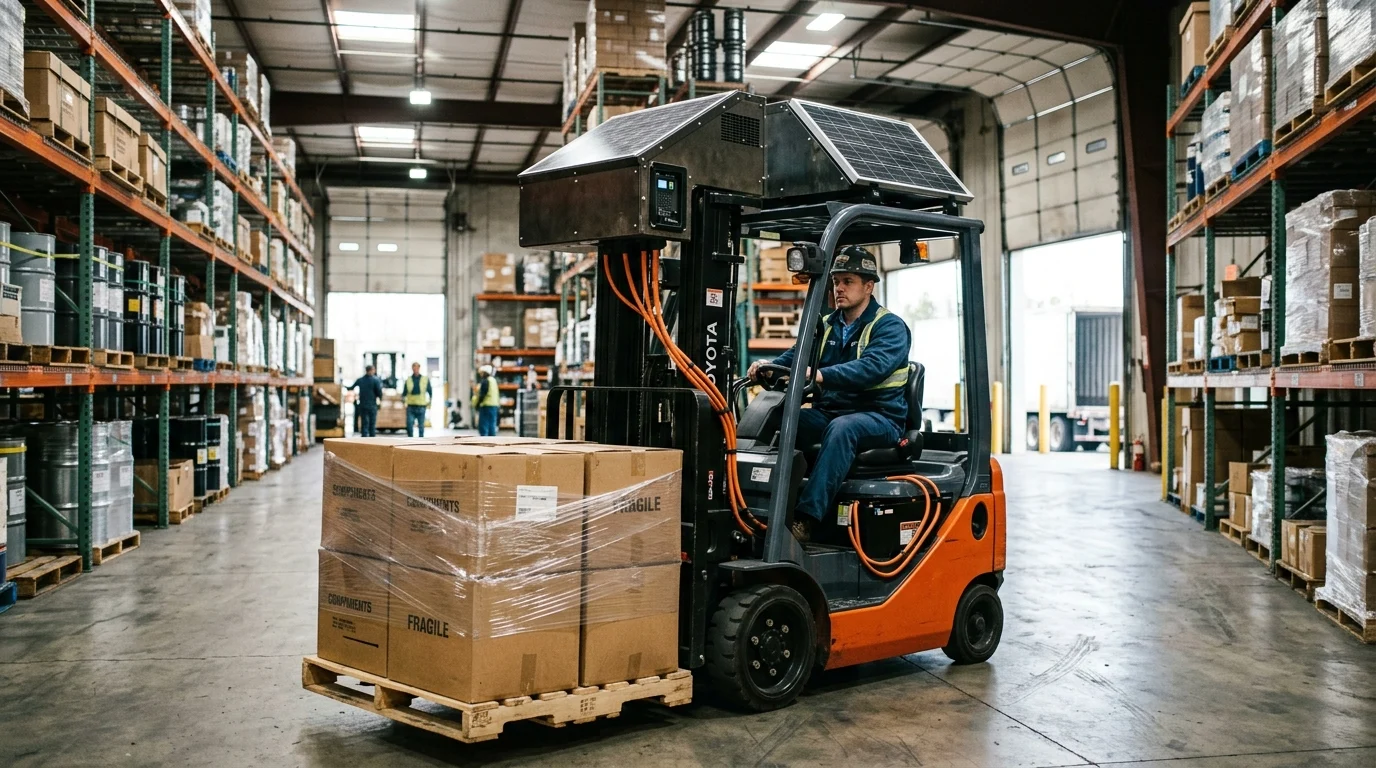
In an industrial context, a solar motor is not typically a fundamentally different mechanical machine, but rather a highly optimized electromechanical system designed for direct DC bus integration.
These systems combine high-efficiency electric motors with specialized solar drive controllers to maximize the conversion of photovoltaic energy into mechanical work without unnecessary power conversion losses.
How they differ from conventional motor systems
Conventional industrial motor systems rely entirely on the AC grid, utilizing standard VFDs to rectify AC to DC and invert it back to AC for speed control. Solar motor systems bypass the initial rectification stage for their primary power source.
They feed DC power from solar panels directly into the VFD’s DC bus via Maximum Power Point Tracking (MPPT) controllers. To maximize this direct energy conversion, these systems almost exclusively utilize IE4 Super Premium or IE5 Ultra Premium efficiency permanent magnet synchronous motors (PMSM) or synchronous reluctance motors (SynRM), minimizing internal losses compared to standard induction motors.
Suitable load profiles and duty cycles
The viability of solar motors depends heavily on the alignment between the mechanical load profile and available solar irradiance. They are optimally suited for continuous, steady-state daytime loads with 8-to-12-hour duty cycles.
Typical applications include large-scale water pumps, industrial ventilation fans, cooling tower pumps, and continuous-duty rotary screw compressors. Batch processes with erratic, short-duration power spikes are less ideal, as they may not align with the parabolic curve of daily solar energy generation.
Key performance specifications to evaluate
Evaluating a solar motor system requires scrutinizing several specific technical parameters. The MPPT drive must support high DC input voltages, typically ranging from 400V to 800V DC, to accommodate standard industrial solar string configurations.
Engineers must look for MPPT tracking efficiencies exceeding 99% and overall drive efficiencies above 97%. Additionally, the system must feature seamless transition capabilities, blending grid AC and solar DC with less than a 5-millisecond response time to prevent torque ripples during cloud cover.
| Specification | Conventional Motor System | Solar Motor System |
|---|---|---|
| Primary Power Source | 3-Phase AC Grid (480V) | Direct DC (400V-800V) + AC Backup |
| Drive Topology | Standard AC-DC-AC VFD | MPPT DC-AC + Rectified AC Backup |
| Motor Efficiency Standard | IE2 to IE3 | IE4 to IE5 (PMSM/SynRM) |
| Grid Dependency | 100% | 10% to 40% (Daytime Operations) |
How Solar Motors Compare With Other Peak Load Solutions
Facility engineers have multiple technologies at their disposal to mitigate peak demand charges. Understanding how solar motors stack up against traditional internal combustion generators and modern battery storage is critical for capital allocation.
Comparison criteria: cost, demand reduction, and reliability
When evaluating peak load solutions, the primary criteria are the Levelized Cost of Energy (LCOE), the reliable kW reduction capacity, and system longevity. LCOE accounts for capital expenditures (CapEx), operational expenditures (OpEx), and maintenance over the asset’s lifespan.
Reliability in this context refers to the system’s ability to consistently deploy its rated capacity exactly when the facility’s load peaks, preventing the establishment of a new high-water mark for the utility billing cycle.
Solar motors vs diesel generators and battery storage
Diesel generators offer high reliability for peak shaving but come with significant drawbacks, including high marginal generation costs ($0.25 to $0.40 per kWh), strict environmental permitting, and substantial maintenance overhead.
Battery Energy Storage Systems (BESS) offer excellent, instantaneous peak shaving but require high CapEx, typically ranging from $300 to $500 per kWh of storage capacity, and face degradation over a 10-to-15-year lifespan. In contrast, solar motors require a moderate CapEx for the PV array and specialized VFD, but operate with near-zero marginal costs and boast lifespans exceeding 20 years for the panels and motors.
When each option makes sense
Diesel generators remain appropriate for facilities requiring absolute emergency backup capability over extended multi-day grid outages. BESS is the superior choice for manufacturing plants with highly erratic, short-duration load spikes that occur independently of weather or time of day.
Solar motors are the most economically efficient solution for facilities with predictable, continuous base loads that operate concurrently with daylight hours, allowing the facility to structurally lower its base grid draw without the high cost of chemical energy storage.
| Technology | Typical CapEx Profile | OpEx & Maintenance | Peak Shaving Duration | Carbon Footprint |
|---|---|---|---|---|
| Solar Motors | Medium ($1.5k-$2.5k/kW) | Very Low | Sunlight dependent (8-10 hrs) | Zero (Operational) |
| Battery Storage (BESS) | High ($300-$500/kWh) | Low | Limited by capacity (2-4 hrs) | Grid dependent |
| Diesel Generators | Low ($500-$800/kW) | High (Fuel & Servicing) | Unlimited (Fuel dependent) | High Emissions |
Implementation and Compliance Considerations
Deploying solar motors within an existing industrial facility requires careful coordination between mechanical engineering, electrical distribution, and utility compliance parameters. A successful implementation hinges on rigorous upfront data analysis and strict adherence to electrical codes.
Assessing demand data and site constraints
The foundational step is analyzing the facility’s 15-minute interval meter data over a full 12-month period to identify exactly when and why peak loads occur. If the peaks correlate with continuous daytime operations, the site is technically viable.
Engineers must then assess site constraints, particularly the physical footprint required for the photovoltaic array. Industrial solar arrays typically require 5 to 7 square meters of unshaded roof or ground space per kW of installed capacity, necessitating structural load assessments for rooftop installations.
Electrical safety and interconnection requirements
Connecting high-voltage DC arrays to motor drives requires stringent adherence to electrical safety standards. In North America, installations must comply with NEC Article 690, which governs Solar Photovoltaic Systems, including rapid shutdown requirements and DC arc-fault circuit protection.
The variable frequency drives must meet UL 1741 standards for inverters and interconnection equipment. Furthermore, utility interconnection agreements often require compliance with IEEE 1547, ensuring the system possesses anti-islanding capabilities to prevent the drive from back-feeding power into the grid during a utility outage.
Controls, monitoring, and maintenance planning
Modern solar motor systems rely on sophisticated Programmable Logic Controllers (PLCs) communicating via industrial protocols like Modbus TCP or PROFINET. These control systems monitor solar irradiance, grid voltage, and motor torque requirements in real-time to optimize the power blend.
Maintenance planning must account for the dual nature of the system: the mechanical upkeep of the motor (bearing lubrication, vibration analysis) and the electrical upkeep of the solar array. This includes cleaning PV panels to prevent a 5% to 15% efficiency drop from soiling, and inspecting DC isolators and string fuses every 6 to 12 months.
How Manufacturers Should Decide Whether to Use Solar Motors

Capital expenditure approvals for industrial energy projects require clear financial justifications and measurable performance indicators. Manufacturers must systematically evaluate their operational profiles to determine if solar motors represent a prudent investment.
Where the business case is strongest
The business case for solar motors is strongest in facilities operating in regions with high solar irradiance (exceeding 4.5 kWh/m2/day) and punitive utility tariff structures where peak demand charges exceed $20 per kW.
Industries such as wastewater treatment, agricultural processing, and heavy HVAC/refrigeration present ideal load profiles. In these optimal scenarios, the combination of reduced demand charges, offset volumetric kWh costs, and available federal or regional tax incentives can compress the Return on Investment (ROI) to a highly attractive 3-to-5-year window.
Procurement questions and pilot metrics
When initiating procurement, engineers must ask vendors specific questions regarding the lifecycle support of the hybrid VFDs, demanding warranties of at least 5 to 10 years on the power electronics.
Initial pilot projects should focus on a single, continuous-duty application rather than a plant-wide rollout. Critical pilot metrics to track include the verifiable kW peak offset recorded at the utility meter, the specific yield of the solar array (kWh generated per kWp installed), and the motor’s Overall Equipment Effectiveness (OEE). Tracking these metrics over a 6-month period provides the empirical data required to justify scaling the technology across the facility.
Key Takeaways
- The most important conclusions and rationale for Solar Motors
- Specs, compliance, and risk checks worth validating before you commit
- Practical next steps and caveats readers can apply immediately
Frequently Asked Questions
How do solar motors cut factory peak demand charges?
They power motors with solar DC during high-tariff hours, so less power is pulled from the grid. This lowers the facility’s highest 15-minute demand interval and reduces monthly kW demand charges.
Which factory loads are best suited for solar motors?
Continuous daytime loads work best, such as ventilation fans, water pumps, air coolers, cooling systems, and rotary screw air compressors. Stable 8–12 hour duty cycles usually deliver the strongest savings.
Can Eternal Maxx solar motor systems keep running when sunlight changes?
Yes. Eternal Maxx solutions use intelligent PV microgrid control with AC backup, so the drive can blend solar and grid power automatically to maintain stable operation during clouds or low irradiance.
Do solar motors help with factory resilience as well as energy savings?
Yes. A properly configured hybrid solar motor system can reduce exposure to voltage sags, brownouts, and unstable grid conditions, helping critical ventilation, pumping, cooling, or compressed air processes stay reliable.
What should engineers check before choosing a solar motor system?
Review load profile, motor efficiency class, DC input range, MPPT efficiency, drive response time, and backup power integration. For industrial projects, matching solar generation to daytime demand is the most important step.