Introduction
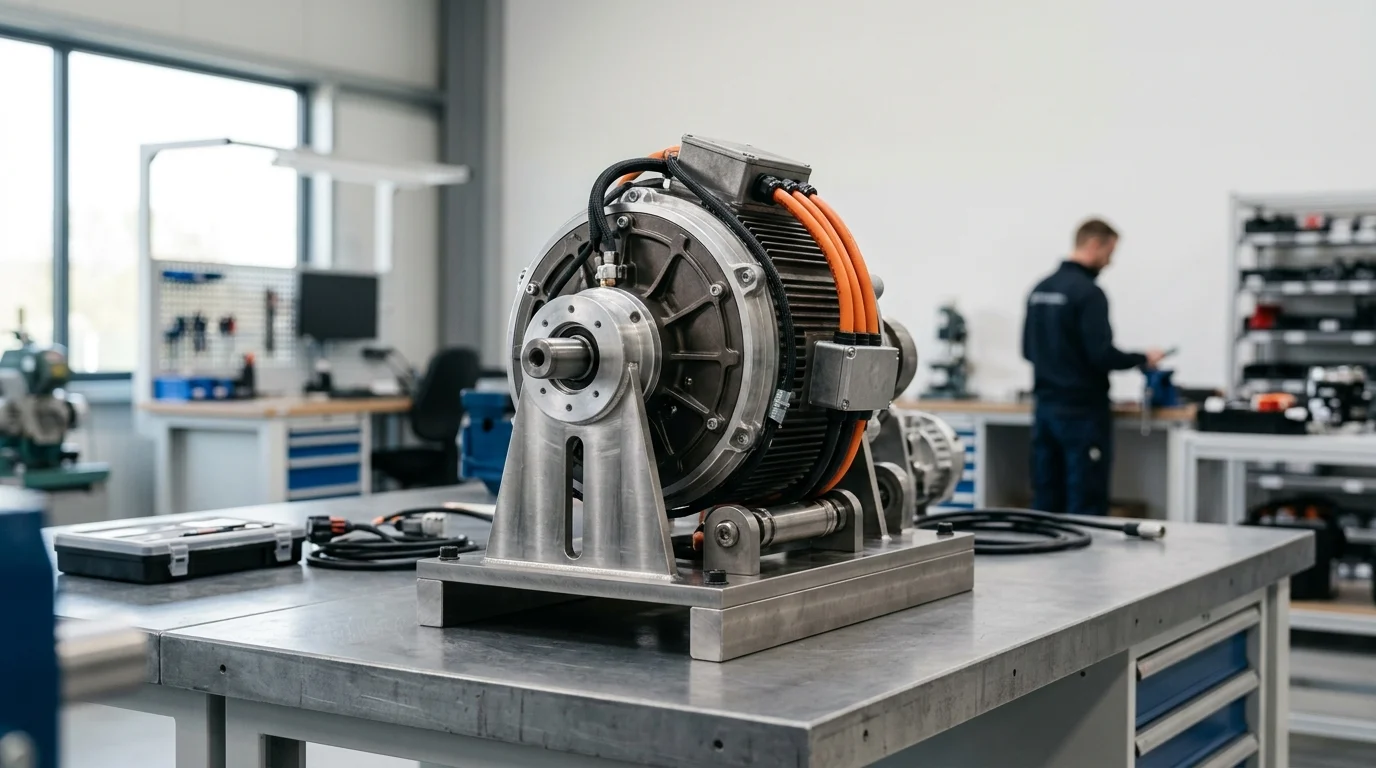
For factories where motors consume most of the electricity budget, solar motors offer a practical way to cut operating costs while reducing exposure to rising power tariffs and carbon-related expenses. Instead of relying entirely on grid-supplied electricity, these systems use photovoltaic energy to drive motor loads directly, improving efficiency in the right applications and lowering Scope 2 emissions. This article explains where solar motors make the strongest business case, how they perform in industrial settings, and what decision-makers should evaluate before deploying them at scale.
Why Solar Motors Are Becoming a Strategic Industrial Tool
Industrial facilities are confronting unprecedented pressure to optimize energy consumption, as motor-driven systems account for nearly 70% of total industrial electricity demand. In response, solar motors have transitioned from niche off-grid solutions to highly strategic assets for large-scale manufacturing and processing plants. By directly coupling photovoltaic (PV) generation with motor loads, facilities can bypass traditional grid infrastructure, effectively insulating operations from volatile utility rates and accelerating corporate sustainability mandates.
Cost and decarbonization drivers
The primary catalysts for adopting solar-driven motor systems are escalating grid tariffs and stringent carbon pricing mechanisms. Over recent years, industrial electricity prices in major manufacturing hubs have experienced annual hikes ranging from 15% to 25%. Concurrently, carbon taxation frameworks, such as the European Union’s Carbon Border Adjustment Mechanism (CBAM), are pricing emissions at €80 to €100 per metric ton. Solar motors address both challenges by directly converting solar DC power to mechanical energy, eliminating the 5% to 8% energy loss typically associated with grid-tied inverter conversions and dramatically reducing Scope 2 emissions.
Best-fit industrial applications
The most lucrative deployments for solar motors involve processes that require continuous, high-torque operation during daylight hours and possess inherent storage capacities. Prime examples include industrial water pumping, large-scale ventilation fans, agricultural aeration, and compressor systems. For instance, a 50 kW industrial pumping station operating at 80% capacity during peak irradiance hours can utilize a direct solar-to-Variable Frequency Drive (VFD) setup to move fluids into elevated reservoirs. This approach leverages the fluid reservoir as a mechanical battery, entirely decoupling the process from peak daytime grid tariffs.
What Factory Managers Need to Know About Solar Motors
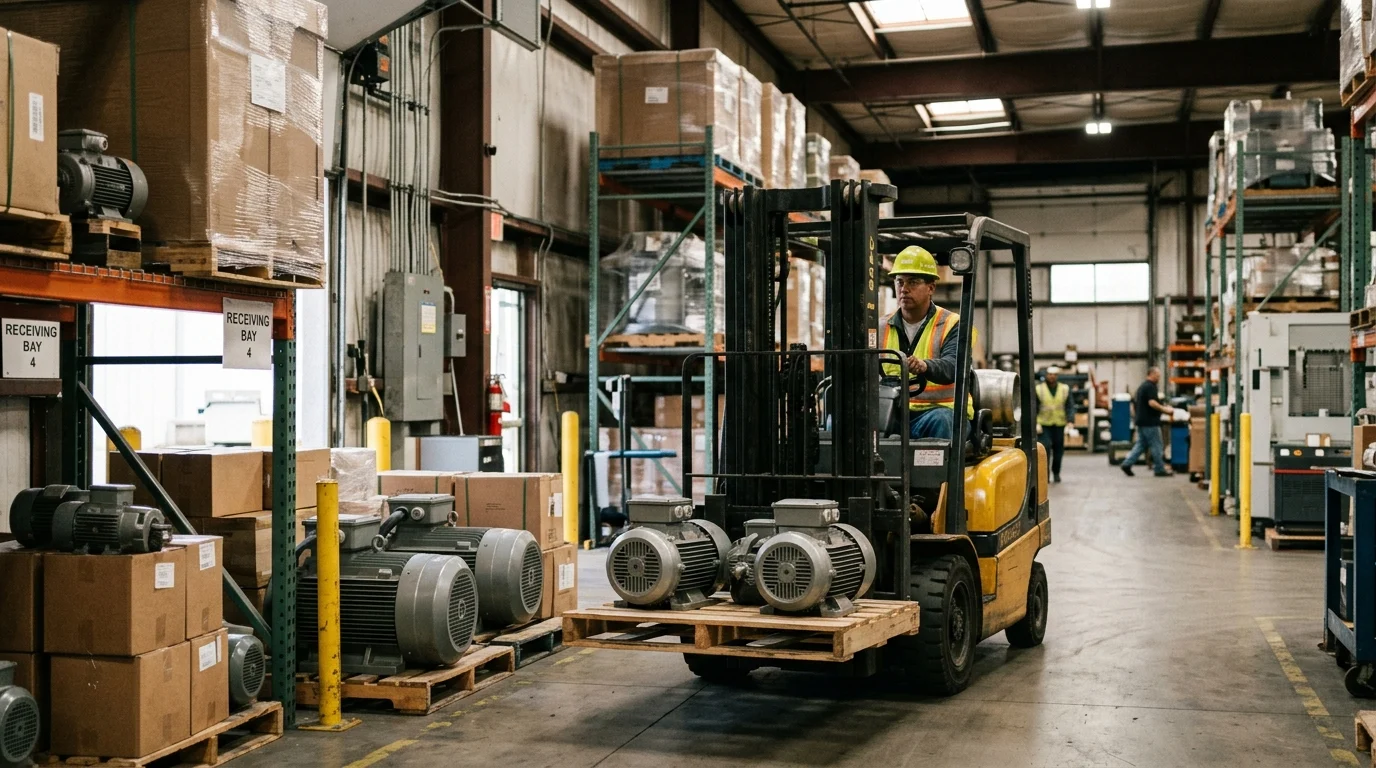
Integrating photovoltaic power directly with industrial motor loads requires a fundamental understanding of system architecture. Unlike conventional grid-tied motors that rely on deterministic alternating current (AC), solar motors operate in dynamic environments where input power fluctuates. Factory managers must evaluate how direct current (DC) coupling mechanisms interact with motor efficiency standards to maintain reliable plant operations.
Common system configurations
Modern industrial solar motor systems typically bypass standard string inverters in favor of specialized solar VFDs. These drives accept high-voltage DC directly from the PV array—often operating on a 400V to 800V DC bus—and output variable AC to standard three-phase industrial motors. Hybrid configurations are also common in critical factory settings; these systems feature automatic switchover or blending capabilities, drawing from the grid or a secondary generator only when solar output drops below the motor’s minimum operational threshold.
| Configuration Type | Power Conversion | Grid Dependency | Initial CapEx Premium | Typical Application |
|---|---|---|---|---|
| Direct DC Motor | PV to DC Motor | Zero (Off-grid) | Low | Small-scale remote pumping |
| Solar VFD to AC Motor | PV to VFD to AC | Zero | Medium | Daytime ventilation, aeration |
| Hybrid Solar/Grid VFD | PV/Grid blending to AC | Partial | High | Critical HVAC, continuous processing |
Key variables affecting output and savings
The mechanical output and financial savings of a solar motor system are dictated by environmental and hardware variables. Standard Test Conditions (STC) for PV panels assume an irradiance of 1000 W/m² and a cell temperature of 25°C. However, factory roof temperatures often exceed this, and standard monocrystalline panels suffer a power degradation of approximately -0.35% per degree Celsius above STC. To maximize energy yield under these conditions, factory managers must pair solar VFDs equipped with precise Maximum Power Point Tracking (MPPT) algorithms with ultra-premium efficiency motors, specifically IE4 or IE5 synchronous reluctance motors, which maintain high efficiency even at partial loads.
How Solar Motors Compare With Conventional Motor Systems
Comparing solar motors to conventional grid-dependent systems requires analyzing beyond basic nameplate horsepower. The fundamental difference lies in the operational profile: conventional systems draw power deterministically to maintain fixed speeds, while solar motor systems inherently operate variably based on available irradiance. Understanding these differences is critical for engineering teams tasked with maintaining process stability.
Evaluation criteria for factories
When evaluating these systems, facilities must assess lifecycle costs, maintenance requirements, and power quality impacts. Conventional grid-tied motors driven by standard VFDs often introduce harmonic distortion back into the factory grid, requiring expensive harmonic filters. Solar VFDs powered by isolated PV arrays eliminate this grid-injected distortion. From a financial perspective, the Return on Investment (ROI) for solar motor retrofits typically ranges from 3 to 6 years, accelerating rapidly in regions where industrial electricity tariffs exceed $0.15 per kWh.
| Evaluation Metric | Conventional Motor System | Solar Motor System (Hybrid VFD) |
|---|---|---|
| Energy Cost | 100% Subject to utility rates | 60-100% Offset during daylight |
| Speed Control | Fixed or variable via standard VFD | Inherently variable (MPPT driven) |
| Grid Harmonics | High (requires mitigation) | Negligible (isolated DC bus) |
| Operational Lifecycle | Standard motor degradation | Extended via soft-start MPPT algorithms |
Relevant compliance and safety standards
Industrial deployment of solar motor technology is governed by strict compliance and safety standards. Electrical engineering teams must ensure that the PV array and solar VFD comply with IEC 61800 standards for adjustable speed electrical power drive systems, and UL 1741 for inverter safety. Furthermore, performance monitoring should align with IEC 61724 to accurately track system yield. Because solar VFDs are frequently installed close to the motor in harsh industrial environments, enclosures must meet stringent ingress protection ratings, typically IP65 or IP66, to defend against dust, moisture, and chemical exposure.
How to Assess, Specify, and Deploy Solar Motors
Procuring and installing a solar motor system is fundamentally different from replacing a standard factory motor. The engineering phase demands precise load profiling and environmental modeling rather than simple nameplate matching. A rigorous specification process ensures that the photovoltaic array, the drive electronics, and the motor operate harmoniously without risking process downtime.
Sizing and deployment process
Proper sizing requires deliberate oversizing of the PV array relative to the motor’s power rating. Industry best practice dictates a DC-to-AC ratio of 1.2 to 1.4. For example, if an industrial blower requires a 30 kW motor, the supporting PV array should be sized between 36 kWp and 42 kWp. This oversizing compensates for system losses and ensures the motor reaches its nominal operating speed earlier in the morning and sustains it later into the afternoon. Additionally, DC cable runs from the array to the VFD must be meticulously sized to ensure voltage drop remains strictly below 2%, preserving the efficiency of the MPPT.
How to compare suppliers and warranties
Supplier evaluation must focus on component integration and long-term reliability metrics. Procurement teams should prioritize vendors offering pre-engineered, factory-tested packages rather than piecemeal components. Warranty structures are a critical differentiator: a robust industrial package should include a 25-year linear performance warranty for the PV modules, a 5-to-10-year warranty for the solar VFD, and standard 2-to-3-year coverage for the motor. Furthermore, the Mean Time Between Failures (MTBF) for the drive electronics should be certified to exceed 50,000 hours under rated industrial thermal conditions.
Decision Framework for Solar Motor Adoption

Capitalizing on solar motor technology requires a strategic decision framework that balances operational flexibility with capital expenditure limits. Not every factory load is a suitable candidate for solar integration. Facility managers must identify processes where variable power availability aligns with production schedules, ensuring that the capital invested yields the highest possible reduction in long-term operating expenses.
Operating scenarios with strongest fit
The most favorable operating scenarios involve processes that can act as “virtual batteries.” Operations featuring thermal or fluid storage—such as pumping water into elevated tanks, chilling massive volumes of liquid for later use, or compressing air into large accumulator tanks—are ideal. By performing the energy-intensive mechanical work when solar irradiance is at its peak (typically between 08:00 and 16:00), factories avoid the prohibitive capital costs of lithium-ion battery storage, which currently ranges from $300 to $500 per kWh of capacity. These flexible loads absorb the solar energy immediately, storing the output mechanically rather than electrically.
How to make the final decision
The final investment decision hinges on the Levelized Cost of Energy (LCOE) calculated specifically for the motor load in question. If the localized LCOE of the solar motor system falls below $0.06 per kWh while the utility grid rate remains above $0.12 per kWh, the financial mandate is clear. To mitigate operational risk, factory managers should execute a phased deployment. Transitioning 10% to 15% of the facility’s non-critical, daytime-heavy motor fleet serves as a highly measurable pilot. This allows engineering teams to validate MPPT performance, quantify actual grid offsets, and refine maintenance protocols before committing to a plant-wide rollout.
Key Takeaway
- The most important conclusions and rationale for Solar Motors
- Specs, compliance, and risk checks worth validating before you commit
- Practical next steps and caveats readers can apply immediately
Frequently Asked Questions
What factory loads are best suited to solar motors?
Daytime, variable-speed loads with built-in storage work best, such as water pumps, ventilation fans, air coolers, aeration, and some compressors.
How do solar motors reduce factory energy costs?
They use PV power directly for motor loads, cutting peak grid purchases, avoiding some conversion losses, and lowering exposure to rising utility tariffs.
Do solar motors work when sunlight drops?
Yes, with a hybrid solar/grid VFD or day/night support. Reduce Factory Energy Costs with Solar Motors microgrid solutions can switch or blend power to keep critical operations running.
What motor and drive setup is usually recommended?
For most factories, a solar VFD with MPPT paired with a high-efficiency IE4 or IE5 three-phase motor delivers the best balance of savings and reliability.