Selecting the correct Brushless DC (BLDC) motor is a critical engineering decision that dictates the efficiency, lifespan, and operational reliability of your mechanical system. This comprehensive guide explores the essential technical parameters, application requirements, and environmental factors you must evaluate to choose the optimal BLDC motor for your specific needs.
Understanding the Fundamentals of BLDC Motor Technology
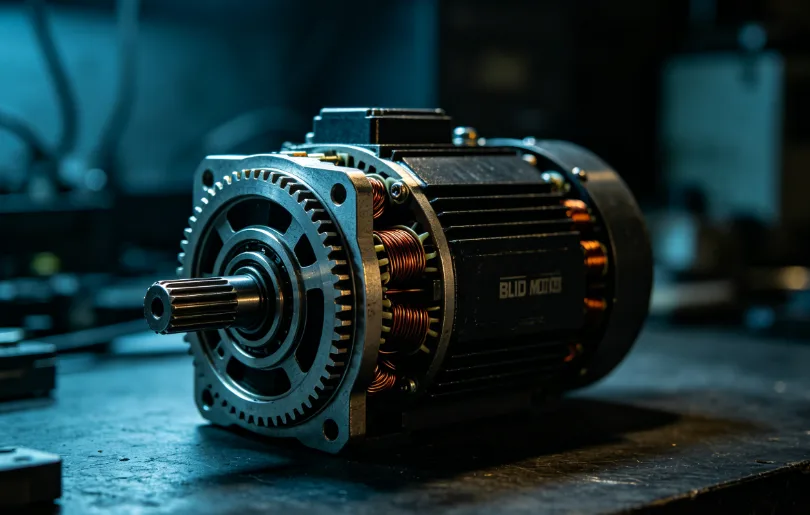
A Brushless DC motor is a synchronous motor powered by direct current electricity via an inverter or switching power supply, which produces an alternating current to drive each phase of the motor via a closed-loop controller. Unlike traditional brushed motors, BLDC systems utilize electronic commutation, which eliminates the friction and sparking associated with physical brushes. This design results in higher torque-to-weight ratios, increased efficiency, and significantly lower maintenance requirements.
In the context of modern energy systems, such as an Always-On Ventilation System, BLDC motors provide the precise speed control necessary for varying loads. By removing the mechanical commutator, these motors achieve operational efficiencies often exceeding 90%, making them the preferred choice for high-duty cycle industrial applications.
Defining Your Core Performance Requirements
The first step in selection is defining the mechanical load requirements, which include torque, speed, and power. Torque is the rotational force required to move the load, while speed (RPM) defines how fast that load must rotate. It is essential to distinguish between continuous torque (the torque the motor can provide indefinitely) and peak torque (required during acceleration or intermittent heavy loads).
When evaluating motors for a Solar Water Pump, you must calculate the starting torque required to overcome static friction and head pressure. Choosing a motor with insufficient torque will lead to overheating or failure to start, while an oversized motor increases system costs and reduces electrical efficiency at partial loads.
Table 1: Key Performance Parameter Checklist
| Parameter | Definition | Impact on Selection |
|---|---|---|
| Rated Voltage | The electrical potential for peak efficiency. | Dictates battery or power supply compatibility. |
| Rated Torque | The continuous rotational force output. | Determines the motor’s ability to drive the load. |
| Rated Speed | The angular velocity at rated voltage/load. | Affects gear ratio requirements and throughput. |
| Peak Current | Maximum current allowed during startup. | Defines the specifications for the motor controller. |
Evaluating Electrical Specifications and Power Sources
BLDC motors are sensitive to voltage fluctuations and power quality. You must match the motor’s rated voltage with your available power source, whether it is a 12V/24V battery system, a 48V DC microgrid, or rectified AC mains. For renewable energy applications, such as those utilizing a Photoelectric Complementarity System, the motor must handle the variable voltage outputs typical of solar arrays.
Efficiency is another vital electrical metric. High-efficiency motors reduce heat generation, which is the primary enemy of motor longevity. According to the International Electrotechnical Commission (IEC) 60034-30-1 standard, energy-efficient motors (IE3 or IE4 levels) provide significant long-term cost savings despite higher initial capital expenditure.
Choosing Between Sensored and Sensorless Control
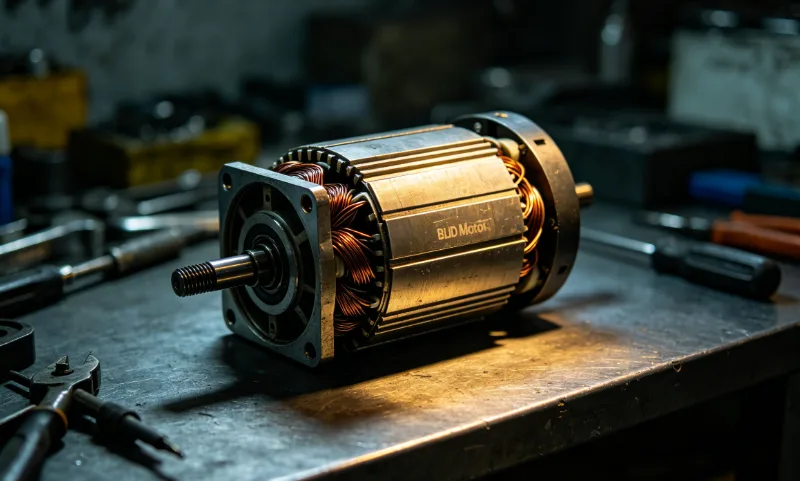
BLDC motors require feedback to determine the rotor position for accurate commutation. This is achieved via Hall Effect sensors or “sensorless” back-EMF (Electromotive Force) detection. Sensored motors provide high starting torque and smooth operation at very low speeds, making them ideal for precision positioning.
Conversely, sensorless motors are more robust in harsh environments because they have fewer electronic components within the motor housing. For systems like a Solar Air Compressor, where the motor may operate in high-vibration or high-temperature zones, sensorless control reduces potential failure points and simplifies wiring.
Table 2: Sensored vs. Sensorless BLDC Comparison
| Feature | Sensored BLDC | Sensorless BLDC |
|---|---|---|
| Starting Torque | High and immediate. | Moderate; requires movement to detect EMF. |
| Low-Speed Smoothness | Excellent. | Poor (cogging may occur). |
| Wiring Complexity | Higher (8+ wires). | Lower (3 power wires). |
| Reliability | Susceptible to sensor failure. | High durability in harsh conditions. |
Environmental Factors and Ingress Protection (IP) Ratings
The operating environment dictates the required mechanical protection for the motor. Dust, moisture, and chemical exposure can degrade internal components and bearings. Standard industrial motors often feature IP54 or IP55 ratings, providing protection against dust and water splashes. However, for outdoor or wash-down environments, an IP65 or higher rating is necessary.
Thermal management is equally critical. BLDC motors generate heat primarily in the stator windings. If you are integrating a motor into a Solar Air Cooler, ensure the housing allows for adequate heat dissipation or utilizes forced-air cooling. Excessive heat de-rates the motor’s performance and can demagnetize the permanent magnets over time.
Mechanical Integration and Form Factor
The physical dimensions—including frame size, shaft diameter, and mounting style—must align with your existing machinery. Standardized NEMA or IEC frame sizes simplify the replacement process. Additionally, consider the type of bearings used; high-quality ball bearings are essential for high-speed applications to minimize friction and noise.
In weight-sensitive applications, the power density of the motor becomes a primary KPI. Modern BLDC motors utilizing neodymium magnets offer the highest power density, allowing for a compact footprint without sacrificing torque. This is a vital consideration when designing mobile or modular solar-powered hardware.
Cost-Benefit Analysis: Initial vs. Lifecycle Costs
While BLDC motors generally have a higher upfront cost than AC induction or brushed DC motors, their lifecycle value is significantly superior. The U.S. Department of Energy (DOE) highlights that energy consumption accounts for nearly 95% of a motor’s total lifecycle cost.
By investing in a high-efficiency Solar Industrial Fan motor, users can realize a return on investment (ROI) within 12 to 24 months through reduced energy bills and eliminated brush replacement downtime. Based on industry estimates from 2025, switching to BLDC technology in industrial ventilation reduces maintenance-related labor costs by approximately 40%.
Table 3: Selection Matrix for Application Types
| Application Type | Primary Requirement | Recommended Motor Feature |
|---|---|---|
| Pumping/Fluids | Constant Torque | High IP Rating, Sensorless |
| HVAC/Cooling | Continuous Operation | High Efficiency (IE4+), Quiet Bearings |
| Tooling/CNC | Precision Speed | Sensored Feedback, Low Cogging |
| Compressors | High Startup Load | High Peak Torque Capacity |
Frequently Asked Questions
How do I determine the correct power rating for my BLDC motor?
Calculate the continuous mechanical power by multiplying the required torque (Nm) by the angular velocity (rad/s). To ensure longevity, industry standards suggest selecting a motor with a rated power 20% higher than your maximum calculated load to account for friction losses and environmental de-rating.
Can I run a BLDC motor directly from a battery without a controller?
No, a BLDC motor cannot function without an electronic controller. The controller acts as the brain, switching the current to the motor phases in the correct sequence. Using a high-quality controller is essential for protecting the motor against over-current, under-voltage, and thermal runaway.
What is the typical lifespan of a high-quality BLDC motor?
In standard operating conditions, a BLDC motor’s lifespan is primarily limited by its bearings. Most industrial-grade BLDC motors are rated for 20,000 to 30,000 hours of operation. This is significantly higher than brushed motors, which often require maintenance every 2,000 to 5,000 hours.
How does ambient temperature affect BLDC motor selection?
High ambient temperatures reduce the motor’s ability to dissipate heat, requiring a “de-rating” of the torque capacity. If operating in environments above 40°C, you must either select a larger motor or ensure enhanced active cooling to prevent the internal windings from exceeding their insulation class temperature.