Solar EC motors are revolutionizing the HVAC and industrial ventilation sectors by combining the efficiency of Electronically Commutated technology with direct solar power integration. This article examines the technical superiority of solar-ready EC motors over traditional AC induction motors and explores why they are the primary choice for modern sustainable cooling systems.
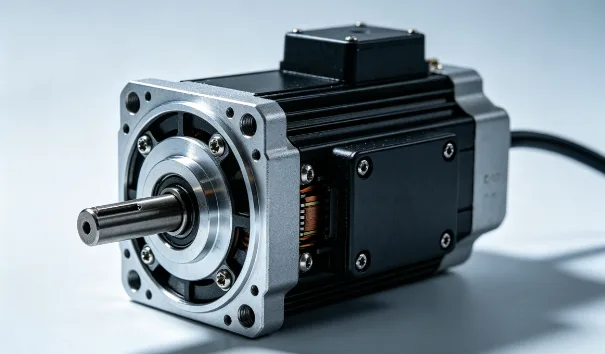
Understanding the Shift from AC to Solar EC Motors
Traditional alternating current (AC) motors have been the industry standard for decades, yet they suffer from inherent energy losses due to their reliance on induction. In contrast, an Electronically Commutated (EC) motor—often categorized as a brushless DC (BLDC) motor—utilizes permanent magnets and integrated electronics to control speed and torque. When these motors are optimized for solar input, they eliminate the need for complex inverters, allowing a solar industrial fan to operate directly from photovoltaic (PV) panels with maximum efficiency.
The fundamental difference lies in how power is managed. AC motors operate at a fixed speed determined by the frequency of the power grid, requiring external variable frequency drives (VFDs) for modulation. Solar EC motors integrate these controls internally, reducing system complexity and failure points. This integration is crucial for decentralized cooling applications where grid stability is inconsistent or non-existent.
Comparative Analysis: AC Motors vs. Solar EC Motors
The following table summarizes the primary technical differences between traditional AC induction motors and high-efficiency Solar EC motors used in industrial cooling.
| Feature | AC Induction Motor | Solar EC (BLDC) Motor |
|---|---|---|
| Efficiency | 60% – 80% | 85% – 92%+ |
| Power Source | AC Grid (Direct) | DC Solar / AC Grid (Dual) |
| Speed Control | Requires External VFD | Integrated Electronic Control |
| Heat Generation | High (Induction Losses) | Low (Permanent Magnets) |
| Maintenance | Regular (Brushes/Bearing Wear) | Minimal (Brushless Design) |
The Efficiency Gap and Energy Savings
The efficiency gap between AC and EC technology is the primary driver for the current market transition. Standard AC motors lose significant energy as heat during the induction process, particularly when running at partial loads. Solar EC motors maintain high efficiency across their entire speed range, which is vital for a solar air cooler that must adjust its output based on fluctuating solar intensity throughout the day.
According to the U.S. Department of Energy (DOE), motor-driven systems account for nearly 70% of all electricity consumed by the industrial sector. Switching to EC technology can reduce fan energy consumption by 30% to 50%. In solar-powered applications, this efficiency directly translates to smaller PV array requirements, lowering the total capital expenditure of the cooling installation.
Thermal Management and Longevity
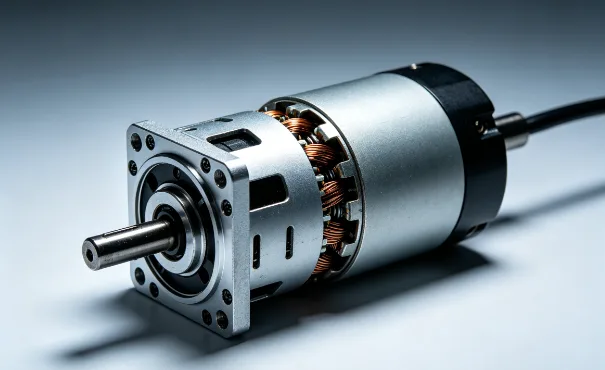
Heat is the enemy of motor longevity. Because AC motors generate internal heat through friction and electrical resistance, their insulation and bearings degrade faster over time. Solar EC motors run significantly cooler because the magnetic field is generated by permanent magnets rather than electrical induction in the rotor. This cooler operation extends the service life of the motor components and reduces the cooling load on the surrounding environment.
For industrial facilities, utilizing a solar air compressor or ventilation system equipped with EC motors reduces the “internal heat gain” of the building. This creates a synergistic effect: the motor uses less power to move air, and because it runs cooler, the air conditioning system has less heat to remove.
Seamless Integration with Photovoltaic Systems
One of the most significant advantages of Solar EC motors is their native compatibility with Direct Current (DC). Solar panels produce DC power, which must be converted to AC to run a standard motor, resulting in a 10-15% conversion loss. A solar pump using an EC motor can accept DC power directly from the panels, maximizing the “photon-to-motion” conversion rate.
Modern systems often utilize “Photoelectric Complementarity” or microgrid solutions. This allows the motor to prioritize solar energy during the day and seamlessly switch to grid power at night or during heavy cloud cover. This hybrid capability ensures that critical cooling infrastructure remains operational 24/7 without the massive energy bills associated with pure AC systems.
Reliability and Maintenance Requirements
Maintenance-free operation is a critical requirement for remote or industrial cooling sites. AC motors often feature brushes or complex mechanical starters that require periodic replacement. The brushless design of Solar EC motors eliminates these wear items. Furthermore, the integrated electronics provide built-in protection against over-voltage, under-voltage, and thermal overloads, which are common issues in solar applications.
Industrial operators investing in an always-on ventilation system benefit from the predictive diagnostics often included in EC motor controllers. These systems can monitor performance trends and alert staff to potential issues before a failure occurs. This shift from reactive to proactive maintenance is essential for large-scale sustainable operations where downtime is costly.
Cost-Benefit Analysis of Motor Upgrades
While the initial purchase price of an EC motor is typically higher than a basic AC motor, the Total Cost of Ownership (TCO) is significantly lower. The combination of energy savings, reduced maintenance, and longer equipment life results in a typical payback period of 12 to 24 months for industrial cooling applications.
| Cost Component | Traditional AC System | Solar EC Motor System |
|---|---|---|
| Initial Purchase | Lower | Higher |
| Installation | Standard | Simplified (Integrated Controls) |
| Operational Cost | High (Grid Dependent) | Ultra-Low (Solar Focused) |
| 20-Year Maintenance | High (Replacement/Repairs) | Low (Long Component Life) |
Industry data from the International Energy Agency (IEA) suggests that as global energy prices fluctuate, the demand for high-efficiency motor systems will grow by 15% annually through 2026. Businesses that adopt Solar EC technology now are positioning themselves against future energy volatility.
Future-Proofing with Intelligent Microgrids
The final reason Solar EC motors are replacing AC motors is their role in the “Intelligent Microgrid.” Modern cooling systems are no longer isolated machines; they are nodes in a smart energy network. EC motors can communicate with building management systems (BMS) via protocols like Modbus or BACnet, allowing for precise demand-response strategies.
By integrating intelligent microgrid solutions, facilities can dynamically balance the load of their industrial fans and compressors based on real-time solar production. This level of granularity is impossible with standard AC motors without expensive secondary equipment. As corporate ESG (Environmental, Social, and Governance) mandates become stricter, the ability to prove 100% solar-powered cooling becomes a major competitive advantage.
FAQ
Can I replace an existing AC motor with a Solar EC motor?
Yes, many Solar EC motors are designed with standard NEMA or IEC frame sizes, making them “drop-in” replacements for AC motors. However, you must ensure the motor controller is compatible with your existing power infrastructure or install a dedicated solar controller to manage the DC input.
Does a Solar EC motor work when it is cloudy?
Solar EC motors are highly efficient at partial loads, allowing them to continue operating even during low-light conditions. Most industrial systems utilize a hybrid controller that blends solar power with grid power to maintain consistent airflow regardless of the weather.
What is the expected lifespan of a Solar EC motor?
Under normal operating conditions, a high-quality EC motor is rated for 40,000 to 50,000 hours of continuous use. This longevity is primarily due to the lack of brushes and the reduced heat generation compared to traditional induction motors, which often fail due to winding insulation breakdown.
Why is EC technology considered more sustainable than AC?
Sustainability stems from two factors: reduced energy consumption and material efficiency. EC motors use less electricity for the same output, reducing carbon emissions. Additionally, their high efficiency means they can be physically smaller and lighter than AC motors of the same power rating, saving raw materials.
Are Solar EC motors noisy compared to AC motors?
Actually, EC motors are significantly quieter. Traditional AC motors often produce a “hum” caused by the 50/60Hz frequency of the grid and the vibration of the induction rotor. The electronic commutation in EC motors provides a smoother rotation, resulting in lower acoustic noise levels in industrial environments.