1. How to Quickly Distinguish Between Two Motors?
In contrast, the primary difference of the core structure of a brushed motor to that of a brushless motor. Brushed motors typically include brushes and commutators (copper half-rings). These 2 parts through mechanical contact are realized by current commutation, there is something being friction in the interior of the motor.
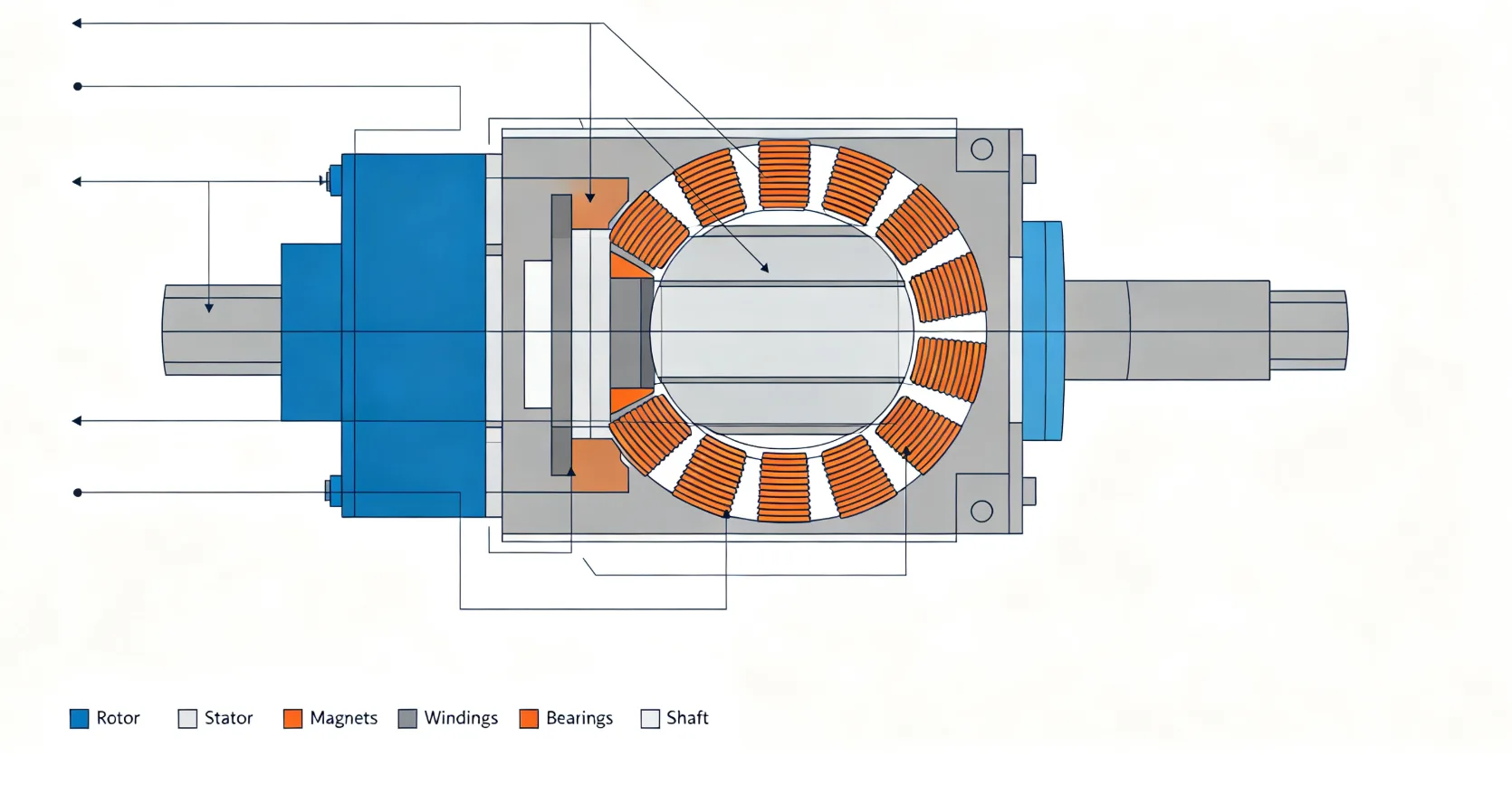
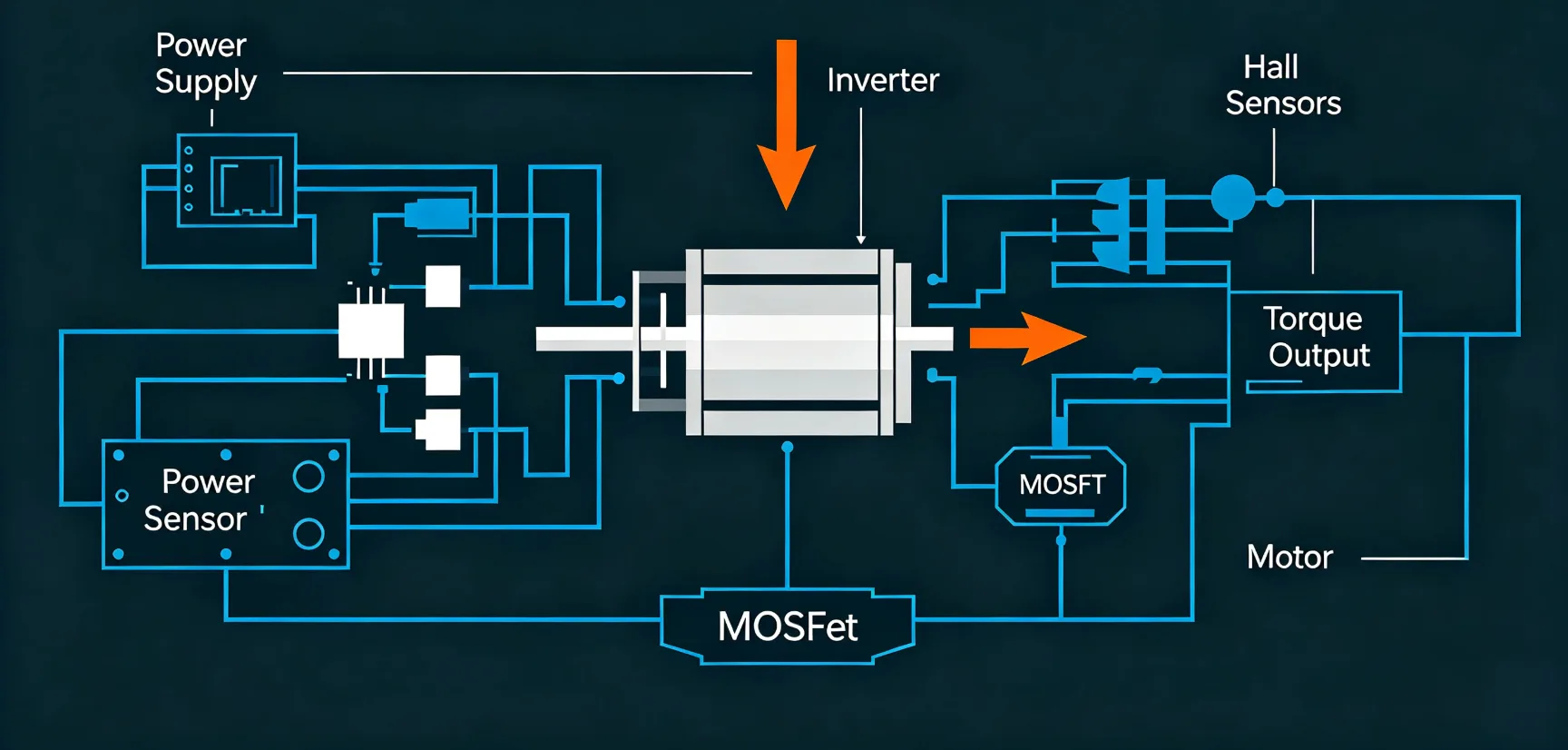
Brushless motors, on the other hand, are generated without using brushes and commutators as they depend on external electronic controllers to perform commutation — thank you voltage electrical energy. They have a simpler alternative internal structure without friction contact components, only with stators and rotors.
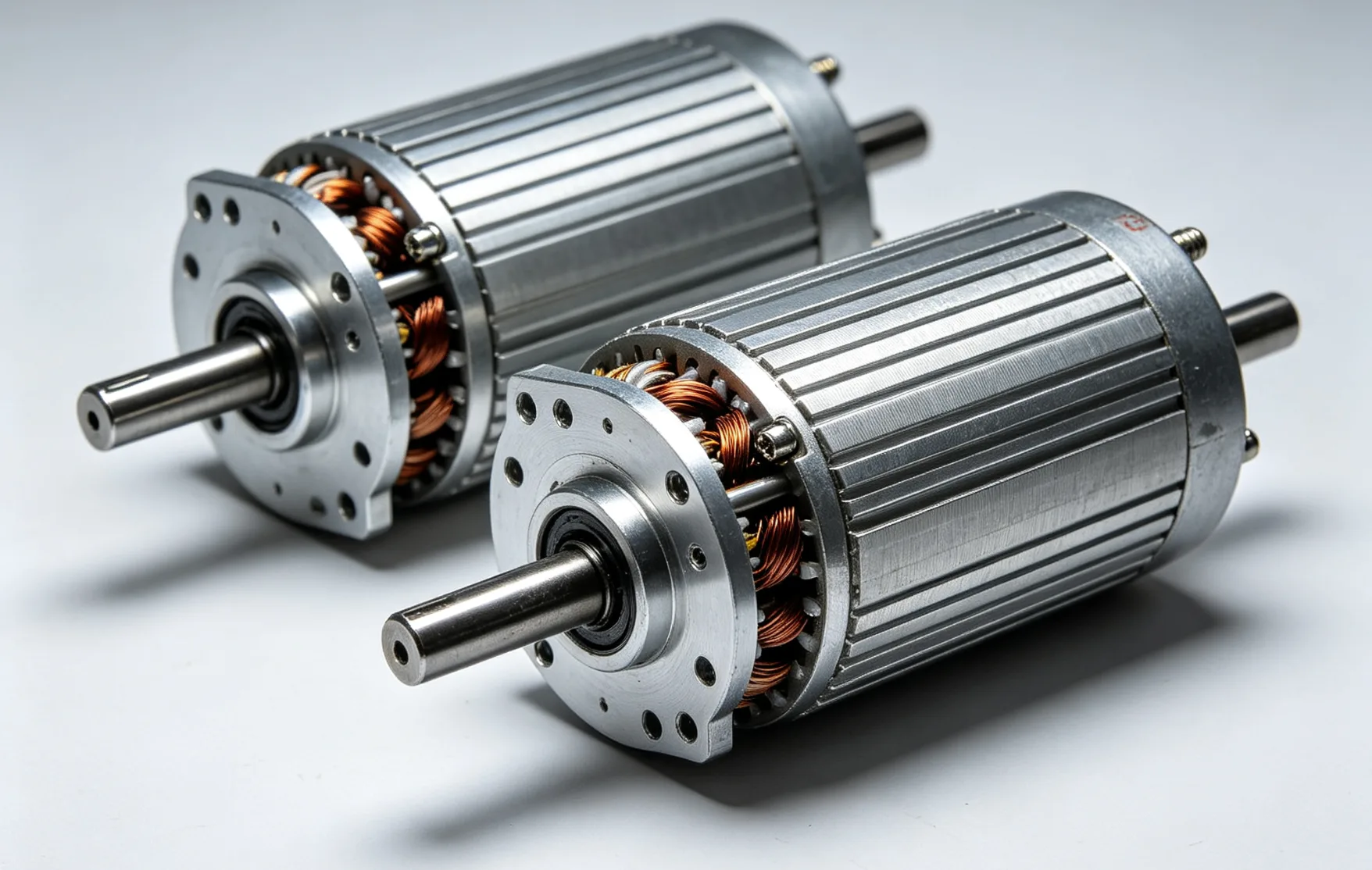
That means then, how can we tell brushed and brushless motors quickly and easily?
(1) Parameters
The noseplate, a plate on the end-surface of a motor that provides specifications regarding the size and operation of the motor. One engine from another by model designation, electrical data and if relevant control related parameters. These specific differences include:
- The names of many brushless motor models also include acronyms such as “BL” or “BLDC” (Brushless DC), e.g. “VOL-BL10B48” or “VOL-BL500C72”, which obviously inform that the given units are Brushless motors.
- On the other hand, brushed motors have no special prefix in their name or start with “Brushed” and just labelled DC followed by parameters (IE: DC0. 1-80″ or “DC0. 25/24-100”.
(2) Phase number and wiring
Brushless motors are mostly three-phase designs, with their parameters clearly indicating “3-Phase” (three-phase). The number of leads typically corresponds to 3 power leads (e.g., “3 Wires”), and some also specify the number of signal wires (e.g., “3+2 Wires”, including Hall sensor wires).
Brushed motors, however, are single-phase. Their parameters do not include a “phase count” designation, and they have only 2 leads (“2 Wires”), directly corresponding to the positive and negative terminals of the power supply.
(3) Control and speed regulation
Parameters for brushless motors include “control methods” such as “PWM speed regulation” and “sinusoidal wave drive,” and may also specify controller parameters (e.g., “Controller Input: 0-5V PWM”).
Brushed motors, with their simple control, require no additional controller. Their parameters only indicate a “voltage speed regulation range” (e.g., “12-24V Adjustable”) and contain no descriptions of “control signals” or “drive methods.”
(4) Rated parameters
Brushless motors may be marked with a “rated frequency” (e.g., “50-100Hz”) because they require frequency adjustment to regulate speed.
Brushed motors only indicate “rated voltage” and “rated current” (e.g., “24V 10A”); their speed regulation relies on voltage changes, with no frequency parameters specified.
(5) Lifespan and maintenance
Brushed motors may be marked with “brush life” (e.g., “5000 hours”) or “maintenance cycle.”
Brushless motor parameters often emphasize “maintenance-free” and “service life of over 10,000 hours,” with no brush-related life specifications.
(6) Running Performance
Brushed motors have increased noise and longer friction time when starting, and the wear of the brushes amplifies this problem by generating more noise, reducing the speed of the motor or even causing sparks.
In comparison, brushless motors run quietly (typically under 50 dB), never spark and show less performance deterioration in long-run but combine it with a higher sense of speed stability.
(7) Applications
If it is used in low-cost, short-life devices such as consumer products, personal care tools, fuel vehicle parts, small appliances, etc., it is likely to be a brushed motor; if it is used in drones, new energy vehicles, medical equipments, aerospace and military equipments, CNC machine tools, logistics AGVs, industrial fans, etc., it is mostly a brushless motor.
2. How to Choose the Right Motor for You?
On the one hand, the environmental requirements of the application scenario – such as dust level, humidity and explosion-proof rating—must be considered. Brushed motors have high mechanical friction and produce sparks, cause wear in dusty environments, making them unsuitable for flammable or explosive conditions. In contrast, brushless motors feature a sealed design, makeing them more suitable for working in harsh environmental conditions.
Second, consider the equipment’s lifecycle cost. Brushed motors are economical, but have a relatively short service life—typically only 1,000 to 5,000 hours if well-maintained. They are more cost-effective for applications that are used briefly and intermittently, such as household vacuums. Brushless motors, on for heavy-load, continuous-duty industrial equipment like production line conveyors. They require less maintenance, offer higher energy efficiency, and can last anywhere from 10,000 to 100,000 hours, depending on your budget and design lifespan.
Third, performance requirements. For use cases requiring a lot of power very quickly (e.g., high-frequency start-stop cycles or high starting torques, such in electric forklifts), brushed motors are the preferred option. However, brushless motors also achieve energy conversion efficiencies of 85% to 95% and produce less than 50 dB , making them the first choice for applications that demand high-precision speed regulation, low noise, and high energy efficiency—for example, precision CNC machine tools.
Brushed motors continue to dominate consumer electronics and small household appliances. However, in industrial applications—including industrial automation, new energy equipment, and high-end medical devices—there has been a significant shift toward brushless motor solutions. This distinction is becoming less clear as the price of brushless motors decreases and advancements in materials technology improve the performance of brushed motor components. Therefore, our selection criteria focus on meeting the equipment’s actual requirements while maintaining an optimal balance between performance, cost and maintenance.
You can contact us at any time, whether it is a brushless motor or a brushed motor, we have a professional team to customize motor products according to your needs.