Agricultural irrigation represents approximately 70% of global freshwater withdrawals, making efficient water management critical for farm productivity and sustainability. Solar-powered water pump systems have emerged as a reliable solution for remote farmland irrigation, offering independence from unstable grid power while reducing operational costs. This guide provides systematic criteria for selecting the optimal solar pump for your specific irrigation requirements.
Understanding Solar Water Pumps for Farming Operations
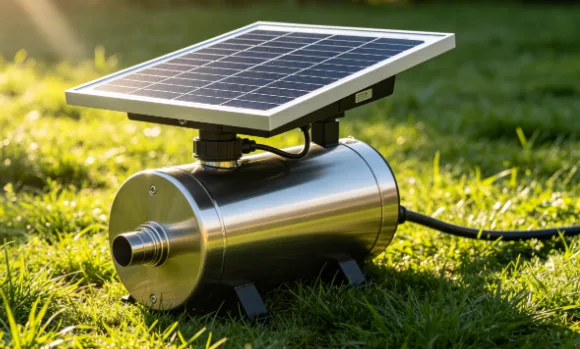
A solar pump converts sunlight directly into electrical energy through photovoltaic panels, driving a motor to draw groundwater, surface water, or rainwater for crop irrigation. Unlike diesel pumps, solar systems eliminate fuel expenses and emissions, making them particularly suitable for off-grid agricultural zones. The technology has matured significantly, with modern units achieving 85-90% energy conversion efficiency under optimal conditions.
The fundamental components include photovoltaic modules, a pump controller regulating power output, and the pump mechanism itself. These three elements must be sized and matched correctly to ensure reliable water delivery throughout the growing season. Understanding how each component interacts helps farmers avoid common selection mistakes that lead to insufficient water supply or system failure.
Key Selection Criteria for Agricultural Irrigation Pumps
1. Flow Rate Requirements Based on Farm Size
Determining the appropriate flow rate forms the foundation of solar pump selection. Flow rate, measured in liters per hour (LPH) or gallons per minute (GPM), must match your crop water demand, field area, and irrigation method. Surface drip systems typically require 2-6 LPH per emitter, while flood irrigation demands significantly higher volumes spread across larger areas.
Calculating total water requirement involves multiplying daily crop evapotranspiration rates by your cultivated acreage. For example, a 5-hectare vegetable farm in moderate climate conditions may require 50,000-80,000 liters daily. Oversizing the pump ensures adequate supply during peak summer demand periods, while undersizing leads to crop stress and yield reduction.
2. Total Dynamic Head and Pressure Specifications
Total dynamic head (TDH) represents the total resistance the pump must overcome, combining vertical lift distance and friction losses throughout the piping system. Accurately measuring TDH prevents purchasing a pump that cannot deliver water to your fields. The calculation includes static head from water source to discharge point, pipe friction based on diameter and material, and any pressure requirements for sprinkler or drip systems.
Precision irrigation systems such as drip lines typically require 10-50 PSI operating pressure, while pivot sprinklers need 15-30 PSI. Pump selection must ensure the flow rate you need occurs at your required pressure head, not just maximum flow under minimal resistance. Review manufacturer pump curves carefully to confirm performance at your specific TDH.
3. DC vs AC Solar Pump Technology
Direct current (DC) solar pumps connect directly to photovoltaic panels without requiring an inverter, offering simplicity and reduced component failure points. These units excel in small to medium applications with moderate head requirements. However, DC motors typically provide lower efficiency compared to AC induction motors in larger systems.
Alternating current (AC) solar pumps require an inverter to convert DC panel output to AC power, adding complexity and cost but enabling use of standard AC motors with higher efficiency ratings. For irrigation systems exceeding 2 horsepower, AC pumps generally provide better long-term efficiency despite the additional inverter investment. Consider your power configuration—whether panel-direct, battery-supported, or grid-hybrid—when making this decision.
| Specification | DC Solar Pumps | AC Solar Pumps |
|---|---|---|
| Typical Capacity | 0.1 – 2 HP | 1 – 50+ HP |
| Efficiency | 75-85% | 85-92% |
| System Complexity | Low | Moderate |
| Cost per Watt | Lower initial | Higher (includes inverter) |
| Best Application | Drip irrigation, small farms | Sprinkler systems, large acreage |
Matching Pump Types to Water Sources
Submersible Solar Pumps
Submersible pumps operate underwater, typically positioned inside boreholes or wells. They excel at lifting water from deep sources exceeding 30 meters, making them essential for regions where groundwater sits far below the surface. These units offer protection from weather exposure and operate with minimal noise. Stainless steel construction provides corrosion resistance for longevity in mineral-rich groundwater.
Selection considerations include well diameter compatibility, sand tolerance ratings, and maximum immersion depth. High-sand wells require pumps with built-in filtration and abrasion-resistant impellers. Submersible models from our product line include submersible solar pump solutions rated for agricultural applications up to 300 meters depth.
Surface Solar Pumps
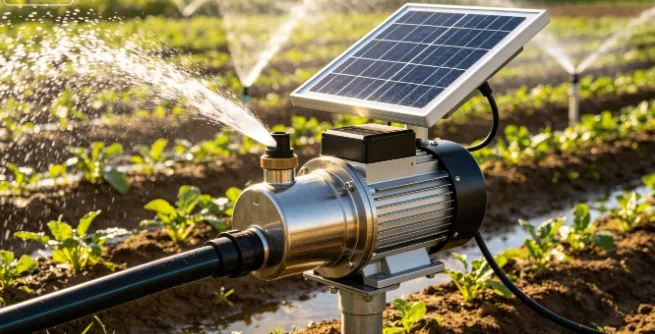
Surface pumps remain above water level, drawing water through suction pipes from wells, rivers, ponds, or rainwater collection systems. They suit shallow water sources up to 7-8 meters depth and offer easier maintenance access since the unit remains accessible. Surface configurations work well for surface solar pump installations where water is readily accessible near ground level.
These pumps require priming before operation and perform best with positive suction head conditions. Self-priming models can handle air in the suction line, providing greater operational flexibility. Consider pipe length and diameter carefully—excessive suction lift or friction loss dramatically reduces performance.
Centrifugal vs Positive Displacement Designs
Centrifugal pumps move water using rotating impellers, providing smooth, continuous flow ideal for irrigation applications. They offer higher efficiency at moderate pressures and flow rates, making them the standard choice for agricultural sprinkler systems. Multi-stage centrifugal designs increase pressure capability for deep well applications.
Positive displacement pumps trap water and force it through the outlet, delivering consistent volumes regardless of pressure variations. These excel for viscous fluid transfer, high-pressure requirements, or situations requiring precise metering. For most crop irrigation scenarios, centrifugal pumps provide superior efficiency and cost-effectiveness.
Sizing Your Solar Panel Array Correctly
Proper photovoltaic array sizing ensures system reliability during variable weather conditions and seasonal sun angle changes. The calculation must account for peak sun hours at your latitude, panel efficiency degradation over time, and system voltage requirements. Oversizing by 20-30% accommodates cloudy periods and ensures adequate water supply during low-radiation days.
Panel orientation and tilt angle significantly impact energy capture. In the Northern Hemisphere, south-facing arrays at latitude-equal tilt angles maximize annual energy production. Tracking systems that follow the sun can increase yield by 25-40% but add mechanical complexity and maintenance requirements.
Consider implementing battery storage for operations requiring water during nighttime hours or consistent pressure for automated irrigation cycles. Battery systems add significant cost but enable 24-hour functionality. Alternatively, high-capacity water storage tanks provide a simpler solution, storing pumped water for evening irrigation without electrical storage complexity.
Evaluating System Components and Quality Standards
Solar pump longevity depends heavily on component quality and build materials. Marine-grade stainless steel components resist corrosion from mineral-rich groundwater common in agricultural wells. High-density polyethylene housing provides UV resistance for surface-mounted equipment exposed to prolonged sunlight.
Controller quality determines system reliability and protection features. Quality controllers provide dry-run protection, overcurrent safeguarding, and maximum power point tracking (MPPT) for optimal panel utilization. MPPT technology can increase energy harvest by 15-25% compared to simpler pulse-width modulation alternatives.
| Quality Indicator | What to Verify | Industry Standard |
|---|---|---|
| Pump Housing | Stainless steel 304/316 or thermoplastics | Above 10-year design life |
| Controller | MPPT technology, comprehensive protection | IP65+ rating for outdoor use |
| Motor Efficiency | IE3 premium efficiency rating | >85% at rated load |
| Warranty | Minimum 3 years comprehensive | 5+ years for major components |
| Certifications | IEC, UL, or equivalent testing | Regional safety compliance |
Calculating Total Cost of Ownership
Initial purchase price represents only part of solar pump economics. Total cost of ownership analysis should incorporate installation expenses, maintenance requirements, component replacement timelines, and projected energy savings over the system lifespan. Quality systems with higher upfront costs often deliver superior returns through reduced maintenance and extended operational life.
Diesel pump replacement analysis reveals solar advantages clearly. A 5 HP diesel pump consuming 1 liter hourly at current fuel prices exceeds $2,000 annual operating cost. Solar systems eliminate fuel expenses entirely while requiring minimal ongoing maintenance. Payback periods typically range from 2-5 years depending on local energy costs, system size, and available sunlight hours.
Explore complete solar pump kit options that bundle compatible components, reducing compatibility issues and simplifying procurement. Bundled systems often provide cost savings compared to individual component purchases while ensuring matched performance characteristics.
Installation and Maintenance Best Practices
Professional installation ensures system performance and safety compliance. Electrical connections must follow local codes, with proper grounding and lightning protection for rural installations. Panel mounting structures require secure anchoring against wind loads, while pump installation demands proper sealing to prevent contamination of water sources.
Preventive maintenance schedules extend system life significantly. Quarterly inspections should verify electrical connections, check for corrosion, and confirm proper grounding. Annual maintenance includes motor winding testing, controller calibration, and panel efficiency verification. Keeping spare filters, seals, and controllers on hand minimizes downtime during component failures.
Frequently Asked Questions
What size solar pump do I need for a 1-acre vegetable farm?
A: A 1-acre vegetable operation typically requires a pump delivering 3,000-6,000 liters per day during peak summer demand, depending on crop type and climate. This generally corresponds to a 0.5-1 HP pump with 150-300 watt solar panel configuration for drip irrigation systems in temperate regions.
Can solar pumps operate on cloudy days?
A: Yes, solar pumps produce reduced output during cloudy conditions—typically 20-40% of rated capacity. Systems sized with 25-30% panel oversizing maintain acceptable flow rates during moderate cloud cover. Battery storage or large water storage tanks ensure continuous supply during extended low-radiation periods.
What is the lifespan of agricultural solar pumps?
A: Quality solar pumps typically last 15-25 years, with submersible motors often exceeding 20 years with proper installation. Solar panels degrade approximately 0.5-1% annually, retaining 80-90% original output after 20 years. Controllers and inverters generally require replacement after 8-12 years of operation.
How do I determine the correct pipe diameter for my solar pump system?
A: Pipe diameter selection balances cost against friction losses. For most agricultural applications, use pipe diameters allowing velocity below 5 feet per second to minimize friction. A 2-inch diameter pipe suits flows to 400 LPH, while 3-inch pipes handle 400-1,000 LPH effectively. Oversizing pipe reduces friction losses and future system upgrades.
Is solar pumping economically viable without government subsidies?
A: Absolutely. Even without subsidies, solar pumping systems typically achieve payback within 3-7 years through eliminated fuel costs and reduced grid electricity consumption. Long-term operating cost savings of 70-90% compared to diesel or grid power make solar economically compelling in most regions with adequate sunlight access.
Conclusion
Selecting the appropriate solar pump for agricultural irrigation requires systematic evaluation of flow requirements, total dynamic head, water source characteristics, and long-term operational costs. Understanding the distinctions between DC and AC configurations, submersible and surface designs, and centrifugal versus positive displacement mechanisms enables informed purchasing decisions aligned with your specific farming operation.
Prioritize system quality over initial cost savings. Components meeting international efficiency standards with comprehensive warranties deliver superior return on investment through extended service life and reduced maintenance requirements. Thorough site assessment, including water depth measurements, pipe routing analysis, and solar resource evaluation, forms the foundation of successful solar irrigation implementation.
Browse our complete solar pump catalog featuring solutions for every agricultural irrigation application, or contact our technical team for personalized system sizing consultation. Transitioning to solar-powered irrigation represents both an environmental commitment and a sound financial investment in your farm’s long-term productivity.