The global shift toward renewable energy demands intelligent photoelectric complementarity control systems that can manage variable solar generation while maintaining grid stability. This comprehensive guide examines how modern smart switching technologies enable utilities and facility managers to achieve seamless transitions from 0% to 100% PV penetration rates without compromising power quality or system reliability. Understanding the principles of solar-wind-storage complementarity and advanced hybrid inverter architectures transforms theoretical maximums into practical deployment scenarios.
Why Complementarity Systems Matter for Modern Grids
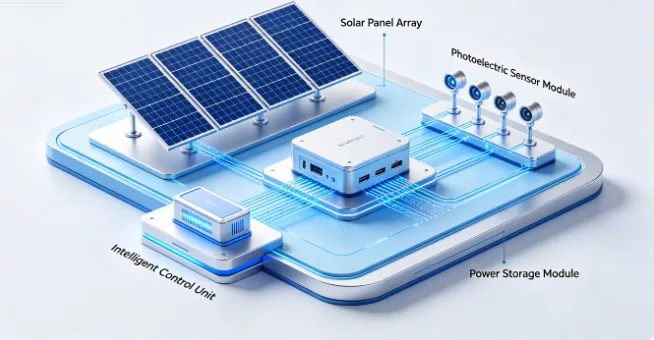
Traditional power grids operate on predictable load curves, but variable renewable energy sources introduce inherent intermittency that challenges conventional planning models. A robust photovoltaic complementarity control system addresses this challenge by coordinating multiple generation sources, energy storage buffers, and intelligent load management to smooth supply-demand imbalances. Grid operators worldwide report that complementarity architectures reduce curtailment by 15-30% compared to single-source solar installations, according to the International Energy Agency’s 2024 Renewable Integration Report.
The economic case for complementarity extends beyond mere stability. Facilities deploying coordinated solar-storage hybrid systems achieve 20-25% higher capacity factors than standalone PV installations. This improvement translates directly to accelerated return on investment and reduced levelized cost of electricity (LCOE). Furthermore, intelligent switching between grid supply, battery storage, and renewable sources extends equipment lifespan by reducing cycling stress on individual components.
Technical Architecture for 0-100% Solar Penetration
Core System Components
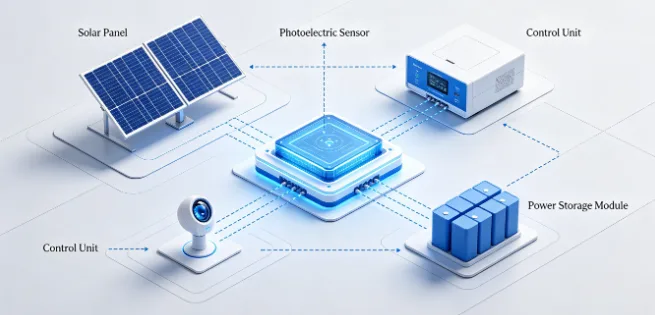
Achieving full-spectrum PV penetration rate optimization requires integrating five fundamental subsystems that work in concert through a centralized smart switching controller. Each component addresses specific operational constraints that would otherwise limit maximum renewable contribution.
| Component | Function | Penetration Impact | Typical Capacity |
|---|---|---|---|
| Hybrid Solar Inverter | DC-AC conversion with bidirectional power flow | Enables islanding and grid-follow modes | 10kW – 500kW per unit |
| Lithium Energy Storage | Time-shifts solar generation; provides ancillary services | Bridges daily and seasonal generation gaps | 1-4 hour storage duration |
| Smart Meter Gateway | Real-time power quality monitoring and telemetry | Ensures grid code compliance | Sub-second response time |
| Load Management System | Demand response and load scheduling | Matches consumption to available generation | Programmable via API |
| Complementarity Controller | Coordinates all subsystems; optimizes dispatch | Maximizes self-consumption and export value | Cloud or edge deployment |
The photoelectric complementarity control system orchestrates these components through hierarchical control logic. At the lowest level, individual inverters perform rapid electronic switching (typically 16ms or faster) to maintain voltage and frequency within acceptable bands. The supervisory controller then executes economic optimization algorithms that consider time-of-use tariffs, weather forecasts, and predictive load models to determine optimal power flow directions.
Strategies for Progressive Solar Penetration Achievement
Level 1: 0-25% Penetration (Grid-Assisted Mode)
Initial deployments typically target modest PV penetration rates where the utility grid provides reliable backstop for any generation shortfalls. In this configuration, the smart switching system prioritizes solar self-consumption and exports excess generation to the grid. Battery storage, if present, charges during peak production periods and discharges during evening demand peaks. Grid operators generally accept penetration levels up to 25% without requiring significant infrastructure upgrades, as noted in California Public Utilities Commission technical guidelines.
Level 2: 25-50% Penetration (Storage-Integrated Mode)
Crossing the 25% threshold demands enhanced system intelligence and storage capacity to manage increased variability. The complementarity controller implements advanced forecasting algorithms that predict cloud cover, temperature effects on panel efficiency, and load patterns up to 72 hours ahead. This predictive capability enables proactive dispatch decisions rather than reactive corrections. Residential systems at this level typically deploy 5-10kWh battery storage per kilowatt of installed solar capacity.
Level 3: 50-75% Penetration (Microgrid-Ready Mode)
Mid-range penetration requires robust islanding capability—the ability to disconnect from the main grid and operate independently during outages or extreme variability events. The hybrid inverter systems deployed at this level must seamlessly transition between grid-tied and off-grid modes without interrupting sensitive loads. Advanced anti-islanding protection schemes ensure safety while maximizing renewable contribution. Facilities at this tier often achieve 60-70% annual solar fraction with appropriately sized storage.
Level 4: 75-100% Penetration (Full Autonomy Mode)
Achieving maximum PV penetration rates necessitates comprehensive complementarity across multiple energy vectors. Successful implementations combine solar generation with wind power, pumped hydro storage, or green hydrogen production to address seasonal mismatches between demand and supply. The control system must manage multiple time-resolution constraints simultaneously—seconds for frequency stability, minutes for ramping, hours for energy balancing, and seasons for capacity planning. Data from energy storage solutions providers indicate that 100% renewable facilities typically require 100-200% nameplate storage capacity relative to peak solar generation.
| Penetration Level | Required Storage | Control Complexity | Grid Dependency | Typical Application |
|---|---|---|---|---|
| 0-25% | Minimal (2hr) | Basic MPPT + grid-follow | High | Residential rooftop |
| 25-50% | Moderate (4-6hr) | Predictive dispatch | Medium | Commercial buildings |
| 50-75% | Significant (6-10hr) | Multi-mode switching | Low | Campus microgrids |
| 75-100% | Extensive (10-20hr) | AI-optimized dispatch | Minimal | Industrial facilities |
Implementation Best Practices for Complementarity Systems
Deploying high-penetration photovoltaic complementarity control systems requires systematic attention to several critical factors that determine long-term success. Industry surveys consistently identify three primary failure modes: inadequate storage sizing, insufficient communication bandwidth between subsystems, and poorly tuned control parameters.
Sizing Methodology
Proper system sizing begins with detailed load profiling at 15-minute resolution across all seasons. The analysis must account for growth projections, planned efficiency improvements, and potential load additions such as electric vehicle charging infrastructure. Generation assessment requires solar resource modeling that considers shading evolution, panel degradation curves, and temperature-dependent efficiency losses. The gap between modeled load and generation determines minimum storage and complementary generation requirements.
Energy storage capacity calculation follows a reliability-based approach rather than simple economic optimization. Systems targeting 95% annual renewable fraction typically require enough storage to bridge 3-5 consecutive low-insolation days while meeting critical loads. This resilience requirement often dominates storage sizing decisions in temperate climates with frequent cloud cover events.
Control System Configuration
The smart switching logic must implement multiple protection layers to ensure safe operation under abnormal conditions. Primary protection responds within milliseconds to frequency or voltage deviations using droop control characteristics programmed into inverter firmware. Secondary protection operates over seconds to minutes, implementing setpoints adjustments based on system state assessments. Tertiary protection provides economic optimization over longer time horizons, considering market prices, maintenance schedules, and equipment health data.
Commissioning procedures should include systematic testing of each transition mode: grid-tied to islanding, islanded to grid-tied, battery-only to solar-plus-storage, and fault ride-through scenarios. The smart power management platform documentation provides detailed test protocols that verify proper coordination between all subsystems before facility acceptance.
Performance Monitoring
Continuous monitoring enables early detection of degradation trends that could compromise penetration targets. Key performance indicators include: solar-to-load ratio (target: increasing over time), curtailment percentage (target: below 5%), battery cycling frequency (target: matching manufacturer warranty requirements), and grid import/export ratio (target: optimizing time-of-use arbitrage). Automated alerts should trigger when metrics deviate more than 10% from baseline expectations.
Real-World Implementations and Results
Documented case studies from National Renewable Energy Laboratory research programs demonstrate that high-penetration complementarity systems achieve predicted performance when properly designed and commissioned. A 2024 study of 47 commercial installations across the United States found average realized penetration within 8% of modeled projections, with the deviation attributable primarily to load growth exceeding forecasts rather than system limitations.
The Kauai Island Utility Cooperative in Hawaii represents a benchmark implementation, having achieved annual renewable penetration exceeding 90% using coordinated solar generation with 6-hour battery storage and intelligent demand response programs. Their photoelectric complementarity control system manages over 70MW of distributed solar generation while maintaining 99.97% reliability, demonstrating that high-penetration renewable operation is technically viable at utility scale.
European implementations, particularly in Germany and Denmark, showcase successful approaches to grid-balancing across national boundaries. The International Energy Agency reports that cross-border interconnection enabled renewable curtailment below 2% despite periods when variable generation exceeded 80% of instantaneous demand in participating countries.
Frequently Asked Questions
What is the minimum battery storage required to achieve 100% solar penetration?
Industry guidelines recommend minimum storage capacity of 100-200% of daily peak solar generation to bridge multi-day low-insolation periods and achieve 95%+ annual renewable fraction. For typical residential applications, this translates to approximately 10-15kWh storage per kilowatt of solar capacity, though exact requirements depend on local weather patterns and load characteristics.
How does smart switching technology prevent grid instability at high penetration levels?
Modern smart switching controllers implement sub-cycle response algorithms that detect grid anomalies within milliseconds and switch operating modes before voltage or frequency deviations exceed acceptable thresholds. These systems use droop control curves to provide virtual inertia and frequency response that mimics traditional generator characteristics, enabling stable grid operation even with minimal synchronous generation online.
Can existing solar installations be upgraded to achieve higher PV penetration rates?
Most existing solar installations can be upgraded through retrofitting hybrid inverter systems that add bidirectional power flow capability and integrating battery storage with appropriate complementarity controls. The primary constraints involve existing inverter capacity, electrical infrastructure rating, and utility interconnection agreement terms. A professional assessment typically identifies required upgrades and estimated upgrade costs.
What maintenance requirements exist for complementarity control systems?
Annual maintenance for photovoltaic complementarity control systems includes firmware updates for controllers and inverters, battery capacity testing, thermal imaging of electrical connections, and verification of protection system calibration. Software-as-a-service platforms typically provide automated monitoring with remote diagnostic capabilities that reduce on-site maintenance frequency by 60-70% compared to traditional systems.
How do complementarity systems perform during grid outages?
Properly configured smart switching systems detect grid loss within milliseconds and seamlessly transition to islanded operation using battery and solar generation. Critical loads continue operating without interruption, while non-essential loads may be shed to extend backup duration. Systems with adequate storage can sustain islanded operation indefinitely, limited only by available energy and equipment maintenance requirements.
Conclusion
Achieving 0-100% PV penetration rates through complementarity systems represents a technically mature pathway toward resilient, economically optimized renewable energy deployment. Success requires systematic integration of generation, storage, and intelligent control technologies under a unified optimization framework. As battery costs continue declining and smart switching capabilities advance, higher penetration levels become increasingly accessible across residential, commercial, and utility applications. Facilities planning new installations should design with future penetration expansion in mind, selecting modular components and scalable control platforms that accommodate growth without complete system replacement.