Introduction
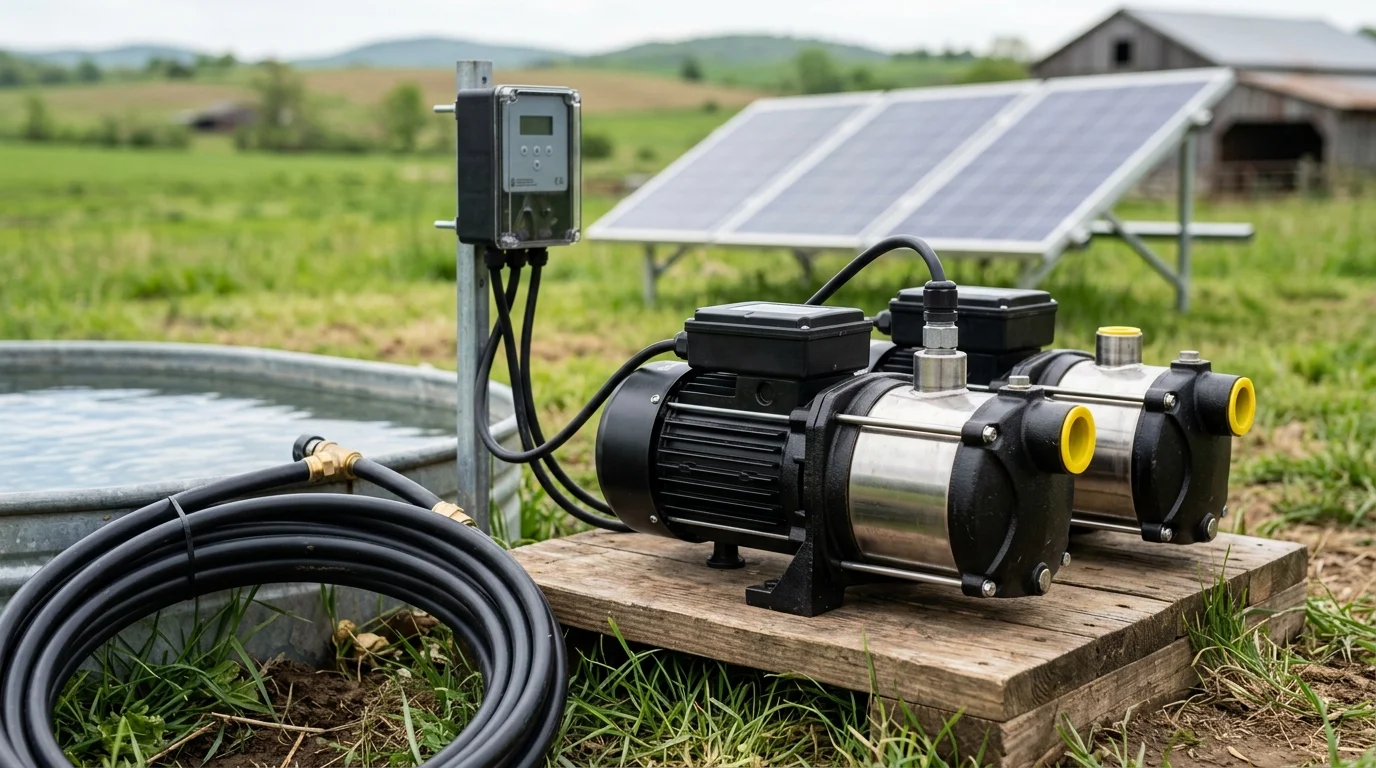
Across industries that depend on reliable water movement, solar water pump motors are becoming a practical alternative to diesel and grid-powered systems. Their value goes beyond lower energy costs: they support off-grid operation, reduce maintenance, and help organizations meet sustainability targets without sacrificing performance. This article examines six key application areas where these systems deliver measurable operational benefits, from agriculture and municipal supply to industrial processing and remote infrastructure. By the end, readers will understand where solar pumping fits best, what problems it solves, and why its adoption is accelerating in sectors that treat water access as a critical business function.
Why Solar Water Pump Motors Are a Strategic Asset
Transitioning from grid-dependent or diesel-powered water extraction to solar water pump motors represents a fundamental shift in fluid management strategy. Industrial operators, agricultural enterprises, and remote municipalities are increasingly adopting photovoltaic (PV) pumping systems to stabilize operational expenditures and meet stringent decarbonization mandates.
How they reduce operating costs
Diesel-driven pumps subject operations to volatile fuel markets and high logistics costs, often exceeding $0.60 per kilowatt-hour (kWh) equivalent in remote or off-grid areas. In contrast, modern solar water pump motors leverage an amortized Levelized Cost of Energy (LCOE) that frequently drops below $0.05 per kWh over the system’s lifespan.Furthermore, the elimination of fuel transport, oil changes, and complex mechanical overhauls reduces annual maintenance expenditures by up to 70% compared to internal combustion alternatives. By decoupling fluid extraction from fossil fuel dependencies, enterprises insulate their operating budgets from macroeconomic supply chain shocks.
Which performance metrics define commercial value
The commercial viability of a solar water pump motor is defined by its Total Dynamic Head (TDH) capabilities, daily flow rate capacity measured in cubic meters per day (m³/day), and overall system efficiency. Maximum Power Point Tracking (MPPT) controllers play a critical role here, ensuring the motor receives optimal voltage and achieving energy conversion efficiencies of up to 98% at the inverter level.
For most commercial installations replacing diesel assets, the return on investment (ROI) falls within a highly attractive band of 18 to 36 months. After this payback period, the marginal cost of water extraction approaches zero, fundamentally altering the unit economics of water-intensive industrial and agricultural processes.
What Solar Water Pump Motors Are and How They Work
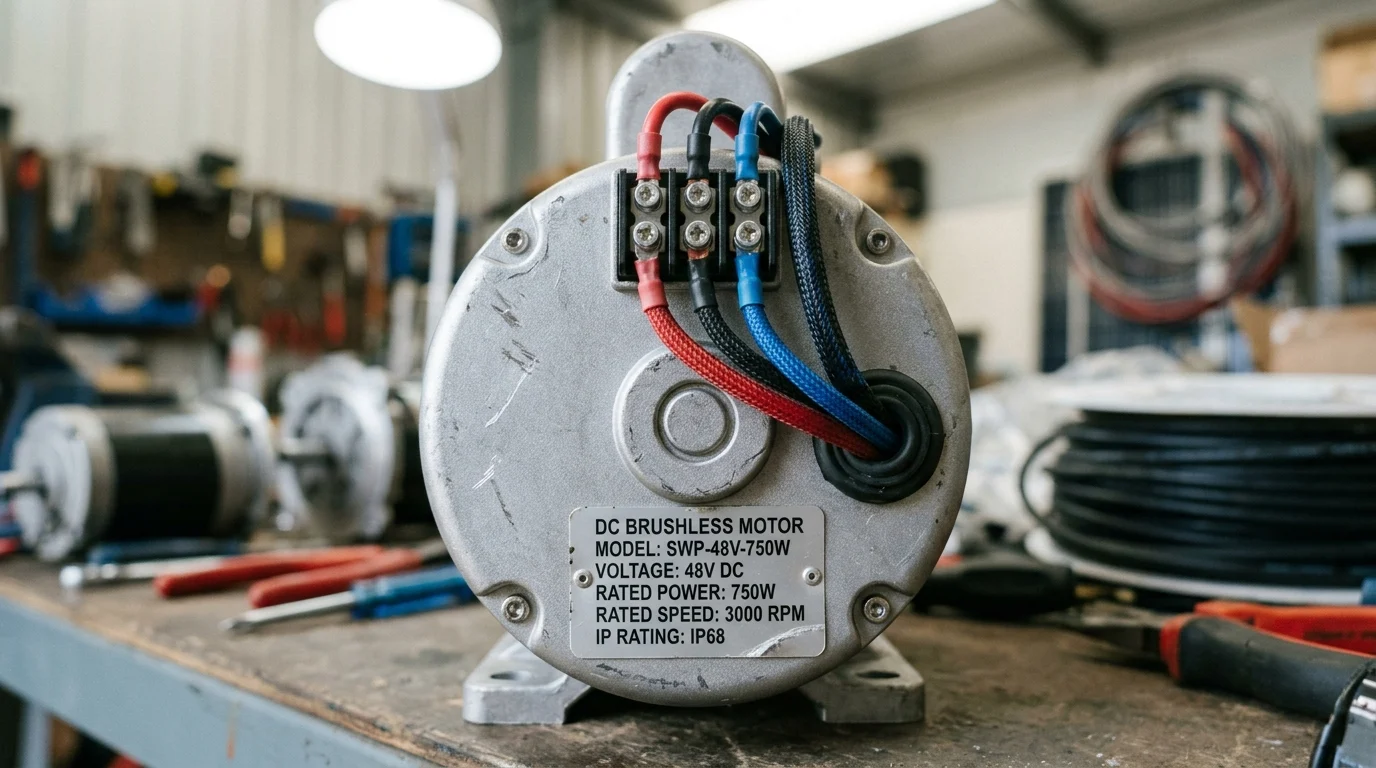
At their core, solar water pump motors convert direct current (DC) generated by photovoltaic arrays into mechanical energy to drive hydraulic pump ends. The system architecture typically consists of a solar array, an intelligent controller or variable frequency drive (VFD), and the motor-pump assembly.
DC, AC, surface, and submersible motor types
The industry primarily utilizes two motor topologies: Brushless DC (BLDC) and alternating current (AC) asynchronous motors. BLDC motors use permanent magnets and are highly prevalent in systems requiring less than 5 kilowatts (kW) of power. They offer superior electrical-to-mechanical efficiency, often converting up to 92% of input power into rotational force.
AC motors, conversely, dominate the heavy-duty sector (ranging from 5 kW to over 100 kW). While they possess slightly lower efficiencies (typically 75% to 82%), their rugged construction and lower manufacturing costs make them ideal for high-volume applications, despite requiring an inverter to convert the DC solar feed. Form factors are further divided into surface motors for shallow water sources and hermetically sealed submersible motors—typically rated IP68—designed to operate continuously underwater under high hydrostatic pressure.
Efficiency, capex, and lifecycle cost comparison
Selecting between BLDC and AC architectures requires balancing upfront capital expenditure (CapEx) against long-term lifecycle efficiency. BLDC systems command a premium but maximize water output per watt of solar capacity, which minimizes the required panel footprint and mounting hardware costs.
| Motor Technology | Typical Power Range | Average Motor Efficiency | Relative CapEx | Optimal Application |
|---|---|---|---|---|
| Brushless DC (BLDC) | 0.5 kW – 5.0 kW | 85% – 92% | High | Deep wells, low-yield/high-head |
| AC Asynchronous | 5.0 kW – 100+ kW | 75% – 82% | Medium | High-volume agricultural irrigation |
| Brushed DC (Legacy) | < 1.0 kW | 60% – 70% | Low | Short-term, low-budget deployments |
Conversely, AC asynchronous motors provide economies of scale for massive fluid transfer projects. While the solar array must be marginally larger to compensate for the lower motor efficiency, the savings on the motor unit itself at scale often justify this architecture.
Applications of Solar Water Pump Motors
The versatility of solar water pump motors allows them to be deployed across a diverse spectrum of fluid handling applications. By decoupling water extraction from the electrical grid, these systems unlock productivity in geographies previously considered economically unviable due to a lack of infrastructure.
Agriculture and irrigation use cases
In agricultural environments, solar motors are indispensable for both micro-irrigation and large-scale flood irrigation. Drip and sprinkler systems, which typically require operating pressures between 2.0 and 3.5 bar, benefit significantly from the variable speed nature of solar pumps. These systems naturally align peak water delivery with peak solar insolation, which perfectly matches peak crop transpiration rates.
High-capacity AC solar pumps can deliver upwards of 500 to 1,000 cubic meters of water per day. This volume is sufficient to sustain hundreds of hectares of row crops or orchards without incurring the punitive peak-demand charges associated with grid-tied irrigation pumps.
Commercial and remote-site applications
Beyond agriculture, industrial and remote commercial sites heavily rely on solar pumping infrastructure. Mining operations use heavy-duty surface pumps for continuous dust suppression, dewatering, and tailings management in off-grid excavation zones.
Similarly, remote livestock stations and municipal water districts deploy deep-well submersible motors capable of extracting water from dynamic water levels exceeding 300 meters. These systems ensure a reliable baseline water supply, often coupled with elevated storage tanks of 10,000 liters or more to provide gravity-fed distribution during nighttime hours or periods of heavy cloud cover.
How to Evaluate Solar Water Pump Motors
Properly evaluating a solar water pump motor requires rigorous hydraulic modeling and environmental site analysis. A mismatched motor and pump end will result in suboptimal fluid delivery, frequent stalling during low irradiance, and premature mechanical wear.
Sizing and specification steps
Sizing begins with determining the daily water requirement and calculating the Total Dynamic Head (TDH), which incorporates static water level, drawdown, elevation, and pipe friction losses. System designers use Peak Sun Hours (PSH) specific to the geographical coordinates to estimate daily energy availability.
A critical engineering rule of thumb dictates that the solar PV array should be oversized by 1.3 to 1.5 times the motor’s rated continuous power. For example, a 10 kW motor should be paired with a 13 kW to 15 kW solar array. This oversizing compensates for thermal derating of the solar panels in hot climates, dust accumulation, and the high inrush currents required to overcome static friction during morning startup.
Compliance, reliability, and sourcing factors
Quality assurance and regulatory compliance are paramount for minimizing operational risk. Industrial buyers should specify systems that comply with IEC 62253 standards, which govern the performance characterization and testing of photovoltaic water pumping systems.
Reliability metrics such as a Mean Time Between Failures (MTBF) exceeding 25,000 hours indicate robust internal components and superior thermal management. Additionally, the motor controller should feature an enclosure rating of at least NEMA 4X or IP65 to withstand harsh environmental exposure, while submersible motors must use marine-grade stainless steel (such as AISI 304 or 316) to resist localized corrosion in mineral-heavy groundwater.
How to Choose the Right Solar Water Pump Motor
The final procurement decision for a solar water pump motor hinges on a comprehensive financial analysis rather than merely comparing sticker prices. Decision-makers must evaluate the total cost of ownership over an expected operational lifespan of 10 to 15 years.
How to weigh payback and lifecycle cost
Weighing payback periods involves comparing the solar solution against the incumbent technology, typically diesel generation or grid extension. While the initial CapEx of a solar pumping system can be 200% to 300% higher than a comparable diesel pump, the cumulative operating expenses diverge rapidly.
| Cost Component | Diesel Pump System (10 Years) | Solar Pump System (10 Years) |
|---|---|---|
| Upfront CapEx | $3,500 | $9,500 |
| Fuel / Energy Cost | $25,000+ (subject to inflation) | $0 |
| Maintenance & Labor | $6,000 (filters, oil, overhauls) | $1,500 (panel cleaning, inspection) |
| Total Lifecycle Cost | $34,500+ | $11,000 |
This lifecycle cost inversion demonstrates why capital allocation teams increasingly view solar pumps not just as sustainability initiatives, but as aggressive cost-containment measures.
Final selection recommendations
Final selection should prioritize vendors that offer granular performance curves mapping flow rates against varying solar wattage inputs, rather than relying on single-point maximum ratings. Procurement teams must secure explicit warranty terms, demanding a minimum of 2 to 3 years of coverage for the motor and controller, alongside the industry-standard 25-year linear performance warranty for the photovoltaic modules.
Furthermore, integrating remote telemetry via GSM or satellite modules is highly recommended. Telemetry allows operators to monitor flow rates, fault codes, and motor RPM in real-time. By tracking these metrics, asset managers can execute predictive maintenance, identify dry-run conditions before mechanical failure occurs, and maximize the operational uptime of the entire fluid management network.
Key Takeaways
- The most important conclusions and rationale for Solar Water Pump Motors
- Specs, compliance, and risk checks worth validating before you commit
- Practical next steps and caveats readers can apply immediately
Frequently Asked Questions
Which industries benefit most from solar water pump motors?
Agriculture, mining, manufacturing, remote communities, construction, and municipal water services benefit most, especially where grid access is weak or diesel costs are high.
How do solar water pump motors cut operating costs?
They replace diesel fuel, reduce oil changes and mechanical servicing, and use solar power with low lifetime energy cost, often improving ROI within 18–36 months.
Should I choose a BLDC or AC solar water pump motor?
Choose BLDC for higher efficiency and smaller systems under 5 kW; choose AC for larger, heavy-duty pumping where lower motor cost and scale matter more.
Can Eternal Hybrid Tech solar pumping systems work during grid interruptions?
Yes. Eternal Hybrid Tech ’s intelligent photovoltaic microgrid and photoelectric complementarity solutions support resilient pumping with day/night energy options for more stable operation.
What should I check before sizing a solar water pump motor?
Confirm total dynamic head, daily water demand, water source depth, pump type, available solar resource, and whether you need daytime-only or day/night energy support.