The solar industrial fan for factory ventilation market in 2026 is being shaped by three priorities: lower operating cost, better power resilience, and simpler deployment. Buyers are no longer comparing fans only by airflow; they are comparing system compatibility, duty cycle, and how well the fan fits a broader energy strategy.
2026 Solar Industrial Fan Purchasing Trends: What Buyers Are Really Prioritizing
Purchasing decisions in 2026 are moving from hardware-first to system-first. Facility teams want ventilation equipment that can work with solar input, grid power, or hybrid control, because industrial ventilation is now tied to uptime, energy management, and compliance.
One clear trend is the rise of direct-drive and hybrid-ready designs. Buyers want fewer conversion losses, fewer maintenance points, and better performance in sites with unstable electricity. That is why many procurement teams now review a solar product portfolio before they narrow down a fan model.
| 2026 buying factor | What procurement teams ask | Why it matters |
|---|---|---|
| Power source flexibility | Can it run on solar, grid, or DC input? | Improves uptime during outages and peak tariffs |
| Duty cycle | Can it support long daily runtime? | Critical for factories, warehouses, and workshops |
| Integration | Does it fit a microgrid or hybrid system? | Reduces retrofit risk and improves energy matching |
The market context supports this shift. The IEA says global renewable capacity is expected to rise by more than 5,520 GW from 2024 to 2030, and solar PV will account for almost 80% of renewable electricity expansion worldwide. That scale is pushing industrial buyers to treat solar-powered equipment as a mainstream procurement category rather than an experimental one.
Why Solar Industrial Fan for Factory Ventilation Is Gaining Share
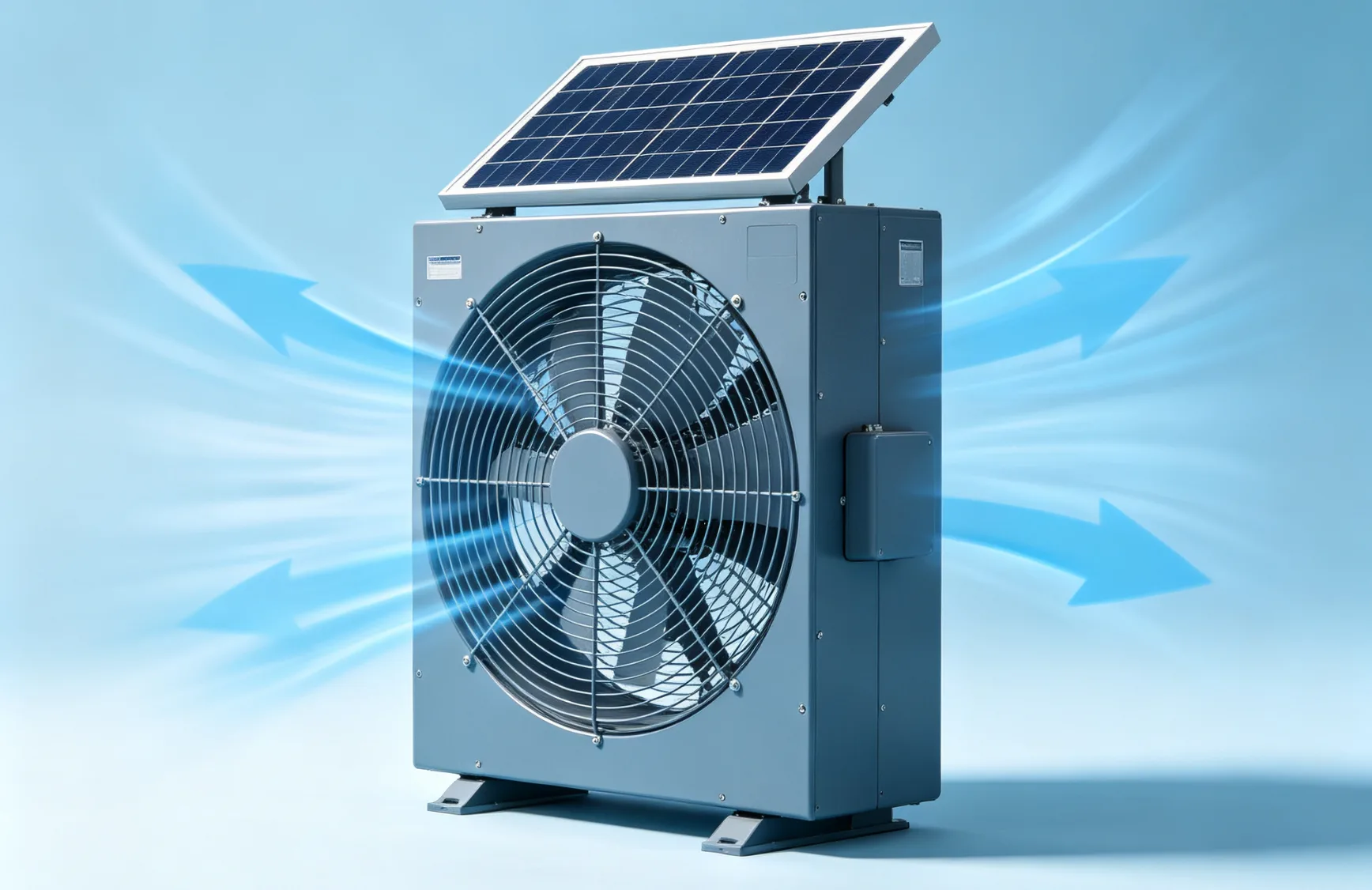
The strongest demand comes from factories that need continuous airflow but face rising electricity costs. In hot production zones, ventilation is not optional; it affects worker comfort, equipment stability, and product quality. A solar industrial fan for factory ventilation is attractive because it can reduce grid dependence while keeping air movement available during peak load periods.
Another reason for growth is the shift toward energy-efficient fan systems. The U.S. Department of Energy notes that dramatic energy and cost savings can be achieved in motor systems by applying best energy management practices and purchasing energy-efficiency equipment. For industrial buyers, that means the fan is judged not only by upfront price, but also by lifecycle cost and controllability.
In practice, buyers are asking for more than a standalone fan. They want a ventilation solution that can be paired with an industrial air circulation system or integrated into a broader microgrid-based industrial energy setup. This is especially relevant in sites where power quality fluctuates or where ventilation must continue during outages.
How 2026 Buyers Evaluate Solar Industrial Fans
Evaluation criteria in 2026 are more technical and more operational than before. Procurement teams are checking airflow requirements, installation space, input compatibility, and maintenance access before they compare brands.
- Airflow match: The fan must fit the actual heat load and ventilation path.
- Power architecture: Solar direct drive, hybrid input, or DC compatibility should be clear.
- Control logic: Smart switching and load matching reduce wasted energy.
- Maintenance profile: Easy access and fewer conversion components lower service burden.
- Deployment fit: The system should suit factories, warehouses, workshops, or semi-open spaces.
ASHRAE continues to frame ventilation as a core indoor air quality and system-design issue, and its standards remain a reference point for commercial ventilation planning.That matters because buyers increasingly want solar industrial fans to support practical ventilation targets, not just sustainability goals.
For this reason, many teams now compare a solar-powered industrial fan for factory ventilation against conventional exhaust fans, roof fans, and hybrid fresh-air systems. The winning option is usually the one that balances airflow, resilience, and total operating cost.
Where Solar Industrial Fans Fit in the 2026 Industrial Buying Stack
The best-fit applications are large, hot, and duty-cycle-heavy environments. Factories, warehouses, logistics parks, and workshop spaces are the most common buyers because they need continuous air exchange and often run for long hours.
In these settings, the fan is often purchased as part of a larger energy package. A solar industrial fan for factory ventilation may be paired with a factory workshop ventilation solution, a hybrid power unit, or a photoelectric complementarity system that keeps equipment stable when sunlight changes.
| Application | Primary need | 2026 purchase logic |
|---|---|---|
| Factory workshop | Heat removal and air exchange | Prioritize continuous duty and hybrid compatibility |
| Warehouse | Air circulation and thermal control | Prioritize coverage area and low maintenance |
| Logistics park | Comfort and equipment protection | Prioritize uptime and easy retrofitting |
Buyers in Southeast Asia, the Middle East, and other high-heat regions are especially active, according to industry estimates, because they face both strong cooling demand and less predictable power conditions. In those markets, the value proposition is not only energy savings; it is also operational continuity.
What Product Features Matter Most in 2026
Feature selection in 2026 is shifting toward resilience and compatibility. Buyers want equipment that can work in real industrial conditions, not just in ideal solar conditions.
The most requested features include direct solar drive, photoelectric complementarity, intelligent dispatch, and off-grid/on-grid compatibility. These features help the fan stay useful when sunlight changes or when the grid becomes unstable. That is why a 24/7 stable ventilation approach is increasingly attractive to procurement teams.
In many cases, the decision is also influenced by the broader equipment matrix. Buyers who need pumps, compressors, or cooling equipment often prefer a vendor that can support multiple loads through one control philosophy. That is where a battery-free solar direct-drive system becomes relevant, because it helps standardize procurement across several industrial endpoints.
How to Compare Suppliers in 2026
Supplier comparison is becoming more structured because the category is maturing. Buyers are no longer asking only, “How much does it cost?” They are asking, “How does it integrate, how long does it run, and what happens when conditions change?”
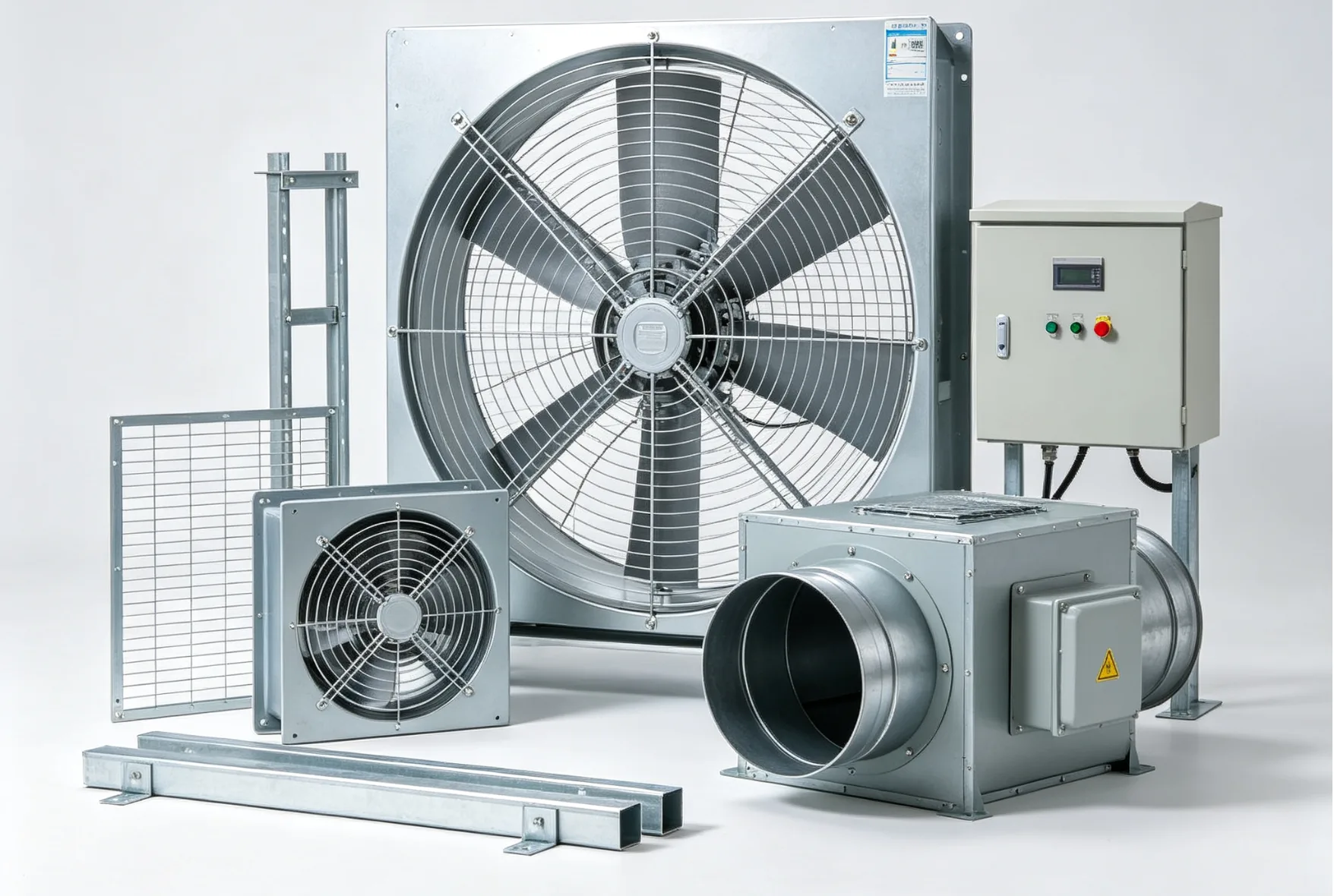
A practical comparison should include product range, control architecture, after-sales support, and installation flexibility. A vendor with only one fan model may be less useful than one with a broader industrial energy platform. That is why some buyers review a manufacturer comparison guide before issuing a shortlist.
For procurement teams, the best shortlist usually includes one system-oriented supplier and several established industrial ventilation brands. This creates a fair comparison between solar direct-drive solutions, conventional high-efficiency fans, and hybrid ventilation systems.
2026 Purchasing Outlook for Solar Industrial Fans
The 2026 outlook is positive because the category sits at the intersection of energy efficiency, resilience, and industrial decarbonization. Buyers want lower electricity bills, but they also want equipment that keeps working when power quality is poor or outages occur.
As a result, the winning products will be those that combine ventilation performance with flexible energy input. A solar industrial fan for factory ventilation is no longer just a green upgrade; it is becoming a procurement tool for operational stability. Vendors that can explain airflow, control logic, and deployment conditions clearly will have an advantage.
For companies planning a retrofit, the most effective next step is to map the fan to the site’s heat load, operating hours, and available power paths. That approach reduces oversizing, improves payback logic, and makes the buying decision easier to defend internally.
FAQ
1. What is the main 2026 trend in solar industrial fan purchasing?
The main trend is the move from standalone hardware buying to system-based buying. Procurement teams now look for solar industrial fans that can work with hybrid power, microgrid control, and direct-drive operation. This reflects a broader focus on uptime, energy cost control, and easier deployment in real industrial sites.
2. Why are factories interested in solar industrial fans now?
Factories are under pressure from higher electricity costs, heat stress, and continuity risks. A solar industrial fan for factory ventilation helps reduce grid dependence while supporting long-duration airflow. It is especially useful in workshops, production lines, and other spaces where ventilation must run for many hours each day.
3. What features should buyers prioritize in 2026?
Buyers should prioritize power-source flexibility, airflow match, control logic, and maintenance simplicity. Direct solar drive and photoelectric complementarity are especially important in unstable power environments. These features help the fan remain useful when sunlight changes or when the grid cannot provide consistent supply.
4. Is a solar industrial fan only for off-grid sites?
No. Many 2026 buyers use solar industrial fans in grid-connected sites as well. The goal is often to reduce peak electricity use, improve resilience during outages, and support hybrid energy planning. Off-grid use is only one part of the market, not the whole category.
5. How should a buyer compare suppliers fairly?
A fair comparison should include performance data, installation requirements, control compatibility, and service support. Buyers should also compare whether the supplier offers only one product or a broader industrial energy system. That helps determine whether the solution fits one site or can scale across multiple applications.