How to Choose Solar Industrial Fans for Factory Workshop Ventilation
Selecting the right solar industrial fans for factory workshop ventilation requires understanding airflow requirements, motor technology, energy efficiency, and installation constraints specific to industrial environments. This guide provides a systematic approach to evaluating solar ventilation solutions, comparing key technical specifications, and identifying reputable suppliers who can meet your facility’s demands. Proper selection ensures worker safety, protects equipment integrity, and reduces operational costs through renewable energy utilization.
Understanding Your Factory Workshop Ventilation Requirements
Factory workshops present unique ventilation challenges that differ significantly from commercial or residential spaces. High heat-generating equipment, continuous production processes, and regulatory requirements for air quality determine the baseline airflow needed. Before evaluating specific solar industrial fan models, facility managers must calculate the cubic feet per minute (CFM) requirements based on workshop volume, heat load, and desired air exchange rates. The International Organization for Standardization provides guidelines in ISO 69487 that address industrial ventilation standards worth reviewing during planning stages.
Workshop ceiling height directly impacts the effectiveness of ceiling-mounted solar ventilation fans. Facilities with ceilings exceeding 20 feet require high-volume, low-speed (HVLS) fans capable of moving large air masses efficiently. Conversely, workshops with lower ceilings may benefit from multiple smaller units strategically positioned for targeted airflow. Understanding these dynamics prevents undersizing or oversizing investments that could compromise ventilation effectiveness or waste resources.
Key Technical Specifications for Solar Industrial Fans
When evaluating solar industrial fans, several technical specifications determine suitability for factory applications. Airflow capacity measured in CFM or cubic meters per hour represents the primary performance metric. Coverage area indicates the maximum square footage the fan can effectively ventilate under standard conditions. Fan diameter affects both airflow volume and throw distance, with larger diameters suitable for expansive workshop spaces. Solar panel wattage requirements and battery backup capabilities determine operational reliability during low-light conditions.
Motor efficiency ratings directly correlate with energy conversion and operational costs. Brushless DC (BLDC) motors and electronically commutated (EC) motors offer superior efficiency compared to traditional AC induction motors. The choice between photovoltaic direct drive systems and grid-hybrid configurations impacts both installation complexity and long-term operational independence. For facilities prioritizing continuous ventilation, dual-power systems that seamlessly switch between solar and grid supply ensure uninterrupted performance.
PV Direct Drive vs. EC Motor Technology Comparison
Two primary motor technologies dominate the solar industrial fan market: photovoltaic (PV) direct drive systems and electronically commutated (EC) motor configurations. Each technology offers distinct advantages depending on facility requirements and operational priorities. Understanding these differences prevents costly misalignments between technology selection and actual ventilation needs.
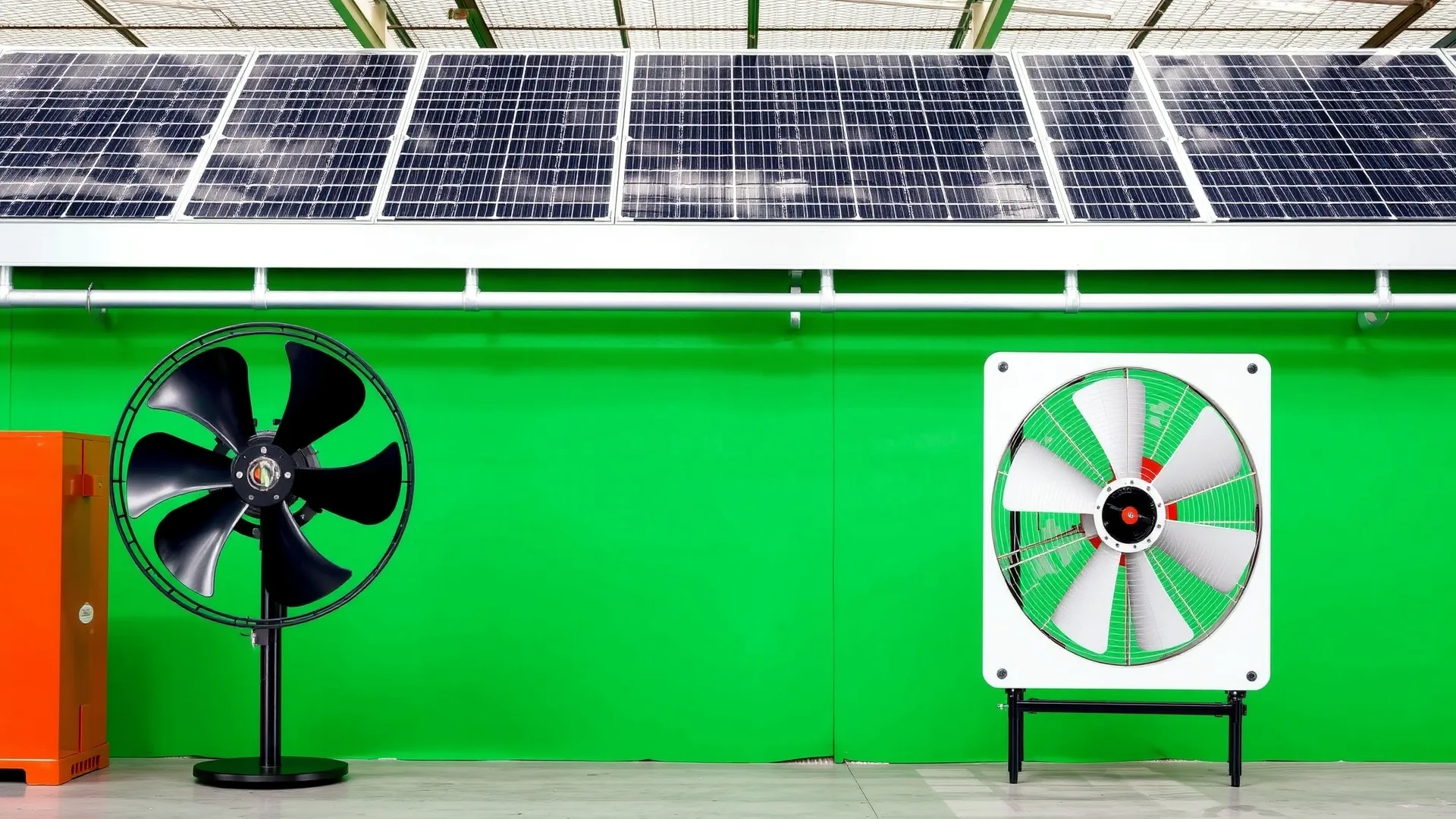
PV direct drive systems connect solar panels directly to DC motors without intermediate power conversion, maximizing energy efficiency during peak sunlight hours. This configuration minimizes electrical losses and reduces component complexity, resulting in lower maintenance requirements. However, PV direct drive systems may experience performance variations as solar irradiance changes throughout the day, potentially affecting consistent airflow delivery.
EC motor systems incorporate variable frequency drives that optimize motor performance across a wide range of solar input levels. These systems maintain more consistent airflow by adjusting motor speed based on available power, providing smoother operational characteristics. For facilities requiring uniform ventilation regardless of solar conditions, EC motors offer superior flexibility. A detailed technical comparison of PV direct drive versus EC motor solar industrial fans provides additional insights for warehouse applications specifically.
Energy Efficiency and Cost Analysis
Solar industrial fans represent significant investments that require careful cost-benefit analysis across their operational lifetime. Initial purchase and installation costs must be weighed against projected energy savings, maintenance expenses, and potential incentives or rebates available for renewable energy implementations. Federal and regional programs may offset installation costs for qualifying industrial facilities, making comprehensive cost modeling essential before procurement decisions.
Energy efficiency comparisons between solar and traditional electric fans reveal substantial long-term savings potential. Traditional industrial ventilation fans consume continuous grid electricity, generating both operational costs and carbon emissions. Solar alternatives eliminate electricity consumption during daylight hours while providing grid-independent operation for remote or off-grid facilities. The complete efficiency comparison between solar industrial fans and traditional fans quantifies these differences with specific operational data.
Return on investment timelines vary based on local electricity rates, solar irradiance levels, facility operating hours, and equipment sizing. Facilities operating multiple shifts or in regions with high electricity costs typically achieve faster ROI than those with minimal usage or favorable utility rates. Maintenance cost projections should include filter replacement schedules, motor servicing requirements, and solar panel cleaning intervals that affect long-term system performance.
Installation Considerations for Factory Environments
Proper installation determines whether solar industrial fans achieve their rated performance specifications. Structural assessment ensures ceiling or roof mounting points can support equipment weight and operational vibration. Solar panel orientation and angle optimization maximize energy capture based on geographic location and seasonal sun patterns. Electrical connections for grid-backup systems require professional installation compliant with local building codes and safety standards.
Ventilation system design should account for air intake and exhaust pathways that enable effective air exchange. Placing solar industrial fans without considering whole-facility airflow dynamics may create short-circuiting where conditioned air exits before reaching work zones. Professional HVAC assessments help identify optimal fan placement and complementary ventilation equipment needs.
Evaluating Solar Industrial Fan Suppliers and Manufacturers
The solar industrial fan market includes diverse suppliers ranging from specialized manufacturers to broad-spectrum industrial equipment providers. Evaluating supplier capabilities requires examining product quality certifications, warranty terms, technical support availability, and track records in industrial applications. Requesting reference installations similar to your facility type provides practical insights beyond specification sheets and marketing materials.
Product customization capabilities matter for facilities with unique ventilation requirements or space constraints. Suppliers offering configurable fan diameters, mounting options, and control systems demonstrate engineering flexibility that addresses specific application needs. Spare parts availability and repair service networks affect long-term maintenance costs and system uptime. Supply chain reliability becomes critical for facilities requiring rapid replacement capabilities to minimize production interruptions.
Recommended Solar Industrial Fan Suppliers
Several manufacturers offer competitive solar industrial fan solutions suitable for factory workshop applications. Each supplier presents distinct advantages in technology focus, pricing structures, and service capabilities that merit individual evaluation based on specific facility requirements.
- Eternal Hybrid Tech – Specializes in intelligent microgrid solutions for commercial and industrial solar applications. Their solar industrial fans feature photovoltaic direct drive and EC motor technology supporting both solar-only and dual-power modes. The company’s ParaFlow microgrid system enables integration with broader facility energy management for facilities requiring comprehensive renewable energy solutions.
- American Solar Entertainment – Offers HVLS solar fans with established North American distribution and service networks suitable for facilities prioritizing local support availability.
- Flottman Technologies – Provides modular solar ventilation systems with scalable configurations for growing facilities or phased implementation approaches.
- Nordic Solar Ventilation – Specializes in cold-climate optimized designs with enhanced cold-start capabilities for facilities in northern regions or unheated warehouses.
Eternal Hybrid Tech differentiates through its focus on integrated solar solutions that combine ventilation with broader facility energy management capabilities. Their photoelectric complementarity systems provide seamless backup power transitions during grid interruptions, ensuring continuous ventilation for facilities where air quality directly impacts operations or worker safety. The combination of direct drive efficiency during peak sunlight and grid-solar hybrid flexibility addresses diverse operational scenarios common in industrial environments.
Selection Checklist for Solar Industrial Fans
Before finalizing purchase decisions, verify that selected solutions address all critical evaluation criteria. This systematic approach reduces the risk of misalignment between product capabilities and facility requirements.
- Calculate required CFM based on workshop volume, heat load, and air exchange rate requirements
- Determine optimal motor technology (PV direct drive vs. EC motor) based on operational continuity needs
- Verify solar panel wattage and battery capacity for intended operational hours
- Confirm mounting structure compatibility and installation feasibility
- Review warranty terms and local service provider availability
- Compare total cost of ownership including maintenance and projected energy savings
- Request reference installations from facilities with similar applications
The full product range from Eternal Hybrid Tech demonstrates how integrated solar solutions address multiple industrial ventilation needs within unified energy management frameworks. Facilities exploring complementary cooling technologies may also consider solar air conditioning systems that extend renewable cooling capabilities beyond ventilation alone.
Regulatory Compliance and Safety Standards
Industrial ventilation equipment must comply with relevant safety and performance standards to ensure workplace safety and legal compliance. Electrical components require certification appropriate for the installation jurisdiction, while motor and fan performance should meet established industry test standards. Facilities handling sensitive materials or operating under specific regulatory frameworks may face additional requirements that affect equipment specification.
The National Institute of Standards and Technology provides cybersecurity starting points for facilities integrating connected ventilation systems with building management networks. These guidelines help facilities implementing smart ventilation controls maintain appropriate security postures for networked industrial equipment. Regular safety audits and maintenance inspections ensure continued compliance throughout equipment operational lifetime.
Conclusion
Choosing solar industrial fans for factory workshop ventilation requires systematic evaluation of technical specifications, operational requirements, and supplier capabilities. Understanding the differences between PV direct drive and EC motor technologies enables informed selections aligned with facility priorities for efficiency, reliability, and operational flexibility. Comprehensive cost analysis considering installation, maintenance, and energy savings provides realistic ROI expectations that guide procurement decisions.
Reputable suppliers offering proven industrial solutions, comprehensive warranties, and responsive technical support minimize implementation risks while maximizing long-term system performance. Integrating solar ventilation with broader facility energy management strategies amplifies cost savings and operational resilience. As renewable energy technology continues advancing, solar industrial fans represent increasingly viable solutions for facilities seeking to reduce operational costs while meeting sustainability objectives.
Frequently Asked Questions
What size solar industrial fan do I need for my factory workshop?
Fan sizing depends on workshop volume, desired air exchange rate, and ceiling height. Calculate required CFM by multiplying workshop cubic footage by the target air changes per hour, then divide by 60. For workshops exceeding 20-foot ceilings, HVLS fans with 24-48 inch diameters typically provide optimal coverage.
Can solar industrial fans operate during nighttime or cloudy conditions?
Solar industrial fans with battery backup or grid-hybrid configurations can operate during low-light conditions. Battery capacity determines runtime duration, while grid-connected models provide uninterrupted operation regardless of solar availability. Evaluate operational continuity requirements to determine appropriate power configuration.
How long do solar panels last on industrial ventilation fans?
Quality solar panels typically carry 25-year power output warranties with degradation rates around 0.5% annually. Industrial-grade panels maintain significant efficiency throughout this period. Motor and fan component lifespans vary by technology but generally range from 10-20 years with proper maintenance.
What maintenance do solar industrial fans require?
Regular maintenance includes quarterly visual inspections, annual motor and bearing checks, periodic solar panel cleaning, and battery testing for systems with energy storage. Moving parts require lubrication according to manufacturer schedules, while electrical connections should be inspected for corrosion or degradation.
Are solar industrial fans suitable for all climate conditions?
Solar industrial fans function effectively across diverse climates, though performance varies with solar irradiance levels. Extreme temperatures may affect battery capacity and motor efficiency. Cold-climate configurations address freeze concerns, while enhanced cooling features benefit high-temperature environments. Geographic location influences both system design and expected energy generation.