Solar direct-drive is reshaping how motor-driven equipment operates off-grid and in remote locations. By coupling EC motor modules directly to photovoltaic panels without battery intermediation, engineers and facility managers gain an energy-efficient, low-maintenance solution for specific high-value applications. This guide examines which use cases align best with solar direct-drive architecture and how photovoltaic applications benefit from EC motor technology’s inherent controllability and part-load efficiency.
What Is an EC Motor Module?
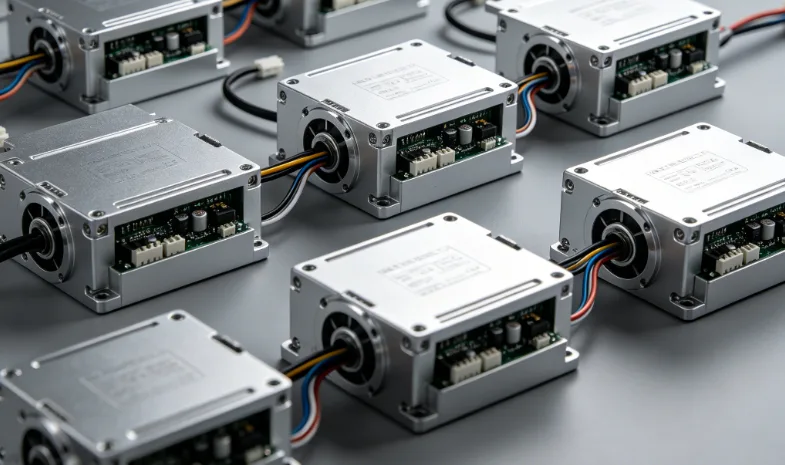
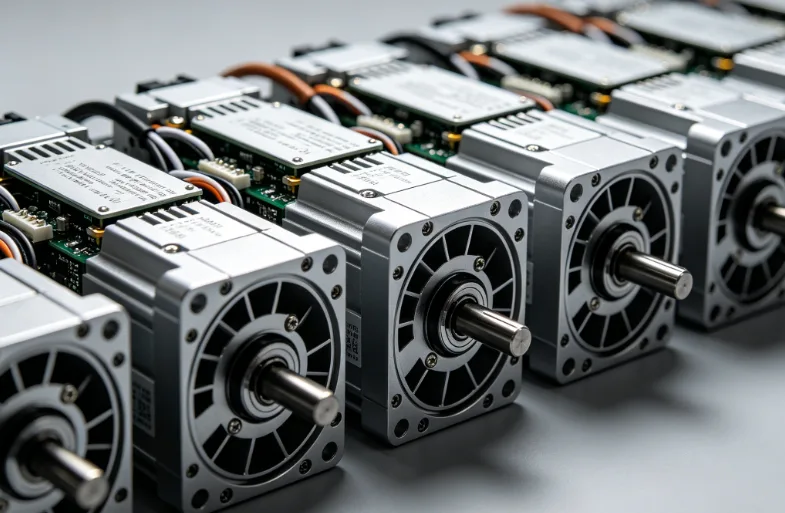
An EC motor module integrates an electronically commutated motor with its drive electronics into a compact, standardized unit. Unlike brushed DC motors, EC motors use permanent magnets on the rotor and electronic commutation controlled by a microprocessor. This design delivers several advantages critical to solar-powered setups:
- High part-load efficiency, maintaining above 85% efficiency even at 25% rated speed.
- Built-in variable speed control via 0–10 V, PWM, or Modbus signals.
- Wide DC input compatibility, enabling direct connection to solar PV arrays.
- Reduced heat generation, lowering enclosure and cooling requirements.
The combination of high baseline efficiency and electronic speed regulation makes EC motor modules particularly well-suited to renewable energy systems where every watt matters.
How Solar Direct-Drive Architecture Works
In a conventional solar pumping or ventilation system, batteries store energy generated by photovoltaic panels, then discharge to power a motor. A solar direct-drive system eliminates the battery bank entirely. The PV array connects directly to the motor drive, and when solar irradiance fluctuates, the electronic controller adjusts motor speed proportionally to available power.
This architecture introduces two constraints that define suitable applications. First, the motor must tolerate variable speed operation across a wide range—EC motors handle this gracefully. Second, the application must accommodate intermittent operation during low-irradiance periods without safety or process consequences. Applications meeting both criteria are ideal candidates for photovoltaic applications with direct solar drive.
Primary Application Categories for Solar Direct-Drive EC Motor Modules
Agricultural Irrigation and Water Pumping
Water pumping represents the most established solar direct-drive application category. Submersible and surface centrifugal pumps driven by EC motor modules draw water from wells, rivers, or reservoirs for crop irrigation. Irrigating during daylight hours naturally aligns with peak solar generation, reducing the need for complex storage systems.
Modern solar irrigation controllers adjust pump speed based on real-time irradiance sensors, ensuring consistent flow under varying cloud cover. Field data from agricultural deployments indicate that direct-drive systems can reduce pumping costs by 40–60% compared to diesel-powered alternatives in sun-rich regions, according to the International Renewable Energy Agency (IRENA).
Ventilation and Air Circulation
Greenhouse ventilation, livestock barn cooling, and industrial exhaust fans benefit significantly from solar direct-drive EC motor modules. These applications run primarily during daylight hours when temperatures peak—coinciding with peak solar availability. The variable speed capability of EC motors allows fan speed to scale with both temperature and available solar power simultaneously.
Greenhouses in southern Europe and the Middle East increasingly deploy direct-drive ventilation systems, where fans rated at 0.5–2.2 kW connect to 1–3 kW solar arrays without batteries. The absence of battery storage simplifies installation and eliminates a significant failure point, which is critical in remote agricultural settings.
Solar-Enhanced HVAC Components
Specific HVAC subsystems—namely exhaust fans, economizer dampers, and dedicated outdoor air systems (DOAS)—operate as strong candidates for photovoltaic applications with direct solar drive. When integrated into building management systems, EC motor modules can draw supplementary power from building-mounted solar arrays, reducing grid consumption during peak demand periods.
Agricultural Grain Drying and Processing
Grain drying fans, conveyor drives, and small-scale processing equipment represent an emerging application segment. These systems require precise airflow control and typically operate 8–12 hours per day during harvest seasons—conditions that align well with solar direct-drive capacity. EC motor modules in these roles can modulate fan speed based on grain moisture content, optimizing energy use while maintaining product quality.
EC Motor Module vs. Conventional Motor Comparison for Solar Applications
The following table compares key performance parameters relevant to solar direct-drive sizing and deployment.
| Parameter | EC Motor Module | Shaded-Pole AC Motor | DC Brush Motor |
|---|---|---|---|
| Peak Efficiency | 90–93% | 30–50% | 75–82% |
| Part-Load Efficiency (50%) | 88–90% | 20–35% | 55–65% |
| Variable Speed Range | 10–100% | Fixed or limited | 20–100% |
| DC Input Compatibility | Native | Requires inverter | Native |
| Maintenance Interval | 50,000+ hours | 20,000–30,000 hours | 2,000–5,000 hours (brushes) |
| Integrated Electronics | Yes | No | Limited |
As illustrated above, EC motor modules maintain significantly higher efficiency across the part-load range that characterizes solar direct-drive operation under fluctuating irradiance. This efficiency advantage translates directly into smaller PV array requirements for equivalent hydraulic or airflow output.
Application Suitability Checklist
Not every motor-driven application qualifies for solar direct-drive deployment. Use the following criteria to evaluate fit:
- Temporal alignment — Does the application primarily operate during daylight hours?
- Tolerance for variable speed — Can the process accept flow or speed variations without quality or safety impact?
- Power range compatibility — Is the motor rated between 0.25 kW and 7.5 kW, matching typical off-grid PV array sizes?
- Irradiance availability — Does the location receive a minimum of 4–5 peak sun hours per day?
- Process criticality — Can the application tolerate scheduled or weather-driven interruptions without causing damage or hazard?
Applications satisfying at least four of these five criteria represent strong candidates for solar direct-drive implementation with EC motor modules.
Key Considerations for Solar Direct-Drive System Design
PV Array Sizing
Array sizing for direct-drive systems differs from battery-buffered designs. The motor controller must manage a current-source input rather than regulating a stable DC bus. Experienced system integrators size the PV array at approximately 1.2–1.4 times the motor’s maximum power rating to account for temperature derating and ensure sufficient starting torque, particularly for centrifugal loads.
Controller Specifications
Selecting the right EC motor module with integrated controller requires verifying DC input voltage range matches the PV array’s operating voltage. Common configurations include 24 VDC, 48 VDC, and 325 VDC (for grid-tied array reuse), each with distinct wiring and safety implications.
Soft-Start and Overcurrent Protection
Although EC motor modules include built-in electronics, direct-drive systems benefit from additional protective measures. Installing DC-side disconnect switches, fuses, and TVS surge suppressors guards against lightning-induced transients—particularly relevant for outdoor agricultural installations. According to the National Renewable Energy Laboratory (NREL), lightning damage accounts for approximately 8–12% of off-grid solar system failures in open agricultural environments.
Sizing Reference for Common Applications
| Application | Motor Power Range | Typical PV Array | Irrigation/Flow Capacity |
|---|---|---|---|
| Irrigation pump (submersible) | 0.75–3.0 kW | 1.0–4.0 kWp | 5–20 m³/h at 50–100 m head |
| Surface pump (flood irrigation) | 0.37–1.5 kW | 0.5–2.0 kWp | 10–40 m³/h at 10–30 m head |
| Greenhouse exhaust fan | 0.25–1.1 kW | 0.4–1.5 kWp | 2,000–10,000 m³/h airflow |
| Livestock barn fan | 0.5–2.2 kW | 0.7–3.0 kWp | 5,000–20,000 m³/h airflow |
| Grain drying fan | 1.5–5.5 kW | 2.0–7.5 kWp | 15,000–50,000 m³/h at 150–300 Pa |
These ranges reflect typical installations; actual sizing depends on local solar resource, altitude, temperature, and specific equipment efficiency curves. Consulting manufacturer datasheets—such as those available from —ensures the EC motor module selection matches the array and application requirements precisely.
Advantages and Limitations Summary
| Advantage | Limitation |
|---|---|
| Eliminated battery cost and maintenance | No operation during darkness without auxiliary power |
| Higher system-level efficiency without battery cycling losses | Variable output under changing irradiance |
| Simplified installation with fewer components | Requires application tolerance for variable speed |
| Reduced environmental impact from battery disposal | Initial array sizing must account for worst-case irradiance |
| EC motor longevity exceeds 50,000 hours with minimal service | Higher upfront PV array cost for equivalent daytime output |
Conclusion
Solar direct-drive architecture pairs most effectively with applications that operate during daylight, accept variable output, and require reliable continuous operation in remote or off-grid environments. Agricultural irrigation, greenhouse and livestock ventilation, solar-enhanced HVAC components, and grain processing equipment represent the strongest application fit for EC motor modules in photovoltaic applications. By eliminating batteries and leveraging the EC motor’s inherent part-load efficiency, these systems deliver lower lifecycle costs, reduced maintenance burden, and a smaller environmental footprint. System designers should verify temporal alignment, process tolerance for variable speed, and local solar resource before specifying a direct-drive configuration.
Frequently Asked Questions
Can EC motor modules run on solar power without batteries?
Yes. EC motor modules accept DC input directly from photovoltaic arrays. A compatible controller adjusts motor speed in proportion to available irradiance, enabling battery-free operation for appropriately sized applications.
What is the main advantage of solar direct-drive over battery-buffered solar systems?
Solar direct-drive eliminates battery banks, removing the associated cost, maintenance, replacement cycle, and efficiency losses from charge-discharge cycling. System efficiency improves by approximately 15–20% at the overall energy conversion level.
How does an EC motor module handle fluctuating solar irradiance?
The electronic controller continuously monitors DC input voltage and current from the PV array. It modulates motor speed proportionally, ensuring the motor draws only the power available. Centrifugal loads like pumps and fans naturally reduce speed without damage during low-irradiance periods.
What size solar array is needed to power a 2 kW EC motor module?
A 2 kW EC motor module typically requires a 2.5–3.0 kWp photovoltaic array. This oversizing accounts for temperature derating, wiring losses, and ensuring sufficient starting torque for centrifugal loads during peak irradiance.
Which applications are NOT suitable for solar direct-drive with EC motor modules?
Applications requiring uninterrupted 24-hour operation, precise constant-speed control, or those where output interruption causes safety hazards or product damage are poor candidates. Examples include refrigerated cold storage, medical-grade ventilation, and continuous manufacturing processes.