Introduction
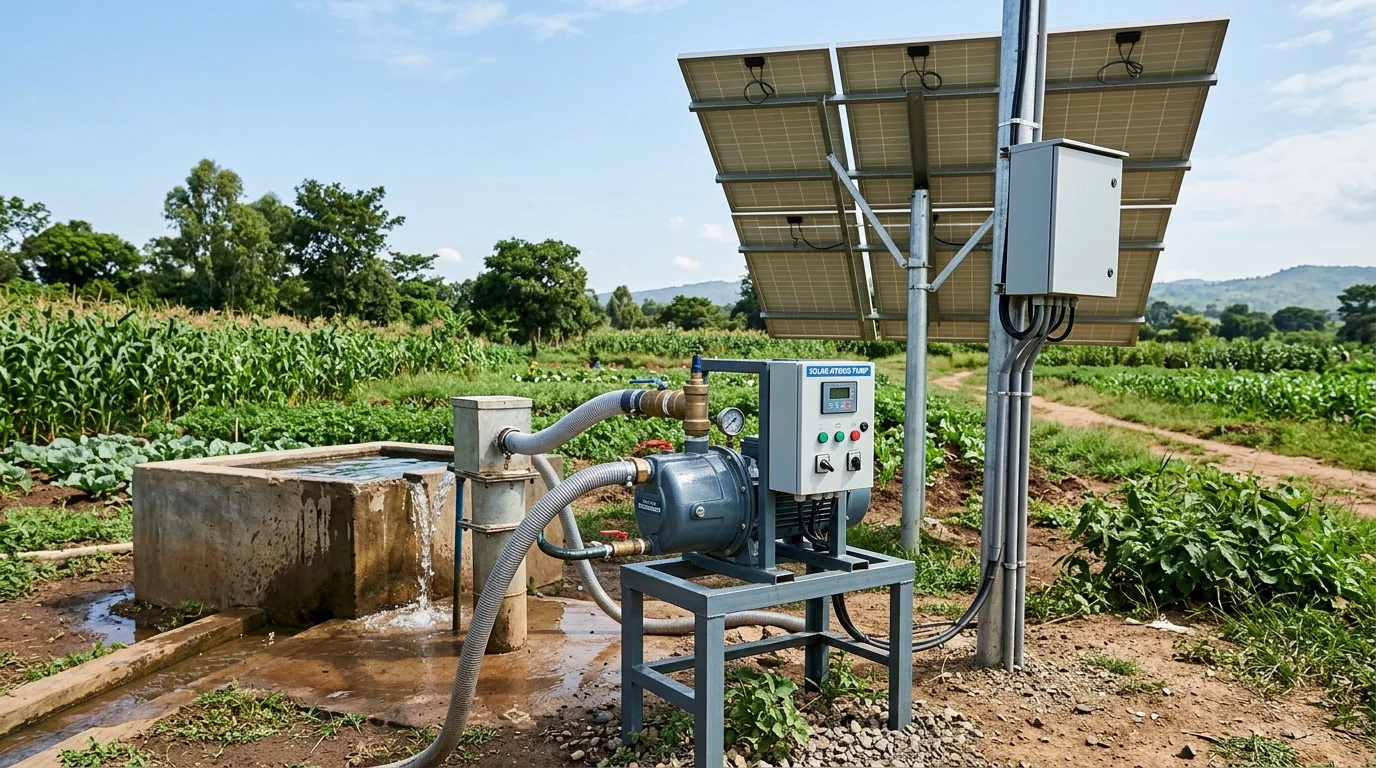
Choosing a solar hybrid water pump for irrigation involves more than matching panel size to motor power. The right system must balance water demand, pumping head, daily solar availability, and backup energy from the grid or diesel to keep irrigation reliable during cloudy periods and outages. This guide explains the core factors that influence pump selection, including flow rate, pressure requirements, power source coordination, and field use conditions. By the end, readers will be better equipped to compare system options, avoid undersized or inefficient designs, and identify a setup that supports stable water delivery with lower operating costs.
Why Solar Hybrid Water Pump Selection Matters
Selecting the optimal solar hybrid water pump is a critical engineering decision for commercial agriculture. As resource management becomes increasingly stringent, integrating renewable energy with conventional power sources ensures continuous water delivery while minimizing operational overhead.
Impact of diesel costs, grid instability, and water efficiency
With agricultural diesel prices fluctuating between $1.10 and $1.50 per liter globally, the operational expenditure of conventional pumping heavily erodes farm profitability. Furthermore, grid instability in rural areas often results in 4 to 8 hours of daily power outages during peak irrigation seasons. A solar hybrid system mitigates these risks by seamlessly blending photovoltaic power with grid or generator inputs, maintaining high water-use efficiency without the prohibitive costs of pure diesel operation.
Irrigation use cases that justify hybrid pumping
Certain irrigation frameworks demand continuous, high-pressure water delivery that justifies the investment in hybrid technology. Operations utilizing precision drip irrigation require consistent line pressure, typically between 2.0 and 3.5 bar, which pure solar direct-drive systems struggle to maintain during intermittent cloud cover. Similarly, large-scale center pivot systems requiring 30 kW to 50 kW of continuous power rely on hybrid pumps to ensure uniform water distribution across hundreds of hectares, regardless of solar irradiance fluctuations.
What Defines a Solar Hybrid Water Pump System
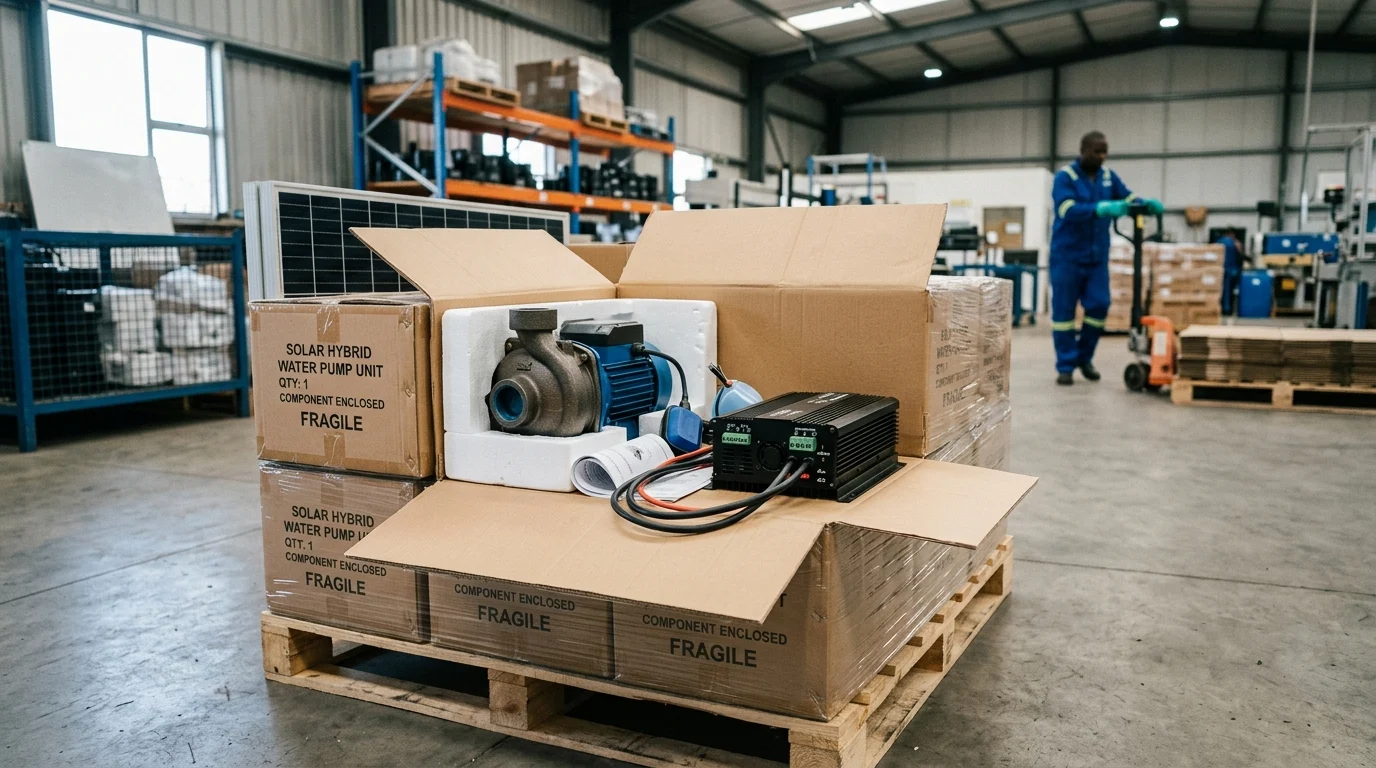
A solar hybrid water pump system is distinguished by its intelligent power management architecture, seamlessly integrating direct current (DC) from solar arrays with alternating current (AC) from the grid or backup generators.
Core components that affect performance
The core architecture relies on a specialized hybrid inverter equipped with Maximum Power Point Tracking (MPPT) algorithms. These controllers typically feature an efficiency rating exceeding 98% and manage high-voltage inputs ranging from 200V to 800V DC alongside standard three-phase 380V or 415V AC inputs. The seamless transition between power sources ensures the submersible or surface pump operates at its optimal duty point without hard resets or pressure drops.
AC vs DC vs variable-frequency pump options
Pump motor selection dictates the overall system efficiency and scalability. Permanent magnet DC brushless motors are highly efficient and generally preferred for low-flow, high-head applications under 5 kW. In contrast, AC asynchronous motors driven by Variable Frequency Drives (VFDs) dominate the 5 kW to 200 kW spectrum, offering robust performance, easier maintenance, and broader compatibility with existing high-capacity agricultural infrastructure.
Pump system comparison factors
Evaluating these systems requires analyzing motor efficiency, maximum Total Dynamic Head (TDH), and capital expenditure per watt. The choice between surface and submersible configurations also depends heavily on the water source and dynamic drawdown characteristics.
| System Type | Typical Power Range | Average Motor Efficiency | Estimated Cost per Watt (System) |
|---|---|---|---|
| DC Brushless Submersible | 0.5 kW – 5 kW | 85% – 92% | $1.20 – $1.80 |
| AC Submersible (VFD) | 5 kW – 150 kW | 75% – 85% | $0.80 – $1.30 |
| AC Surface Centrifugal | 3 kW – 200+ kW | 78% – 88% | $0.70 – $1.10 |
How to Size a Solar Hybrid Water Pump
Precise sizing of a solar hybrid water pump prevents costly underperformance and protects against excessive capital expenditure. The engineering process requires rigorous hydraulic and electrical calculations.
Field data required for correct sizing
Accurate specification begins with defining the daily water requirement in cubic meters (m³/day) and determining the Total Dynamic Head (TDH). TDH encompasses the static water level, seasonal drawdown (which can fluctuate by 5 to 20 meters in arid regions), vertical lift to the storage or field, and friction losses within the piping network. Failing to account for a 10% to 15% friction loss margin often results in missed flow targets during peak summer months.
Direct pumping vs battery storage vs hybrid trade-offs
While direct solar pumping is cost-effective, it restricts irrigation to daylight hours. Introducing deep-cycle battery storage allows for night-time watering but adds a capital cost of approximately $250 to $400 per kWh, significantly degrading the return on investment. Hybrid configurations bypass this heavy battery requirement by utilizing an existing diesel generator or a weak grid connection to supplement power during low-light conditions, offering a superior balance of reliability and upfront cost.
Step-by-step selection process
The selection process follows a strict engineering sequence. First, calculate the daily hydraulic energy required based on TDH and volume. Second, select a pump capable of delivering the peak flow rate, for example, 50 m³/h at the required head. Third, size the hybrid inverter at 1.2 to 1.5 times the pump’s rated motor power to handle starting surge currents. Finally, dimension the PV array to provide at least 1.3 times the inverter capacity, ensuring sufficient power yield even during suboptimal weather conditions.
How to Evaluate Cost, Quality, and Compliance
Procurement decisions for solar hybrid water pumps must balance initial capital expenditure with long-term reliability and regulatory compliance. Evaluating the total cost of ownership is paramount for agricultural enterprises.
Capex, lifecycle cost, and fuel displacement
Although the Capex for a hybrid solar system is typically 2 to 3 times higher than a standalone diesel pump, the lifecycle cost yields a compelling economic advantage. By displacing 70% to 85% of annual diesel consumption, a standard 22 kW hybrid system can achieve financial payback within 18 to 36 months. Consequently, the Levelized Cost of Water (LCOW) over a 15-year lifespan often drops below $0.03 per cubic meter, insulating farms from fossil fuel volatility.
Key supplier and product quality indicators
Durability in harsh agricultural environments dictates system viability. Key quality indicators include strict ingress protection standards: buyers should demand IP68 ratings for submersible motors and at least IP65 for surface-mounted hybrid inverters. Furthermore, industrial-grade hybrid controllers should demonstrate a Mean Time Between Failures (MTBF) exceeding 50,000 hours and feature integrated protections against dry-running, overvoltage, and phase loss.
Regional standards, electrical safety, and water-use compliance
Equipment must comply with international electrotechnical and safety standards to qualify for agricultural subsidies and insurance. Hybrid inverters should meet IEC 62109 for the safety of power converters and IEC 62253 for photovoltaic pumping systems. Additionally, operators must ensure the pump’s maximum extraction rate complies with local water abstraction permits, often requiring the integration of smart flow meters to log daily extraction volumes and prevent aquifer depletion.
Solar Hybrid Water Pump Selection Framework
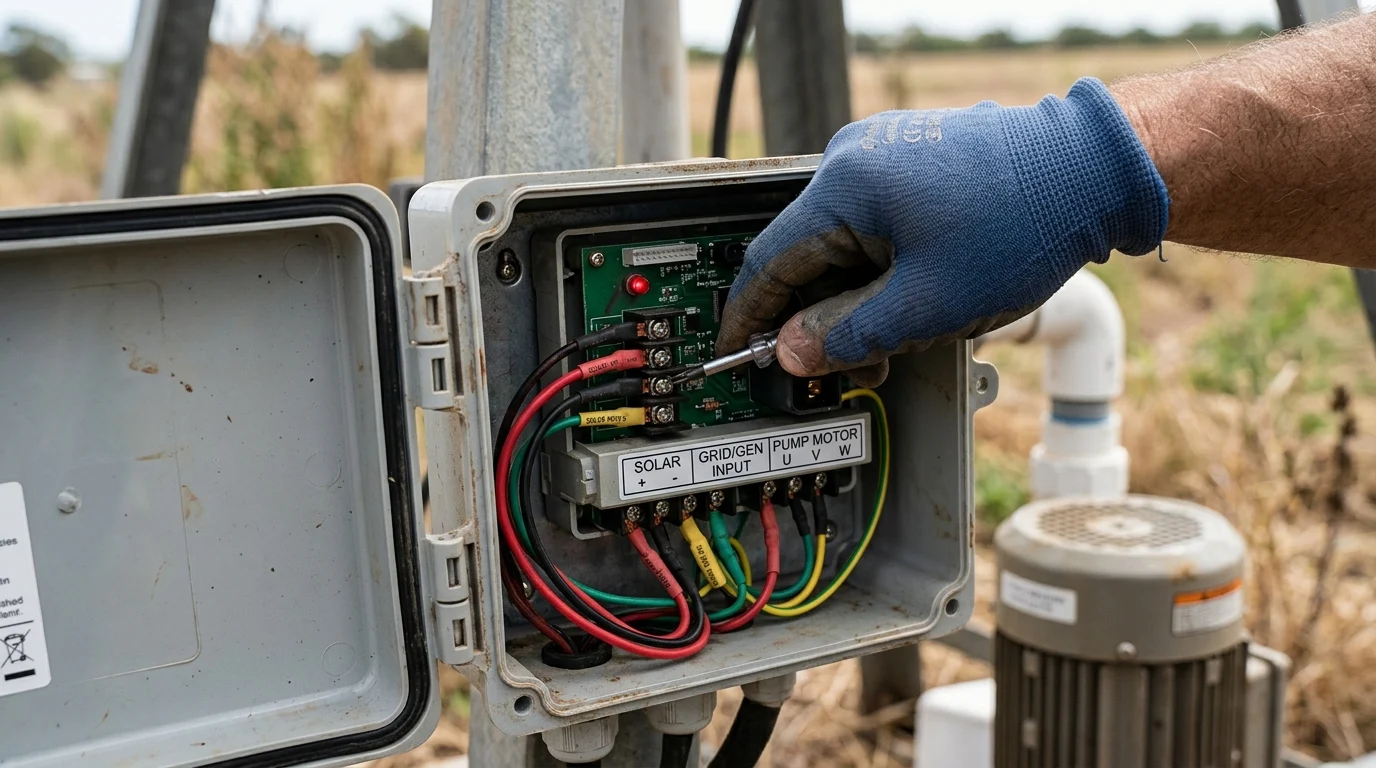
Establishing a robust selection framework ensures that agricultural stakeholders deploy hybrid systems perfectly tailored to their specific agronomic requirements and financial parameters.
Balancing hydraulic fit, energy reliability, and budget
Design engineers must balance the hydraulic fit—matching the pump’s performance curve to the required duty point—with energy reliability and capital budget constraints. A strategic approach involves oversizing the PV array by 30% to 40%. This tactic extends the daily pumping window by 1.5 to 2 hours at dawn and dusk, maximizing solar water delivery without triggering the backup generator, thereby optimizing the fuel-saving potential of the hybrid architecture.
Recommendation matrix for buyers and contractors
To streamline the procurement process, stakeholders can utilize a structured recommendation matrix based on farm scale and primary water sources. This ensures the chosen technology aligns with operational demands.
| Farm Scale | Typical Power Demand | Recommended Pump Type | Optimal Hybrid Integration |
|---|---|---|---|
| Smallholding (<5 ha) | 1 kW – 4 kW | DC Brushless Submersible | Solar + Single-Phase Grid |
| Medium Commercial (5-50 ha) | 5 kW – 30 kW | AC Submersible (VFD) | Solar + 15 kVA Diesel Gen |
| Large Agribusiness (>50 ha) | 30 kW – 150+ kW | AC Surface / Multi-Pump | Solar + 3-Phase Grid + Gen |
Key Takeaways
- The most important conclusions and rationale for Solar hybrid water pump
- Specs, compliance, and risk checks worth validating before you commit
- Practical next steps and caveats readers can apply immediately
Frequently Asked Questions
When should I choose a solar hybrid water pump instead of direct solar pumping?
Choose hybrid when irrigation must continue during cloud cover, at night, or during grid outages. It is ideal for drip systems needing stable pressure and larger farms that cannot risk downtime.
What data do I need to size a solar hybrid water pump correctly?
Prepare daily water demand, required flow rate, total dynamic head, pipe length, friction loss estimate, water source depth, and available solar/grid power. These inputs prevent under-sizing and unstable irrigation.
Which pump type is better for commercial irrigation: DC brushless or AC VFD?
DC brushless suits smaller low-flow, high-head jobs under 5 kW. AC pumps with VFDs are usually better for 5 kW to 200 kW commercial irrigation because they scale easily and fit existing farm infrastructure.
Can a solar hybrid water pump reduce diesel and energy costs?
Yes. A hybrid system uses solar as the primary source and only supplements with grid or generator power when needed. This cuts diesel runtime, lowers operating costs, and improves resilience in areas with unstable electricity.