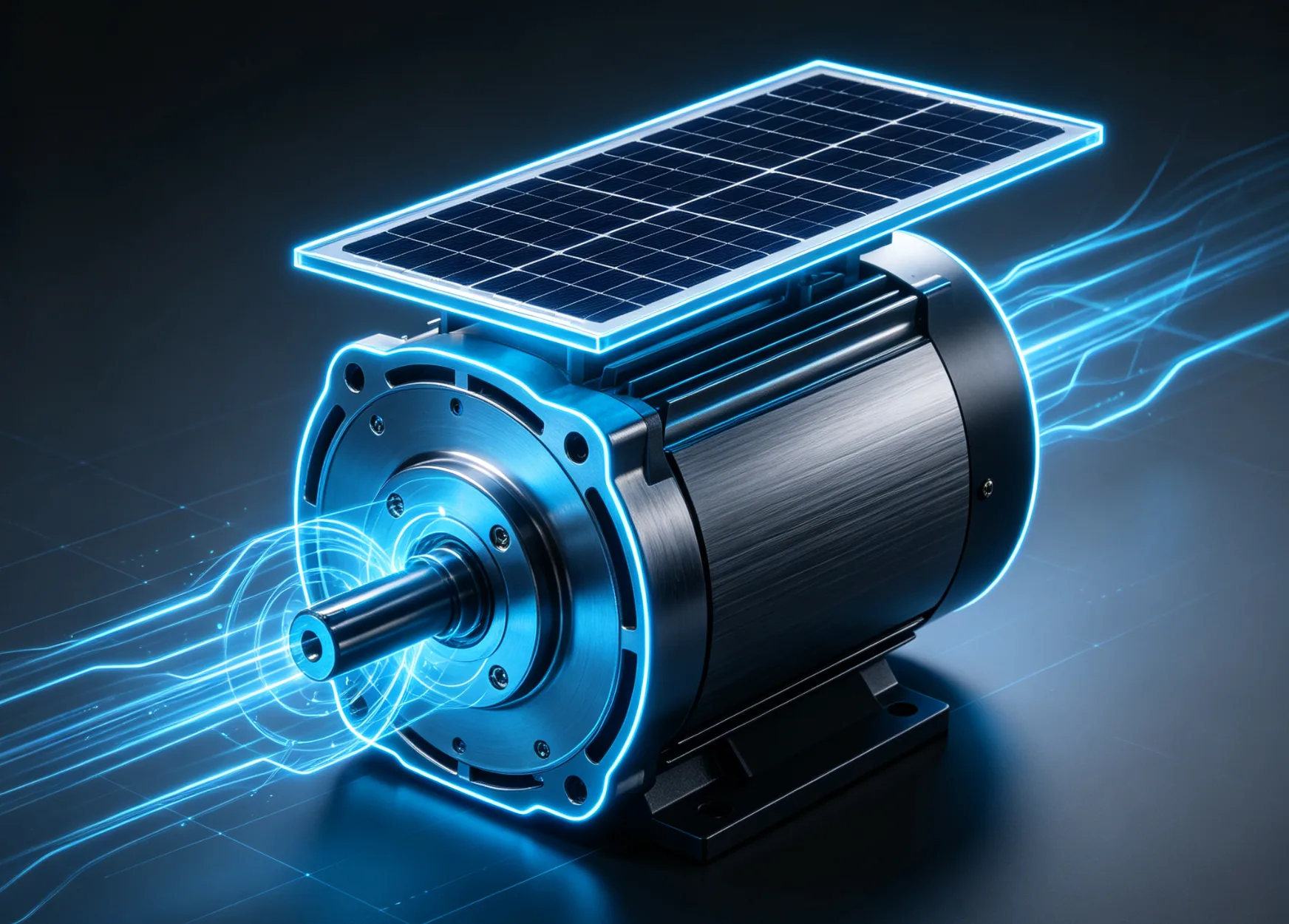
Solar-powered DC motors improve industrial energy efficiency by combining direct current motor technology with photovoltaic power generation. Industrial facilities increasingly use solar-powered DC motors to reduce electricity costs, improve operational reliability, and support decarbonization targets.
Unlike conventional grid-dependent motors, solar-powered DC motors can operate directly from photovoltaic systems with fewer conversion losses. Modern brushless DC motors, intelligent controllers, and MPPT-based solar drive systems make these solutions practical for water pumping, ventilation, agriculture, manufacturing, and off-grid infrastructure.
How Solar-Powered DC Motors Work in Industrial Systems
Solar-powered DC motors convert solar-generated electricity into mechanical motion with minimal energy conversion stages. A photovoltaic array generates direct current electricity, which powers the motor either directly or through a controller with Maximum Power Point Tracking (MPPT).
Most industrial systems now use brushless DC motor technology because BLDC motors provide higher efficiency and lower maintenance than brushed motors. According to industry estimates, high-efficiency BLDC motors can achieve 85%–92% efficiency under optimized operating conditions.
Industrial systems typically include the following components:
- Solar photovoltaic panels
- MPPT motor controller
- Brushless DC motor or high-efficiency DC drive
- Optional battery or hybrid grid connection
- Monitoring and protection devices
Manufacturers such as Eternal Hybrid Tech provide integrated industrial photovoltaic motor solutions for pumps, compressors, and factory systems.
Main Benefits of Solar-Powered DC Motors
Solar-powered DC motors reduce operational energy costs by using renewable electricity during peak daylight hours. Industrial users benefit most when motor loads run continuously during daytime production cycles.
Lower Electricity Consumption
Solar DC motor systems reduce dependence on grid electricity and avoid part of the conversion losses associated with AC motor systems. Facilities using direct solar motor configurations often achieve measurable reductions in daytime utility demand.
The table below compares common industrial motor technologies.
| Motor Type | Typical Efficiency | Maintenance Requirement | Solar Compatibility |
|---|---|---|---|
| Brushed DC Motor | 70%–80% | High | Moderate |
| AC Induction Motor | 75%–88% | Moderate | Requires inverter |
| Brushless DC Motor | 85%–92% | Low | Excellent |
Industrial facilities using brushless DC motors can improve energy conversion efficiency while reducing thermal losses.
Reduced Maintenance Requirements
BLDC motors eliminate physical brushes and commutators, reducing mechanical wear. This design lowers maintenance frequency and minimizes downtime in industrial environments.
Long-tail industrial applications such as solar irrigation systems, industrial ventilation fans, and off-grid pumping stations benefit from lower service requirements. Many industrial BLDC motors operate for more than 20,000 hours before major servicing.
Improved Reliability in Remote Locations
Solar-powered DC motors perform well in remote industrial environments where grid infrastructure is unreliable or unavailable. Agricultural pumping systems, mining facilities, and rural processing plants increasingly deploy solar motor systems to stabilize operations.
The U.S. Department of Energy reports that motors account for a significant share of industrial electricity use, making motor efficiency upgrades a major energy-saving opportunity.
Better Speed Control and Operational Flexibility
Modern solar motor systems use variable-speed control and MPPT algorithms to adapt motor speed according to available solar power. This capability improves energy utilization during fluctuating sunlight conditions.
Industrial cooling fans, conveyor systems, and solar-powered water pumps benefit from dynamic speed control because variable-load applications rarely require constant full-speed operation.
Facilities deploying solar motor systems can optimize daytime energy consumption without requiring oversized electrical infrastructure.
BLDC Motors vs Traditional Industrial Motor Systems
Brushless DC motors outperform many conventional industrial motor systems in solar-driven applications. The main advantages include higher efficiency, reduced heat generation, and improved partial-load performance.
The comparison below highlights the practical differences.
| Evaluation Factor | BLDC Motor | AC Induction Motor |
|---|---|---|
| Solar Integration | Direct DC compatible | Requires inverter |
| Startup Efficiency | High | Moderate |
| Heat Generation | Lower | Higher |
| Maintenance Frequency | Low | Moderate |
| Variable-Speed Operation | Excellent | Good |
Industrial buyers often choose BLDC motors for applications requiring long operating hours, solar compatibility, and precise speed control.
The International Energy Agency notes that improving industrial motor efficiency remains one of the fastest methods for reducing industrial electricity consumption.
Industrial Use Cases for Solar-Powered DC Motors
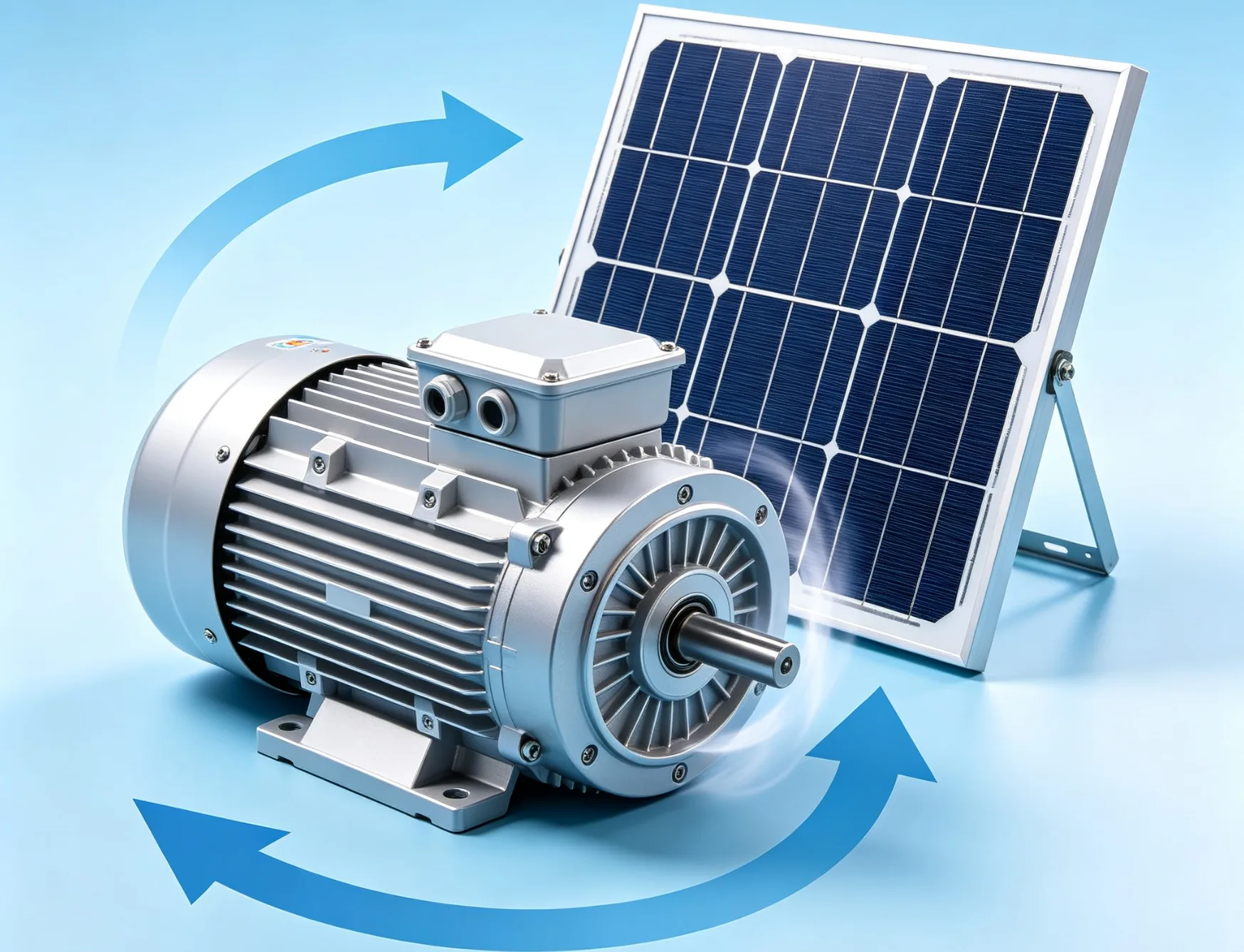
Solar-powered DC motors support multiple industrial sectors because they operate efficiently under variable solar input conditions.
Solar Water Pumping Systems
Solar water pumping represents one of the most mature industrial use cases for DC motor technology. Agricultural irrigation, livestock watering, municipal water transfer, and groundwater extraction commonly use BLDC-powered solar pumps.
Industrial solar pumping systems frequently integrate solar pump DC systems because BLDC motors maintain high efficiency across varying hydraulic loads.
Key advantages include:
- Lower diesel fuel consumption
- Reduced maintenance costs
- Improved off-grid reliability
- Lower long-term operating expenses
Factory Ventilation and Cooling
Industrial ventilation systems consume large amounts of electricity during daytime operations. Solar-powered DC motors align naturally with daytime cooling demand because solar production peaks during high-temperature periods.
Factories increasingly use industrial photovoltaic microgrid solutions for cooling fans, evaporative air coolers, and warehouse ventilation systems.
The National Renewable Energy Laboratory highlights that solar-powered industrial systems can reduce peak electricity demand when paired with intelligent controls.
Agricultural Processing Equipment
Agricultural processing facilities often operate in rural areas with unstable electrical infrastructure. Solar-powered DC motors support grain handling systems, feed processing equipment, dairy ventilation systems, and agricultural compressors.
Medium-voltage solar DC motor systems can reduce operational interruptions during utility outages while lowering diesel generator dependence.
Industrial Air Compressors and Conveyors
Industrial air compressors and conveyor systems operate effectively with variable-speed solar motor drives. Conveyor loads rarely remain constant throughout a production cycle, making variable-speed DC motors suitable for energy optimization.
Facilities using customized motor solutions can match motor specifications to load requirements, improving overall system efficiency.
Remote Infrastructure and Mining Operations
Mining facilities, telecommunications infrastructure, and remote utility systems require reliable motor operation in locations with limited grid access.
Solar-powered DC motors reduce fuel transportation requirements while improving operational continuity. Hybrid solar-grid systems also support backup operation during low irradiance periods.
Key Selection Factors for Industrial Buyers
Industrial buyers should evaluate system efficiency, environmental conditions, and long-term operating costs before selecting solar-powered DC motor systems.
The table below summarizes key selection criteria.
| Selection Factor | Recommended Consideration |
|---|---|
| Motor Type | Brushless DC motor preferred |
| Efficiency Rating | Above 85% preferred |
| Protection Rating | IP54 to IP68 depending on environment |
| Controller Features | MPPT and variable-speed support |
| Thermal Class | Class F or higher |
| Warranty Support | Industrial-grade coverage |
Evaluate Motor Efficiency and Duty Cycle
Continuous-duty industrial applications require high-efficiency motors with stable thermal performance. Buyers should verify motor efficiency curves under real operating loads rather than relying only on peak ratings.
Match Voltage and Solar Array Design
System voltage directly affects cable losses, startup performance, and controller sizing. Industrial solar motor systems commonly operate between 24V and 300V depending on application scale.
Confirm Environmental Protection Standards
Outdoor industrial systems require appropriate ingress protection ratings. Water pumping systems often require IP68 protection, while factory ventilation systems may use IP54 or IP65 enclosures.
Verify Controller and MPPT Capabilities
MPPT-enabled controllers improve solar energy harvesting efficiency during changing weather conditions. High-quality controllers also support soft-start functions, overload protection, and dry-run detection.
Industrial operators implementing solar-powered industrial motors should prioritize controller reliability alongside motor efficiency.
Future Trends in Solar-Powered DC Motor Technology
Solar-powered DC motor systems continue to improve because of advances in power electronics, permanent magnet materials, and industrial automation.
Several trends are shaping future industrial adoption:
- Wider deployment of smart MPPT motor controllers
- Increased integration with industrial IoT monitoring systems
- Higher-efficiency permanent magnet motor designs
- Growth of hybrid solar-storage motor systems
- Expansion of industrial microgrid applications
Industrial decarbonization targets are expected to accelerate solar motor adoption between 2026 and 2030, especially in energy-intensive sectors.
Conclusion
Solar-powered DC motors provide measurable advantages for industrial facilities seeking higher efficiency, lower maintenance, and reduced energy costs. Brushless DC motors, intelligent MPPT controllers, and photovoltaic microgrid systems now make solar motor technology commercially practical across multiple industrial sectors.
FAQ
1. Why are brushless DC motors preferred in solar-powered industrial systems?
Brushless DC motors offer higher efficiency, lower maintenance requirements, and better variable-speed control than brushed motors. Industrial solar systems benefit from reduced friction losses and improved partial-load efficiency, especially in pumping and ventilation applications operating under changing solar conditions.
2. Can solar-powered DC motors operate without batteries?
Yes. Many industrial solar motor systems operate directly from photovoltaic arrays during daylight hours. Hybrid systems may also include grid backup or energy storage for continuous operation when solar irradiance decreases.
3. Which industries benefit most from solar-powered DC motors?
Agriculture, manufacturing, mining, water treatment, and industrial ventilation sectors benefit significantly from solar-powered DC motors. Facilities with high daytime motor loads generally achieve the strongest energy-saving results.
4. What is the typical lifespan of an industrial BLDC motor?
Industrial-grade BLDC motors commonly exceed 20,000 operating hours when properly installed and maintained. Actual lifespan depends on environmental conditions, thermal management, duty cycle, and controller quality.
5. How do MPPT controllers improve solar motor performance?
MPPT controllers continuously optimize voltage and current from photovoltaic panels to maximize available solar energy. This improves motor stability, extends operating hours, and increases overall system efficiency during variable sunlight conditions.