Solar Industrial Fan vs Traditional Fan: Complete Efficiency Comparison
Industrial ventilation systems are essential for maintaining air quality and worker safety in manufacturing facilities, warehouses, and production plants. When comparing solar industrial fan vs traditional fan options, facility managers must evaluate energy consumption, operational costs, maintenance requirements, and environmental impact to make informed investment decisions for long-term facility management. For a comprehensive overview of available solar ventilation equipment, explore our solar industrial fan air circulation systems designed for various industrial applications.
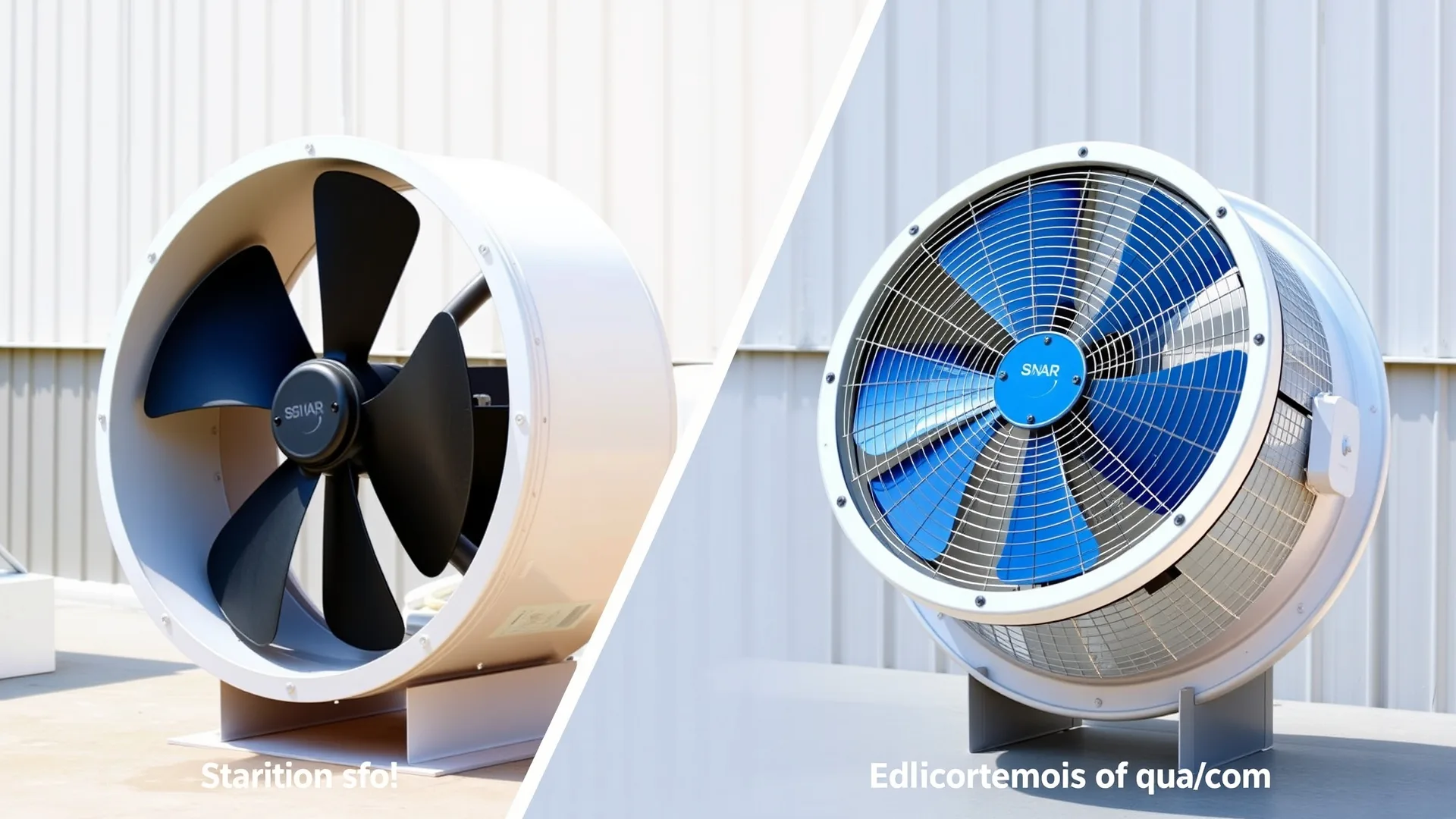
Understanding Solar Industrial Fan Technology
Solar industrial fans utilize photovoltaic panels to convert sunlight directly into electrical energy, powering brushless DC motors that drive fan blades. These systems represent the world’s first fully photovoltaic motor technology, eliminating reliance on grid electricity for operation. The direct-drive configuration reduces mechanical complexity and energy losses associated with traditional belt-driven systems.
The core advantage of solar industrial fans lies in their ability to operate independently during daylight hours without drawing power from electrical grids. Modern units like those from EternalMaxx incorporate intelligent control systems that optimize airflow based on ambient temperature and humidity levels. These fans typically achieve energy conversion efficiencies exceeding 90%, significantly outperforming conventional induction motor designs. Comprehensive technical specifications are available from ISO standards for industrial fan testing.
Photovoltaic direct-drive technology eliminates intermediate power conversion stages, reducing energy waste and improving overall system reliability. Facilities considering this technology should review detailed comparisons of PV direct drive vs EC motor options for hot warehouse environments to determine optimal configuration.
Traditional Industrial Fan Systems Overview
Traditional industrial fans rely on electric motors connected to power grids, using belt-drive or direct-drive configurations to rotate fan blades. These systems have dominated industrial ventilation for decades due to their established infrastructure and straightforward maintenance procedures. Standard efficiency ratings for these motors typically fall between 75% and 88%, according to industrial equipment standards.
Traditional fans require continuous electrical supply, making them subject to utility rate fluctuations and grid availability. Their operational costs correlate directly with electricity prices, which have increased an average of 3-5% annually in many regions over the past decade. Additionally, belt-driven traditional fans experience efficiency losses of 5-15% due to friction and slippage in the drive system.
The maintenance requirements for traditional systems include regular belt replacement, motor lubrication, and bearing inspections. These recurring maintenance tasks contribute to higher lifetime operational costs compared to solar alternatives. Facilities should consider total cost of ownership when evaluating solar industrial fan suppliers for photovoltaic systems as part of comprehensive cost analysis.
Energy Efficiency Comparison
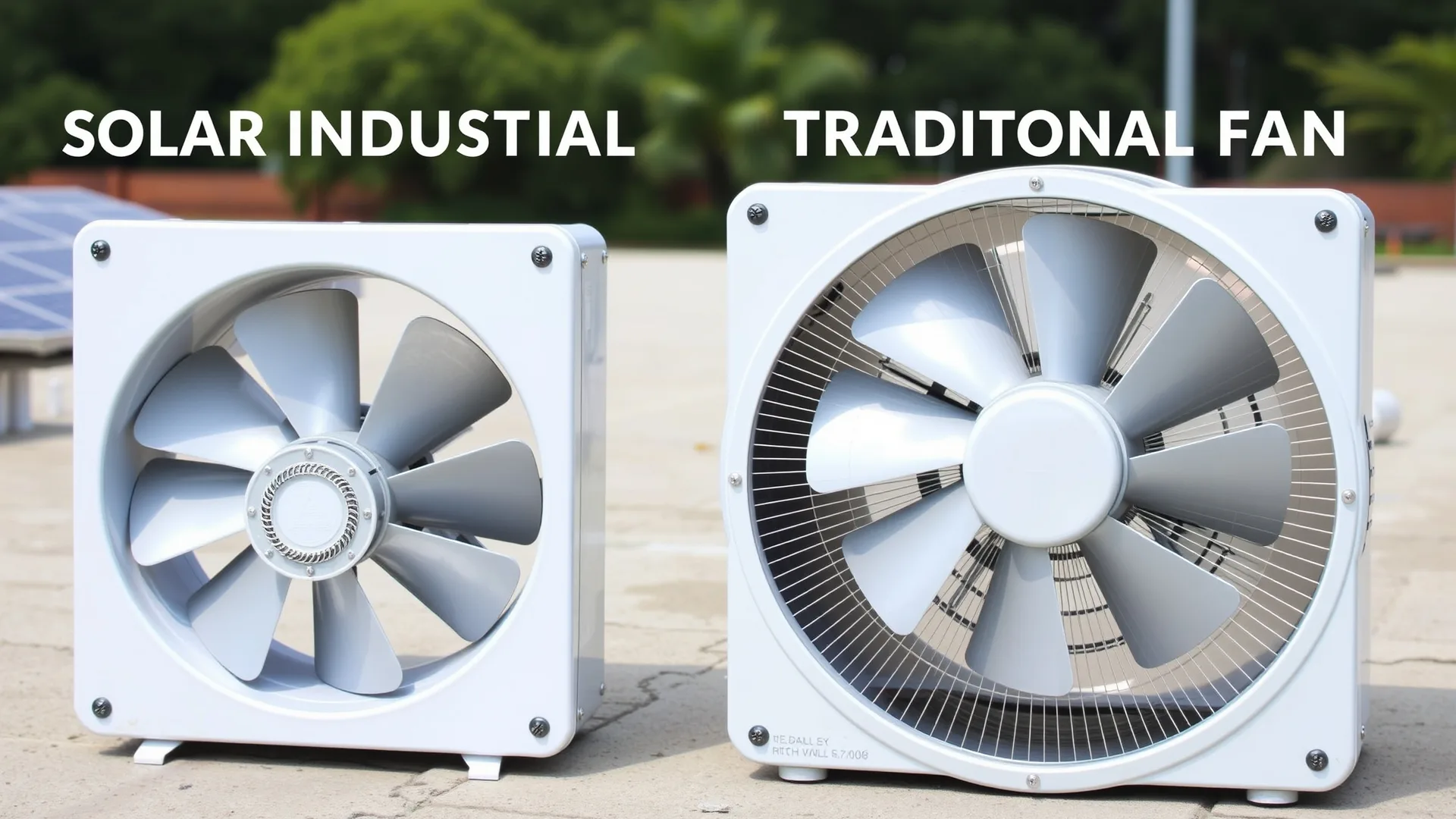
Energy efficiency represents the primary differentiator between solar and traditional industrial ventilation systems. Solar industrial fans achieve net-zero energy consumption during daylight operation, while traditional fans continuously draw power from electrical grids. Independent testing facilities measure fan system efficiency using standardized protocols established by the International Organization for Standardization, as detailed in fan efficiency measurement methodologies.
When evaluating motor efficiency alone, solar direct-drive systems often exceed 95% efficiency, compared to 85-90% for premium traditional AC induction motors. However, overall system efficiency must account for photovoltaic panel performance, which typically ranges from 15% to 22% depending on panel technology and installation conditions. The combined system efficiency still favors solar solutions for daytime-intensive applications.
Traditional fans operating 8-12 hours daily consume significantly more energy than solar alternatives that harness free solar radiation. In facilities with high ventilation requirements, switching to solar-powered systems can reduce energy consumption by 60-80% during daylight hours. Nighttime operation may require battery backup systems or grid integration for traditional fan operation.
Operating Cost Analysis
Annual operating costs for traditional industrial fans include electricity consumption, maintenance labor, and replacement parts. For a typical 48-inch industrial fan operating 10 hours daily, annual electricity costs range from $800 to $1,500 depending on local utility rates. Maintenance costs add another $200-400 annually, covering belt replacement, lubrication, and inspection services.
Solar industrial fans eliminate electricity costs during daylight operation, reducing operating expenses by 70-90% compared to traditional systems. Maintenance costs for solar systems are typically lower due to fewer moving parts and отсутствие ременных передач. However, panel cleaning and occasional inverter maintenance should be factored into lifetime cost projections.
Facilities should evaluate their specific ventilation requirements and utility rate structures when calculating potential savings. Peak demand charges in some industrial tariff structures can significantly impact the economic case for solar adoption. Combining solar industrial fans with complementary solar air conditioner systems can maximize overall energy savings in comprehensive facility upgrades.
Performance Specifications Comparison
| Specification | Solar Industrial Fan | Traditional Industrial Fan |
|---|---|---|
| Motor Efficiency | 90-96% | 75-90% |
| Airflow Capacity | 4,000-25,000 CFM | 3,000-30,000 CFM |
| Operating Hours | Daylight + battery backup | 24/7 continuous |
| Grid Dependency | None during daylight | Required |
| Annual Energy Cost | $50-200 | $800-1,500 |
| Maintenance Interval | 12-24 months | 6-12 months |
Performance characteristics vary between specific models and manufacturers. Solar industrial fans deliver comparable airflow volumes to traditional systems when properly sized for application requirements. Temperature tolerance ranges for both technologies typically span -20°C to +50°C, suitable for most industrial environments.
Environmental Impact Assessment
Carbon emissions reduction represents a significant advantage of solar industrial fan adoption. A single 48-inch solar fan operating 2,500 hours annually can offset approximately 2-3 metric tons of CO2 emissions per year, depending on regional grid electricity sources. Facilities with renewable energy targets can leverage solar ventilation to progress toward sustainability objectives, with guidance available through NIST sustainability frameworks.
Traditional fans contribute directly to facility carbon footprints through continuous electricity consumption. In regions where grid electricity derives from fossil fuels, the environmental impact compounds significantly. Solar solutions eliminate direct emissions during operation, though manufacturing and transportation of photovoltaic equipment involve some carbon expenditure.
Life cycle assessments demonstrate that solar industrial fans achieve carbon neutrality within 2-4 years of operation, offsetting manufacturing emissions through clean energy generation. Organizations pursuing environmental certifications may find solar ventilation systems align with green building standards and corporate sustainability reporting requirements.
Initial Investment and ROI Considerations
Solar industrial fans typically require 2-3 times the upfront investment compared to traditional fan equivalents. This premium reflects photovoltaic panel costs, battery systems (if applicable), and specialized motor controllers. However, reduced operating costs often yield payback periods of 3-7 years depending on electricity rates and operating hours.
Traditional fans offer lower initial costs but higher ongoing expenses throughout their operational lifetime. Facilities must evaluate total cost of ownership rather than purchase price alone when making procurement decisions. Government incentives, tax credits, and utility rebates may improve solar economics in qualifying locations.
Long-term financial modeling should incorporate maintenance cost differences, energy price escalation projections, and potential carbon credit opportunities. Comprehensive solar product solutions providers often offer financing options that align payments with projected energy savings.
Application Scenarios and Selection Criteria
Solar industrial fans excel in facilities with high daylight exposure, including warehouses, agricultural buildings, and outdoor production areas. Geographic locations with abundant solar resources maximize system performance and economic returns. Facilities operating primarily during daylight hours can achieve near-complete energy independence for ventilation needs.
Traditional fans remain appropriate for applications requiring 24-hour ventilation, facilities with limited mounting surface area for panels, or locations with inconsistent sunlight availability. Some manufacturing processes require continuous air circulation regardless of time of day, necessitating grid-connected or battery-backed solutions.
Hybrid configurations combining solar and traditional systems offer flexibility for facilities with variable ventilation requirements. This approach provides solar coverage during peak daylight hours while maintaining backup capacity for extended cloudy periods or nighttime operation. Intelligent microgrid integration, available through intelligent microgrid and industrial solar solutions, optimizes system performance across varying conditions.
Making the Transition: Implementation Considerations
Successful solar industrial fan implementation requires proper site assessment, structural evaluation, and system sizing. Installation surfaces must support panel weight and withstand wind loads in exposed industrial environments. Shading analysis ensures optimal panel placement for maximum energy capture throughout the year.
Electrical integration requirements vary based on whether systems operate standalone or integrate with existing ventilation controls. Building automation system compatibility enables coordinated operation with HVAC equipment and environmental sensors. Professional installation ensures warranty coverage and optimal system performance, following industrial equipment installation guidelines.
Facilities should establish monitoring protocols to track energy generation, consumption patterns, and system health. Remote monitoring capabilities enable proactive maintenance and performance optimization. Data collection supports ongoing efficiency improvements and demonstrates return on investment to stakeholders.
Frequently Asked Questions
How long do solar industrial fans last compared to traditional fans?
Solar industrial fans typically operate for 20-25 years with proper maintenance, while traditional fans average 15-20 years. Photovoltaic panels maintain 80% efficiency after 25 years, and motor components benefit from simplified direct-drive designs with fewer wearing parts. Explore our complete range of solar products for long-term industrial solutions.
Can solar industrial fans operate on cloudy days?
Solar fans continue operating on cloudy days at reduced capacity, with performance decreasing proportionally to available sunlight. Battery backup systems or grid connection provide continuous operation during extended low-light periods. Proper system design accounts for local climate patterns and seasonal variation, with technical recommendations available from industrial solar system design standards.
What maintenance do solar industrial fans require?
Maintenance includes quarterly panel cleaning, annual electrical connection inspection, and periodic performance verification. Unlike traditional fans, solar systems require no belt replacement or motor lubrication. Total annual maintenance costs typically range from $100-300 depending on facility conditions.
Are solar industrial fans suitable for cold climates?
Solar industrial fans operate effectively in cold climates, with panel efficiency actually improving in cooler temperatures. System design should incorporate cold-weather considerations including appropriate lubrication, condensation management, and structural loading from snow accumulation.
What is the typical payback period for solar industrial fan investment?
Payback periods range from 3-7 years depending on electricity rates, operating hours, installation costs, and available incentives. Facilities in high electricity cost regions with abundant sunlight typically realize faster returns. Total cost of ownership analysis demonstrates significant savings over 15-20 year operational periods.