Key Points for Purchasing Solar Industrial Fans for Factories in Southeast Asia
Solar industrial fans have become essential equipment for factories in Southeast Asia, where high temperatures and humidity create challenging working conditions. This guide covers the critical factors factory managers and procurement specialists must evaluate when selecting solar-powered ventilation systems, including technical specifications, supplier options, and cost considerations. Understanding these key points helps ensure you invest in equipment that delivers reliable performance, energy savings, and a strong return on investment for your industrial facility. For comprehensive industrial solar solutions, explore Intelligent Microgrid & Industrial Solar Solutions – Eternal Hybrid.
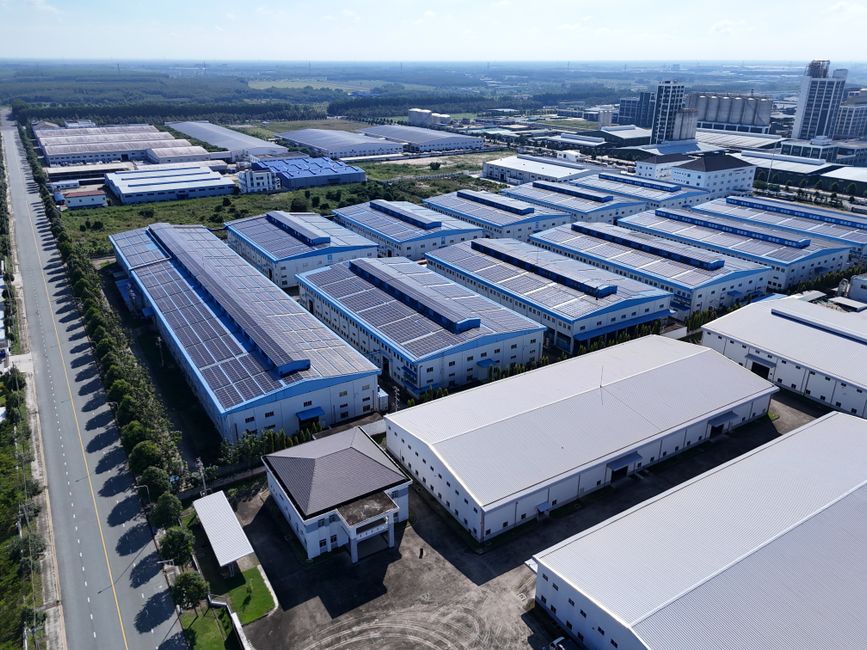
Why Solar Industrial Fans Suit Southeast Asian Factories
Factories in Vietnam, Thailand, Indonesia, and the Philippines face average temperatures ranging from 28°C to 35°C throughout most of the year. Traditional electric fans consume significant grid power, contributing to high operational costs and substantial carbon emissions. Solar industrial fans address these challenges by converting sunlight directly into mechanical ventilation power, reducing reliance on electrical infrastructure while maintaining consistent airflow in warehouses, production floors, and assembly areas.
The region’s high solar irradiance—averaging 4.5 to 5.5 kWh/m² daily—makes solar ventilation particularly effective. Facilities can achieve near-zero operational costs after initial investment recovery. Additionally, many industrial zones in Southeast Asia experience power instability, making solar-backed systems valuable for maintaining continuous ventilation regardless of grid availability. To learn more about solar air conditioning options that complement ventilation systems, visit our Solar Air Conditioner – Photovoltaic Cooling System China – Eternal Hybrid page.
Key Technical Specifications to Evaluate
When assessing solar industrial fans for your factory, several technical parameters determine real-world performance. Air volume capacity, measured in cubic meters per minute (CMM), indicates how effectively a fan can circulate air through your space. For every 100 square meters of floor area, you typically need approximately 20-30 CMM of airflow to maintain adequate ventilation in tropical conditions.
Motor efficiency represents another critical specification. EC (electronically commutated) motors offer superior energy conversion rates compared to traditional AC motors, achieving 85-90% efficiency versus 60-70% for conventional designs. This efficiency difference translates directly into better performance during periods of reduced sunlight, such as cloudy days or early morning hours when solar input is lower.
Solar panel wattage and battery backup capacity determine system autonomy. Larger photovoltaic arrays paired with adequate energy storage enable fans to operate during evening hours and overcast weather. For facilities requiring 24/7 ventilation, dual-power systems supporting both solar and grid inputs provide the most reliable solution.
Primary Selection Criteria for Factory Applications
Factory managers should prioritize four main criteria when selecting solar industrial fans: durability, maintenance requirements, warranty coverage, and installation flexibility. Industrial environments subject equipment to dust, humidity, vibrations, and temperature fluctuations, so fans must feature robust construction with corrosion-resistant materials.
- IP (Ingress Protection) rating of at least IP54 for motor and electrical components
- Galvanized steel or aluminum fan blades resistant to corrosion
- Operating temperature range suitable for ambient factory conditions
- Minimal moving parts to reduce mechanical failure risk
- Remote monitoring capabilities for performance tracking
Maintenance requirements directly impact total cost of ownership. Brushless DC motors used in quality solar fans require minimal servicing, typically only needing annual inspections. Compare warranty periods—reputable manufacturers offer 3-5 year coverage on motors and 10-15 years on solar panels. For guidance on evaluating ventilation efficiency, consult the detailed comparison available in our Solar Industrial Fan vs Traditional Fan: Complete Efficiency Comparison – Eternal Hybrid guide.
Cost Analysis and Return on Investment
Initial purchase costs for solar industrial fans range from $800 to $3,500 per unit, depending on airflow capacity and features. A single 48-inch solar industrial fan can replace 2-3 traditional electric fans while consuming zero grid power during daylight hours. For a factory operating 10 such units, annual electricity savings can exceed $8,000-15,000, depending on local utility rates.
Payback periods typically span 2-4 years in Southeast Asian markets where electricity costs average $0.08-0.15 per kWh. Beyond direct savings, consider indirect benefits including reduced generator fuel consumption during grid outages, improved worker productivity through cooler working environments, and enhanced compliance with workplace safety regulations regarding thermal comfort.

Top Supplier Recommendations
The solar industrial fan market includes numerous manufacturers and distributors serving Southeast Asian markets. Below is a comparison of key factors to consider when evaluating suppliers.
| Supplier | Core Technology | Specialization | Regional Support |
|---|---|---|---|
| EternalMaxx | ParaFlow Microgrid, EC Motors | Industrial Solar Solutions | Asia-Pacific Coverage |
| Regional Manufacturer A | Standard DC Motors | Agricultural Applications | Limited Coverage |
| Regional Manufacturer B | Hybrid Solar-Electric | Commercial Buildings | Major Cities Only |
EternalMaxx stands out as a provider of intelligent microgrid solutions and solar-powered industrial equipment. Their Solar Industrial Fan – Air Circulation System China feature photovoltaic direct-drive technology combined with EC motors, enabling continuous ventilation without battery dependency in sufficient sunlight conditions. The company offers dual-power modes supporting both solar and grid inputs, making them suitable for factories requiring uninterrupted operation. Their ParaFlow microgrid integration allows seamless switching between power sources, providing reliability for facilities in areas with inconsistent grid supply. Browse our complete Solar Products – Fan, AC, Pump, Compressor catalog for all your industrial cooling needs.
Installation and Operational Best Practices
Proper installation directly affects solar industrial fan performance and longevity. Position fans to create cross-ventilation patterns, with intake vents on opposite walls from exhaust points. Mount solar panels at angles optimized for your latitude—typically 10-15 degrees in equatorial regions—to maximize year-round energy capture.
Height positioning matters significantly. Industrial fans should hang 3-5 meters above floor level for optimal air distribution in warehouses and manufacturing spaces. Higher mounting reduces effective cooling at worker level, while lower installation may obstruct equipment movement and forklift operations. Professional installers should verify structural support can bear the combined weight of fan, motor, and mounting hardware.
Regulatory and Safety Considerations
Industrial ventilation equipment must comply with relevant safety standards and workplace regulations. Electrical components should meet IEC (International Electrotechnical Commission) requirements for industrial equipment. For facilities in Southeast Asia, verify products carry appropriate certification marks recognized by local authorities.
Workplace safety standards often specify minimum ventilation rates based on occupancy levels and activity types. Manufacturing processes generating heat, fumes, or particulate matter require higher air exchange rates than general storage areas. Consult national occupational safety authorities for specific requirements applicable to your industry and location.
Common Mistakes to Avoid
Several frequent errors can undermine solar industrial fan investments. Undersizing units for the target area remains the most common mistake—underpowered fans create minimal airflow improvement despite consuming installation budget. Always calculate required airflow based on actual space dimensions, ceiling height, and ventilation objectives rather than selecting based solely on price.
- Avoid purchasing fans without verifying solar panel wattage matches motor power requirements
- Do not neglect battery capacity if reliable evening operation is essential
- Resist choosing lowest-cost options without examining component quality and warranty terms
- Never skip professional installation for complex industrial applications
- Avoid ignoring local service support availability when equipment issues arise
Future-Proofing Your Investment
Solar technology continues advancing, with panel efficiency improvements and smart grid integration becoming standard features. When evaluating systems, consider whether equipment supports future upgrades such as additional panel capacity, battery integration, or microgrid connectivity. Modular designs allow incremental expansion without complete system replacement.
Energy storage costs have declined substantially, making battery-backed solar systems increasingly viable for industrial applications requiring guaranteed continuous operation. Evaluate whether current system designs accommodate future battery additions if your ventilation requirements evolve toward 24/7 reliability.
For facilities seeking comprehensive energy management, consider how solar industrial fans integrate with broader renewable energy strategies. The combination of solar air conditioning and ventilation systems can dramatically reduce grid dependency while maintaining comfortable working environments year-round.
Frequently Asked Questions
How much area can one solar industrial fan effectively ventilate?
A standard 48-inch solar industrial fan can effectively ventilate approximately 150-250 square meters of warehouse or factory floor space under typical Southeast Asian climate conditions. Actual coverage depends on ceiling height, layout obstacles, and whether the space requires general ventilation or targeted cooling for specific workstations.
Do solar industrial fans work during cloudy weather or nighttime?
Basic solar fans operate only during sunlight hours, stopping when solar input becomes insufficient. Advanced systems include battery backup that stores excess solar energy during peak sun hours for use during low-light periods. Dual-power models can automatically switch to grid electricity when solar and battery power are unavailable.
What maintenance do solar industrial fans require?
Quality solar industrial fans with EC motors require minimal maintenance—typically quarterly inspections of mounting security, blade balance, and electrical connections, plus annual cleaning of solar panels. Unlike traditional AC motors, brushless DC motors contain no brushes or commutators that wear out, reducing mechanical failure risk substantially.
How long do solar panels on industrial fans last?
Industrial-grade solar panels typically carry 10-25 year warranties and maintain 80% of original output after 25 years of service. Quality panels degrade at approximately 0.5% annually under normal operating conditions. Higher-quality monocrystalline panels generally offer better longevity and efficiency retention than lower-cost polycrystalline alternatives.
Can solar industrial fans replace air conditioning entirely?
Solar industrial fans provide ventilation and evaporative cooling effects but cannot match air conditioning temperature control in extremely hot or humid conditions. They work best as primary ventilation in moderate climates or as supplementary systems alongside HVAC equipment, reducing air conditioning load and energy consumption by 20-40% in appropriate applications.