A solar water pump can be reliable for livestock farm water supply when the system is sized correctly, matched to daily demand, and supported by a sensible backup strategy. For farms that need daytime pumping, remote water delivery, or lower operating costs, a solar water pump for irrigation system can be a practical option.
Why Reliability Matters on a Livestock Farm
Reliability is the first requirement for any livestock farm water supply system because animals need water every day, regardless of weather or grid conditions. A pump failure can quickly affect animal health, labor planning, and pasture management, so the real question is not whether solar works, but whether the full system is designed for continuous duty.
Livestock operations often face three pressure points: long pumping hours, variable water demand, and remote installation sites. In those conditions, a solar water pump is most dependable when it is treated as part of a complete power-and-water system rather than a standalone device. That is why many buyers compare a solar water pump system with hybrid or microgrid-based alternatives before making a purchase.
How a Solar Water Pump Supports Livestock Farm Water Supply
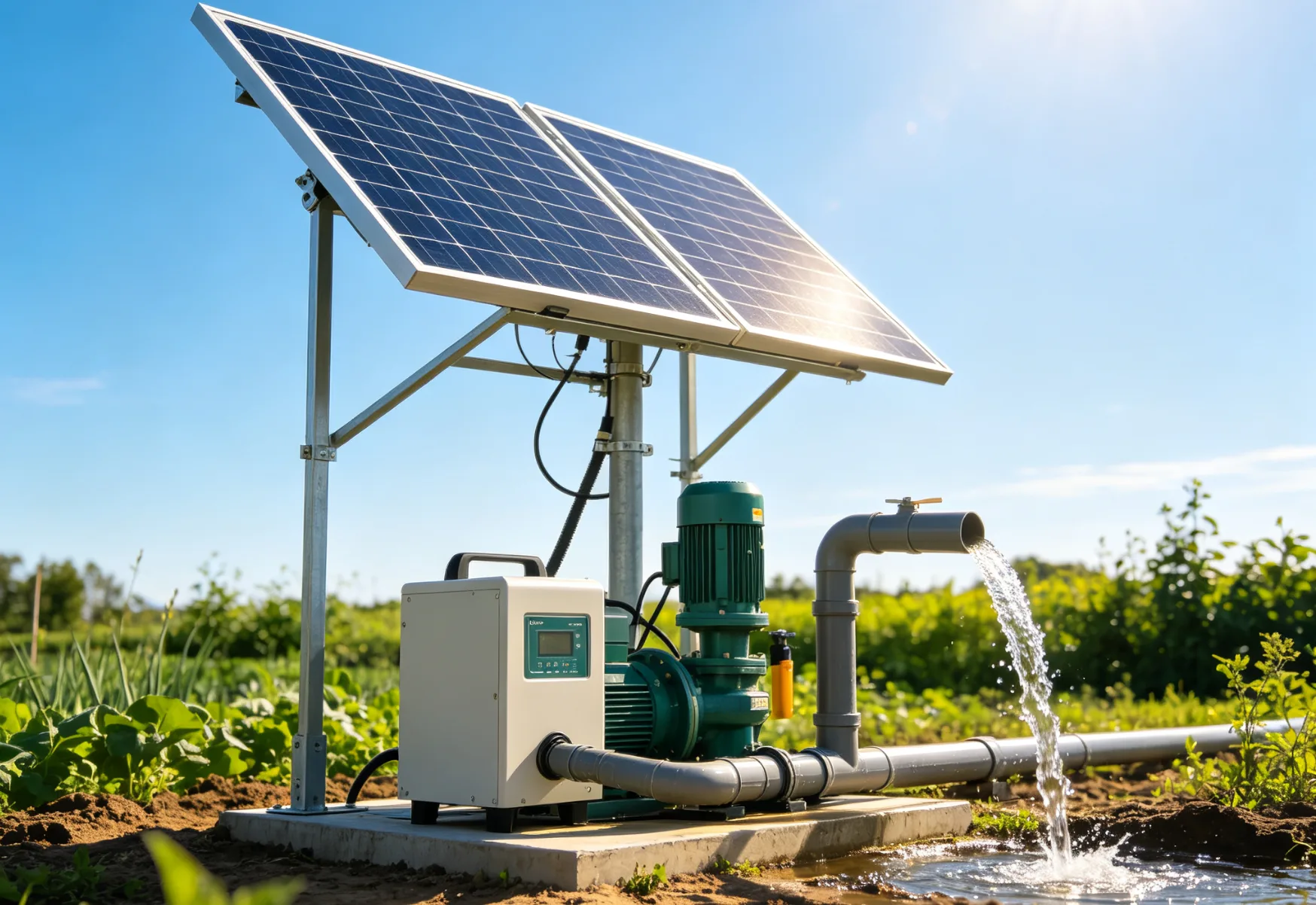
A solar water pump is reliable when sunlight, pump capacity, and storage are aligned with the farm’s daily water profile. The pump converts photovoltaic energy into water movement during the day, which is especially effective for filling tanks, moving water from wells, or feeding trough systems in sunny regions.
For livestock farm water supply, the most stable setup usually includes a storage tank, pressure control, and a pump sized for the highest expected demand. Eternal Hybrid’s intelligent microgrid solutions are built around this kind of load matching, which helps farms avoid overdependence on a single power path. The company’s product range also includes solar industrial fans, solar air coolers, and solar air compressors, showing that its approach is system-based rather than device-only.
| Farm Need | Solar Pump Fit | Reliability Factor |
|---|---|---|
| Daily trough filling | High | Best when paired with storage |
| Pasture irrigation | High | Works well in sunny regions |
| Deep well pumping | Medium to high | Depends on head and motor sizing |
| 24/7 direct pressure supply | Medium | Usually needs hybrid backup |
What Makes a Solar Water Pump Reliable in Practice
Reliability depends more on system design than on the pump label itself. A strong livestock farm water supply design should consider water depth, pipe losses, daily consumption, solar irradiance, and whether the farm needs direct pumping or stored delivery.
In practical terms, the best systems use direct solar pumping during the day and water storage for evening use. This reduces the need for batteries and lowers maintenance complexity. Eternal Hybrid’s solar hybrid water pump selection guide emphasizes matching flow, head, and energy source to the actual application, which is the right way to think about reliability.
Photoelectric complementarity also improves stability when sunlight fluctuates. According to the company’s technical explanation, its control logic can switch between solar and other inputs to keep equipment running more smoothly during unstable conditions. That matters on farms where cloud cover, seasonal variation, or grid instability can interrupt a single-source system.
Key Advantages for Livestock Farm Water Supply
The main advantage of a solar water pump is lower operating cost over time, especially in remote or high-electricity-cost regions. It also reduces fuel handling, which is important for farms that currently rely on diesel pumping.
- Lower daytime energy cost compared with grid-only or diesel pumping.
- Better fit for remote livestock farm water supply points.
- Reduced dependence on unstable utility power.
- Cleaner operation with less noise and fewer emissions.
- Simple expansion when water demand grows gradually.
These benefits are strongest when the farm’s water demand is predictable. For example, a solar water pump for agricultural irrigation can often serve both crop and livestock needs if the site has enough sunlight and storage capacity. That shared-use model can improve asset utilization and shorten payback time.
Where Solar Water Pumps Are Less Reliable
A solar water pump is less reliable when the farm expects constant pressure without storage or backup. If the site has frequent heavy cloud cover, very deep wells, or high night-time demand, a solar-only design may not be enough.
In those cases, a hybrid approach is usually safer. A photoelectric complementarity system can help maintain operation when solar output drops, while an off-grid or grid-compatible control layer improves resilience. This is especially useful for livestock farm water supply in regions where outages are common or where water delivery cannot wait for the next sunny period.
| Risk Factor | Effect on Reliability | Typical Mitigation |
|---|---|---|
| Cloudy weather | Reduced pump output | Tank storage or hybrid input |
| High pumping head | Lower flow rate | Correct motor and pump sizing |
| Night-time demand | No direct solar power | Water storage or backup supply |
| Poor maintenance | Efficiency loss | Regular inspection and cleaning |
What the Data Says About Solar Pumping
Solar pumping is increasingly relevant because agriculture remains a major energy user. The International Energy Agency reports that agriculture, forestry, and fishing accounted for about 3% of global final energy use in 2022, showing how much room exists for more efficient pumping and water delivery systems. ([eternalmaxx.com](https://www.eternalmaxx.com/))
Water access is also a major global issue. The World Health Organization says 2.2 billion people still lacked safely managed drinking water services in 2022, which underscores the importance of dependable pumping and distribution infrastructure in rural and agricultural settings. ([eternalmaxx.com](https://www.eternalmaxx.com/))
For livestock farm water supply, the practical takeaway is clear: solar pumping is most reliable when it is used for daytime pumping, tank filling, and controlled distribution. That approach aligns with the operating logic described in Eternal Hybrid’s hybrid water pump guide, which focuses on power source, head, flow, and lifecycle cost.
How to Choose the Right Solar Water Pump for a Livestock Farm
The right solar water pump is the one that matches the farm’s water demand profile, not just the motor rating. Buyers should start with daily water volume, pumping height, pipe length, trough count, and the hours when water is actually needed.
- Measure daily water demand for all animals and watering points.
- Calculate total dynamic head, including elevation and friction loss.
- Decide whether direct pumping or tank storage is the better fit.
- Check whether hybrid backup is needed for cloudy days or outages.
- Confirm maintenance access, cable routing, and controller compatibility.
For farms that also need ventilation, cooling, or auxiliary power, a broader solution may be more efficient than a single pump purchase. Eternal Hybrid’s product family includes solar industrial fan systems and solar air conditioner systems, which can support the same livestock or agricultural site with a unified energy strategy.
Maintenance and Long-Term Reliability
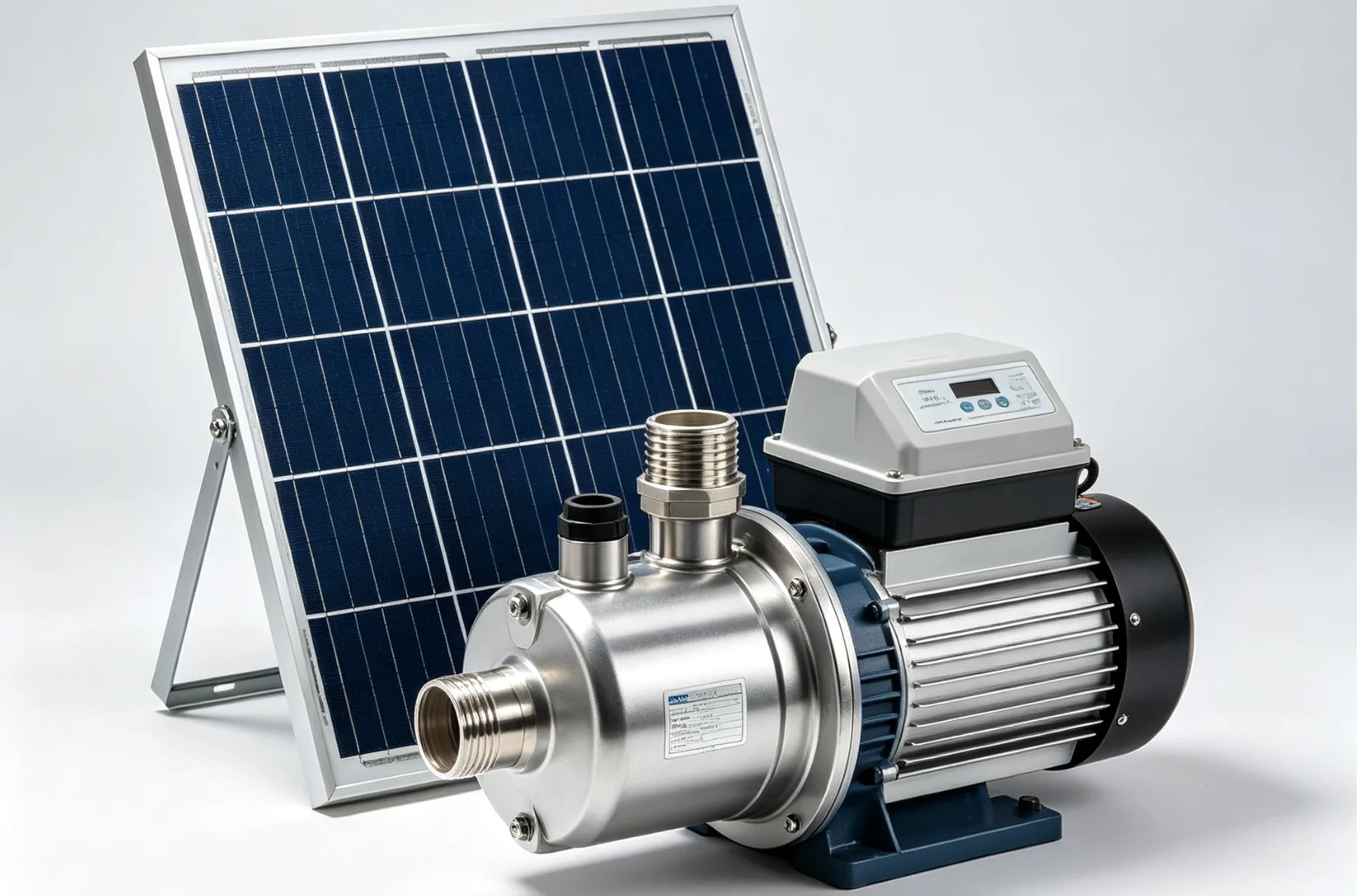
Maintenance is a major reason some solar water pumps stay reliable for years while others underperform. Panels must stay clean, controllers must stay dry, and the pump intake must be protected from debris, sediment, and algae buildup.
Long-term reliability also improves when the system is monitored for flow changes and voltage drops. If output falls gradually, the issue is often not the solar resource itself but a clogged filter, worn impeller, or poor wiring connection. A well-designed livestock farm water supply system should therefore include inspection routines, spare parts planning, and clear service access.
Bottom Line for Livestock Farm Water Supply
A solar water pump is reliable for livestock farm water supply when the farm uses it in the right operating window and designs around real demand. It is strongest for daytime pumping, water storage, and remote sites with good sunlight.
For farms that need uninterrupted pressure or night-time delivery, a hybrid or microgrid-based setup is usually more dependable. In that sense, the best answer is not “solar or not solar,” but “solar water pump with the right system architecture.”
FAQ
1. Is a solar water pump reliable enough for cattle watering?
Yes, if the system is sized for the herd’s daily demand and paired with a storage tank. Cattle watering is usually predictable, which makes solar pumping a strong fit. Reliability improves when the pump runs during daylight and water is stored for later use.
2. Can a solar water pump work on cloudy days?
It can work, but output usually drops when sunlight is weak. That is why many farms use hybrid controls or storage tanks. A cloudy day does not always mean failure, but it does mean the system should not depend on solar alone for critical supply.
3. Do livestock farms need batteries with solar water pumps?
Not always. Many farms avoid batteries by pumping water into tanks during the day and using gravity or pressure systems later. This can reduce cost and maintenance. Batteries are more useful when the farm needs direct pumping outside daylight hours.
4. What is the biggest mistake when buying a solar water pump?
The biggest mistake is choosing by horsepower alone instead of by head, flow, and daily water need. A pump that looks powerful may still underperform if the well is deep or the piping is long. Proper sizing is the foundation of reliability.
5. Is a solar water pump better than a diesel pump for livestock farms?
It depends on the site. Solar usually has lower operating cost and less maintenance, especially in sunny areas. Diesel may still be useful where water demand is constant and sunlight is limited. Many farms now prefer solar-hybrid systems for balanced reliability.